


£3m Welsh trial to test new radiotherapy approach for inoperable stomach cancer
Nation.Cymru staff
Two oncologists are leading a world-first trial to find out whether giving radiotherapy earlier and at higher doses could help patients with inoperable stomach cancer.
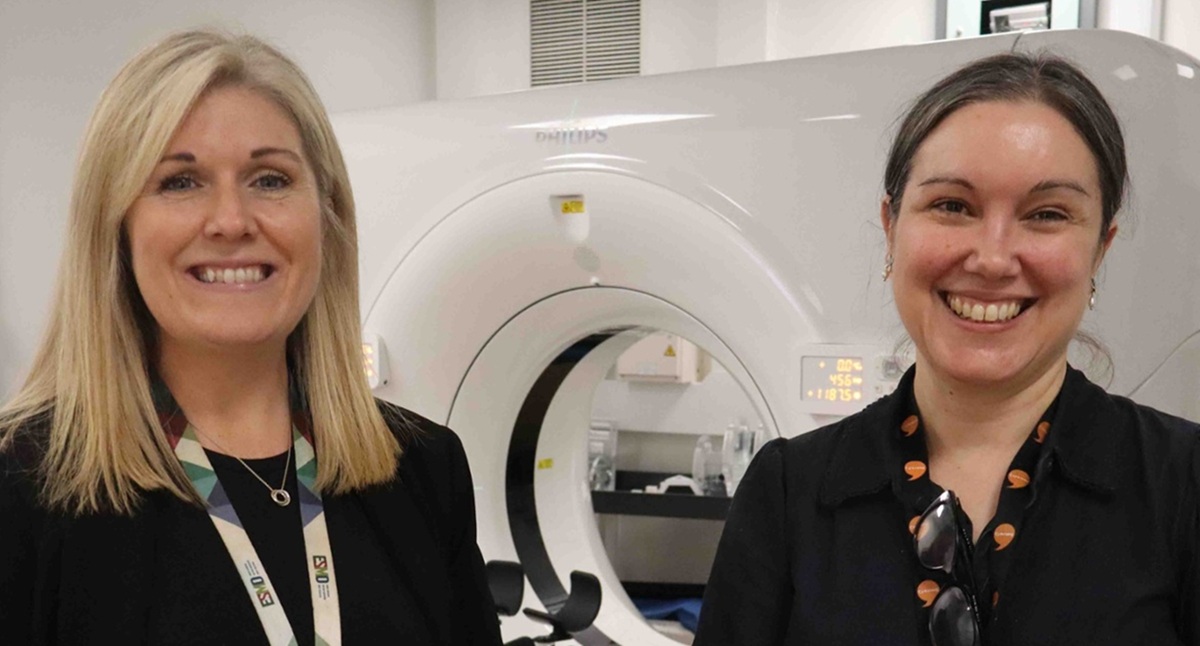
Dr Sarah Gwynne and Dr Amy Case, based at Swansea’s Singleton Hospital, will lead the £3m study involving 558 patients across 28 centres.
The GastroSCOPE trial will compare standard treatment with and without higher-dose radiotherapy. Researchers want to establish whether the approach can slow the cancer’s progression and delay or prevent symptoms such as bleeding, blockage and pain.
Funded by Cancer Research UK, it is described as the world’s first randomised trial of radiotherapy in this setting and the UK’s first stomach radiotherapy study.
Dr Gwynne, a consultant clinical oncologist at the South West Wales Cancer Centre, said the research would address a question she had been asking throughout her 14 years as a consultant.
“Much has changed in 14 years. We have better drug treatments and advances in radiotherapy techniques. But we still don’t know how and when to combine them to treat this disease.”
Some patients cannot undergo surgery because of the location or extent of their cancer. Others have medical conditions that make a major operation unsafe, while some choose not to have surgery.
Their treatment options can include chemotherapy, immunotherapy, low-dose radiotherapy or supportive care.
Radiotherapy is currently often given as a single, low dose to relieve symptoms once they develop. The trial will test whether a higher dose delivered over several treatments could help before those problems arise.
Dr Gwynne said: “From the limited information available, we believe higher doses of radiotherapy over a number of treatments could help control the cancer for longer and stop distressing symptoms occurring.
“But we do not know this with enough certainty to change what we currently do. The best way of knowing if one treatment is better than another is by carrying out a randomised controlled trial.”
Patients will be randomly allocated to receive either standard treatment alone or standard treatment with the additional radiotherapy.
Dr Gwynne received support from Health and Care Research Wales to develop the trial alongside Dr Case, who was then a clinical research fellow partly funded by Wales Cancer Research Centre. Both are now consultant clinical oncologists and will serve as co-chief investigators.
More responsive
The study will also examine whether radiotherapy changes tumour cells in ways that make them more responsive to certain drugs. That work will be led by Dr Chris Jones, from the University of Cambridge.
Researchers will investigate advanced imaging to improve treatment planning, alongside tumour biology and blood markers that may help explain why some patients respond better than others.
Recruitment is not expected to begin for about another year. Around 30 sites across all four UK nations have expressed an interest in taking part.
Dr Case credited the support she received early in her research career with helping her become involved in GastroSCOPE.
She said: “It is very exciting to be part of a trial that has the potential to transform the treatment landscape and improve outcomes for patients across Wales, the wider UK, and around the world who are living with gastric cancer.”
Support our Nation today
For the price of a cup of coffee a month you can help us create an independent, not-for-profit, national news service for the people of Wales, by the people of Wales.
Get more trusted Welsh news
Choose Nation.Cymru as a preferred source in Google News to see more of our journalism.


