

£732,000 project aims to open up science careers to Welsh children
Nation.Cymru staff
A £732,000 project will work with primary schools to help more Welsh children pursue careers in environmental science, with a focus on rural and low-income communities.
The Cardiff University-led team will develop bilingual lessons and practical outdoor activities, alongside training to help teachers build confidence in teaching the subject.
Funded by the Natural Environment Research Council, part of UK Research and Innovation, the project will run until the end of 2028.
It aims to address barriers that can discourage young people from studying science, technology, engineering and maths, and from considering jobs involving wildlife, landscapes, climate and the wider environment.
Project lead Dr Phillip Lugg-Widger, a lecturer in Cardiff University’s School of Engineering, said: “It is important that we try to remove the barriers to those individuals in Wales who want to learn about the natural environment, science and technology, so that one day they can carry out the science that protects our world from challenges such as climate change.”
Teachers will help design and test projects based on Welsh places and culture, linking science and maths topics to the Curriculum for Wales. Training will particularly target geographically isolated areas and communities with lower incomes.
“Our environmental projects will take science outside of the classroom and provide Welsh children with an interactive and engaging experience of how they can use science, maths and Welsh culture to protect the natural environment around them, while also promoting their wellbeing,” Dr Lugg-Widger said.
The work builds on a pilot that ran between July 2025 and July 2026. Researchers surveyed children aged seven to 18 and university students, and held discussion groups with 10 to 14-year-olds, to investigate what prevented underrepresented groups in Wales from entering environmental science careers.
The pilot brought together researchers from Aberystwyth, Bangor, Cardiff, Swansea and the University of the West of England, alongside organisations including the British Antarctic Survey, British Geological Survey and National Oceanography Centre.
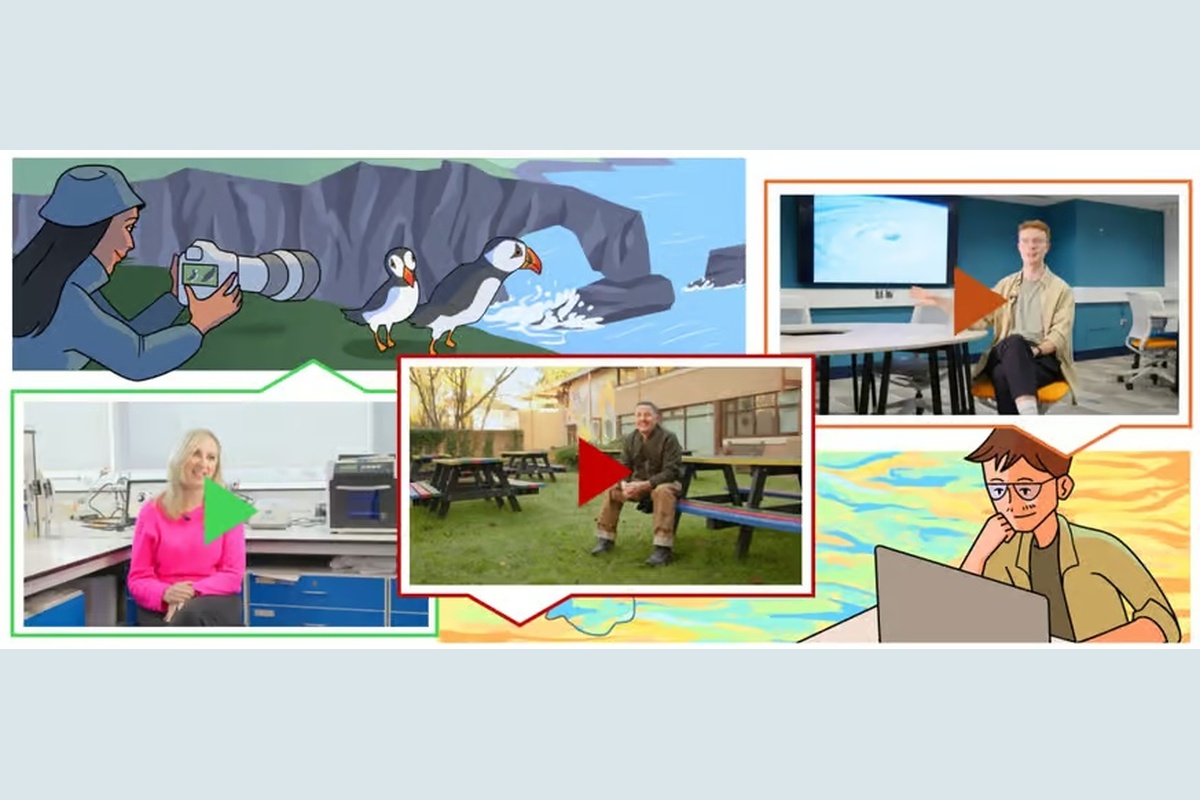
It also tested bilingual videos featuring people working in environmental science, intended to introduce young viewers to careers and role models they could relate to.
One young participant said: “I think it was like really surprising how cool it looks and how fun it is.”
Another said: “I think it looks quite exciting to see all the different animals and the ice and glaciers and stuff.”
Teaching resources
The videos will now be expanded into teaching resources. Schools will also be offered online sessions where pupils can meet scientists, while arts workshops, Welsh-language festivals and other public events will provide opportunities to discuss environmental issues.
Dr Lugg-Widger said Welsh perspectives had a role to play in research beyond Wales.
“They bring with them unique cultural and historical understandings of Wales that could help protect its unique landscapes, animal species and nature with approaches that can be used elsewhere in the UK and beyond,” he said.
Support our Nation today
For the price of a cup of coffee a month you can help us create an independent, not-for-profit, national news service for the people of Wales, by the people of Wales.
Get more trusted Welsh news
Choose Nation.Cymru as a preferred source in Google News to see more of our journalism.


