


9 in 10 councillors in Wales received complaints about pavement parking
Nation.Cymru Staff
A survey has revealed that 9 in 10 (91%) councillors in Wales said they had received complaints from constituents about vehicles parked on the pavement.
Living Streets, the UK charity for everyday walking, sent the survey to all councillors in Wales between May and June 2026 and 114 councillors replied.
The charity, who have campaigned on the issue for over 50 years, highlighted that pavements blocked by vehicles force pedestrians – especially disabled people and partially sighted and blind people – onto the road and into oncoming traffic. Parking on pavements also cracks and damages pathways, increasing costs for councils.
In May, the UK government announced more powers for local authorities in England to restrict pavement parking, and pavement parking has been banned in Scotland since 2023, but no such legislation yet exists in Wales.
When asked, 8 in 10 (83%) councillors in Wales said new powers, like those seen in England and Scotland, would benefit their constituents.
Ruth Billingham, Head of Campaigns, Living Streets said: “For too long, Wales’s pavements have been no-go zones for people with wheelchairs, guide dogs and pushchairs. Blocked pavements force people off the safety of the pavement and into oncoming traffic. It also stops thousands of us from enjoying the benefits of walking more.
“The new Welsh Government has the opportunity to take action against pavement parking and avoid getting left behind Scotland and England.”
Christine Tuppence lives in Llanelli and regularly experiences difficulties with vehicles parked on pavements. She comments: “I am extremely concerned about pavement parking here in Llanelli. It’s been bad for some years and if there should be an emergency neither the fire brigade, police or ambulance service would be able to gain access.
“Getting Carmarthenshire County Council to take this seriously is an uphill struggle. The council tell me it’s a police matter and nothing they can do. The police tell me it’s a council matter and I need to contact them! Meanwhile, we just wait for an emergency to happen.”
The issue of responsibility remains confusing and unresolved. Living Streets sent Freedom of Information (FOI) requests to all 22 local authorities in Wales, asking whether they had received complaints about pavement parking.
Seven authorities stated the enquiry was not applicable, five said they didn’t keep records on pavement parking, and two said the information would exceed FOI cost limits. Some councils directed the request to the local police force. This has led some councillors to call for nationwide legislation to avoid confusion.
Karen Edwards, County Councillor for Llangollen, Denbighshire, said “Pavement parking affects the safety, accessibility, and the condition of our public footways here in Llangollen.
“Pavements are provided for pedestrians, not for vehicles. When cars and vans are parked on pavements, people are forced into the road to get around parked vehicles, creating an unnecessary safety risk.
“In my view, no vehicle should be parked on a pavement. Clear national legislation would remove ambiguity, improve accessibility, protect vulnerable road users and help ensure that pavements remain available for their intended purpose.”
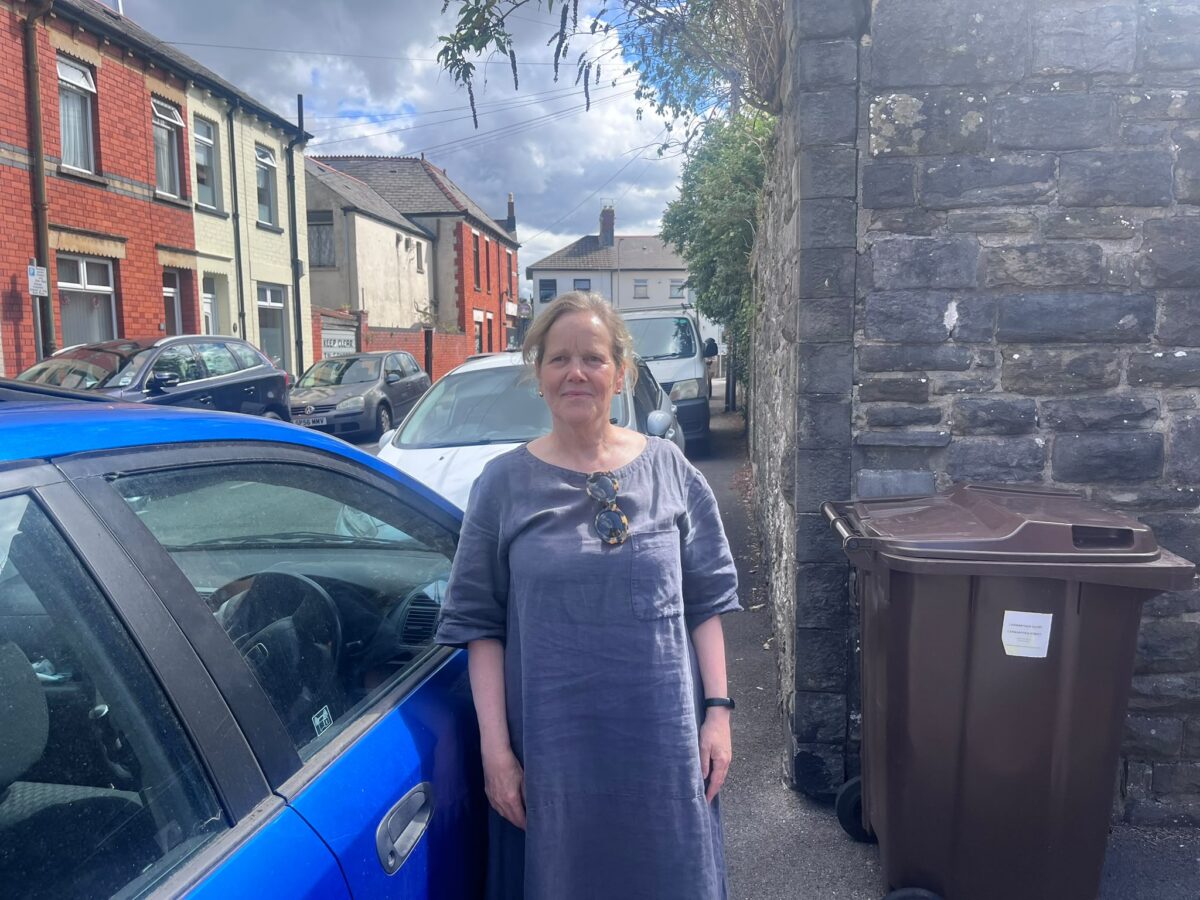
Susan Elsmore, Councillor for Canton, speaking about pavements around Carmarthen Street, Cardiff, said: “Cars are parked on pavements daily in this area. It has a profound impact on residents.
“Here in Carmarthen Street, we’re surrounded by primary schools and nurseries, and lots of parents with pushchairs. There are also people with limited mobility issues and sight loss. People are frustrated because they can’t access the places they need to access.
“Car owners believe they are entitled to take up the pavement space of pedestrians. It’s not right and it’s got to stop.
“Because of vehicles parked on pavements, people tell us they feel less free to move around their local areas. This has a particular impact on older generations, some older people have developed a fear of going out.
“I would like the Welsh Government to ban pavement parking. They have the legal powers to get this done. It will make residents’ lives in Canton – and across Wales – so much better.
“A ban on pavement parking would mean freedom. People wouldn’t have to plan ahead what route they are going to take, they would be able to choose direct routes and have the joy of using the pavements as intended. I’m sure there would be a greater sense of community among all residents.”
Rhys Taylor, Councillor for Gabalfa, Cardiff added: “Pavement parking makes communities like mine unsafe for everyone. It makes routes to school and work less safe, pushes pedestrians into the road and passing traffic, and creates a visual obstruction for drivers.
“Tackling pavement parking will make our communities safer and more pleasant places to live, work, and play.”
To support the campaign against pavement parking in Wales, visit Living Streets site here.
Support our Nation today
For the price of a cup of coffee a month you can help us create an independent, not-for-profit, national news service for the people of Wales, by the people of Wales.
Get more trusted Welsh news
Choose Nation.Cymru as a preferred source in Google News to see more of our journalism.



Happens almost everywhere in the Rhondda Cynon Taf area too, especially Mountain Ash – which I don’t get seeing as there’s ample free parking – and Aberdare, which has six car parks by my last count. Would it be fair for pedestrians to take over the roads and force motorists to drive on pavement?
Many of our streets were built before mass car ownership and space is at a premium, which has been made worse by cars getting bigger and public transport cuts. There’s no one size fits all approach but in a lot of residential areas a quick fix would be to take residential streets (especially when there’s no through access for vehicles) and convert them to “home zones” so that pedestrians can walk on the road and have priority over motor vehicles. Drivers can then take up as much of the pavements as they wish, the road is accessible to all, and… Read more »
Yes there is one way streets
Yes, I agree with that concept. Many people park on the pavement as they simply have no choice. If they park fully on the road they’ll block it. Vehicles are just too wide these days. Converting to access for all and introducing safety measures seems a good idea.
The best thing is that home zones already exist in UK legislation so it’s just a case of councils using them where appropriate. It obviously doesn’t work on main roads, but I can think of plenty of places it would help.
The only issue I can see would be how blind and partially sighted people navigate them, but it’s not like are doing well with the status quo anyway.
Hopefully eventually there will be less cars on the road, but that just means that if it does happen you can dedicate more spaces to e.g. benches, trees etc.
Seriously needs tackling, but will motoring lobby win out as usual.
I am part of the motoring lobby and disagree with pavement parking. I see councils and police condoning pavement parking.
Stop turning a blind eye
Do they get complaints about the council enforcement officers. Parking on the pavements is not at the moment illegal but unless the vehicles can levitate they break the law by driving on the pavement.
They should get a penalty for being on the pavement.. are there Masonic influences coming into play here
I was told by a councillor that if the parking stops wheelchairs or prams it’s an offense. Yet each year the parking moves cms further on as these silly oversized nonsense vehicles are purchased. To the point I had to get my bike down my steps over my head as no room roll it down.
Councils are missing a revenue raising trick. Anyone parking on the pavement is volunteering to pay more into council coffers and just waiting for it to be collected.