A small Welsh language business in the heart of Europe
Aran Jones, SaySomethinginWelsh
I must have had a puzzled expression on my face as I stood in front of the ticket machine at Bologna Centrale. ‘Perhaps I can help you?’ said the uniformed woman, whose job title was probably ‘Stop idiot tourists from creating long queues’.
‘I think I’m fine,’ I said with ordinary male stubbornness. ‘I’m just trying to make sure I get the dates right’.
‘Travelling today?’
‘Yes.’
‘Returning on the 17th?’
‘Yes.’
She looked closer.
‘Travelling to Firenze? To Florence?’
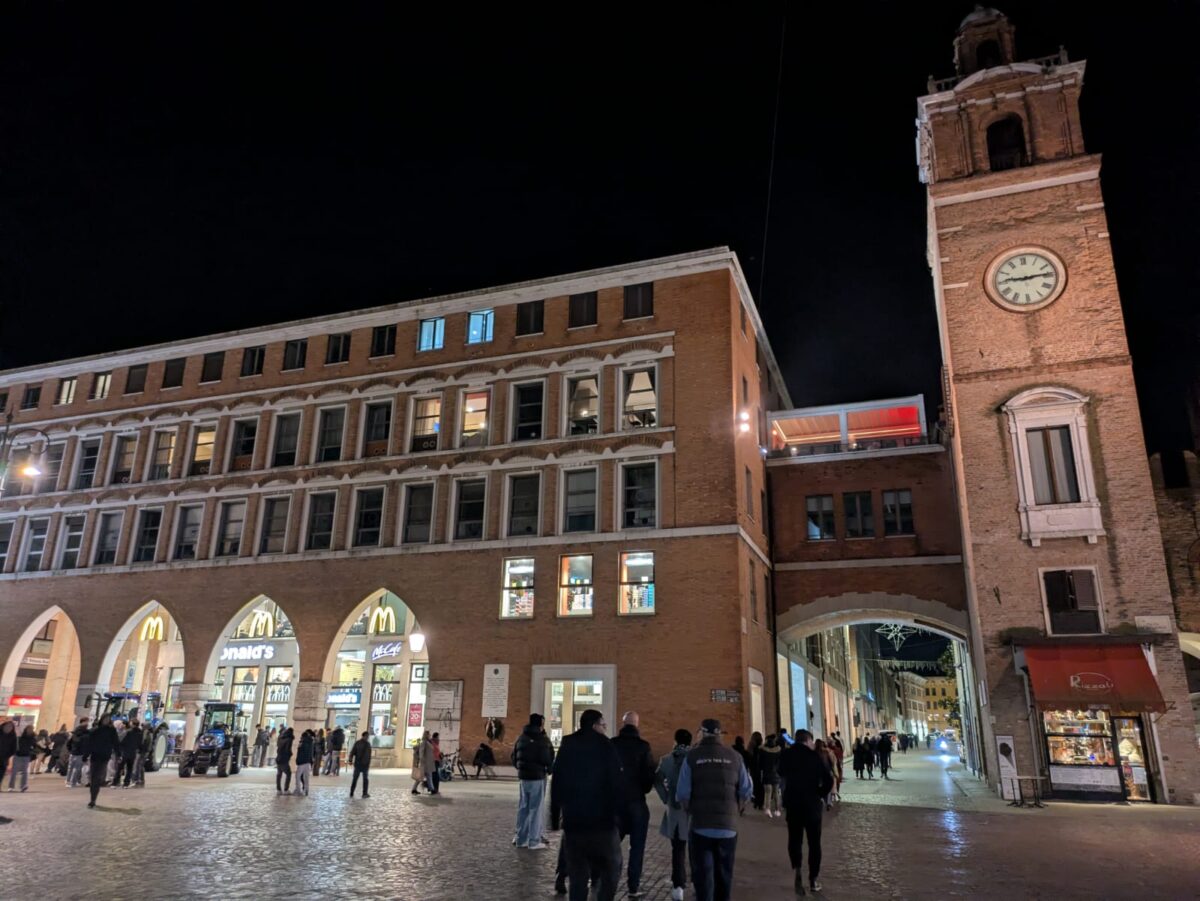
‘What?! No! We’re going to Ferrara!’
‘Ah, si. That’s the opposite direction.’
I love Florence, and I haven’t been there for 25 years. But the language business retreat that Tom and I were attending on behalf of SaySomethingin was very much not in Florence, so thank heavens for ‘Idiot Tourist Prevention’ officers.
The retreat was the brainchild of Richard Simcott, an extraordinary hyperglot who has studied over 50 languages and speaks 30 of them regularly – including Welsh, rather joyfully.
He had brought together two powerhouses to lead the sessions: Anja Spilker, founder of ZALOA Languages (and recognised in 2024 as one of the top 10 female CEOs in Mexico) and Hyunwoo Sun, founder of Talk To Me in Korean (which started in 2009, the same year as SaySomethingin, but is slightly larger than us with over two million learners worldwide!).
The challenge for Anja and Hyunwoo was to take 19 language business owners with a range of approaches and ideas and turn them into supportive collaborators instead of mortal enemies.
Not a task to be sneezed at, but their clever use of a range of excellent restaurants, pasta demonstrations and boat trips did the trick (along with their own generosity and warmth as an example for the rest of us).
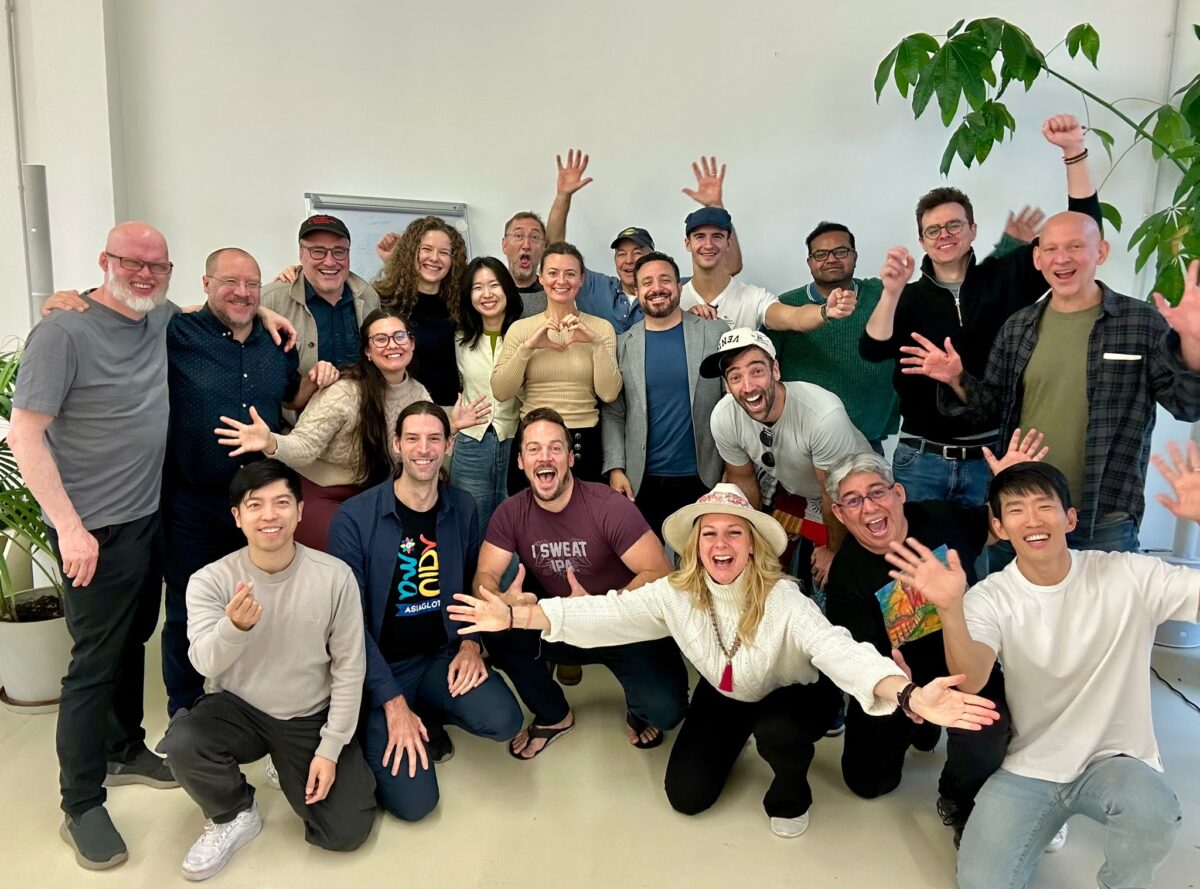
Once we were all firmly on each other’s side, it became clear that this was an unusually interesting group of people. You hear about the big beasts in language learning – think Duolingo, Babbel, Rosetta Stone – but underneath those fairly traditional monoliths, there is a huge amount of practical creativity going on. Crucially, it’s driven by people’s own extensive experiences of learning languages, rather than investors in suits.
Luca Lampariello, for example, speaks 14 languages and was switching seamlessly between English, French, Spanish, Italian and German in an ordinary afternoon on the retreat.
David from San Diego spoke Dutch with a more convincing accent than several Dutch people I’ve known – and David and Luca are working together on some important new ideas about how to use AI to accelerate spoken confidence.
Dick and Aditya work together on uTalk, a game-focused app offering 160 languages with plans to build courses for all 7000 (which SaySomethingin would also love to do!) and they’re just about to release a version of their app for northern Welsh, which we’ve promised to let our learners know about.
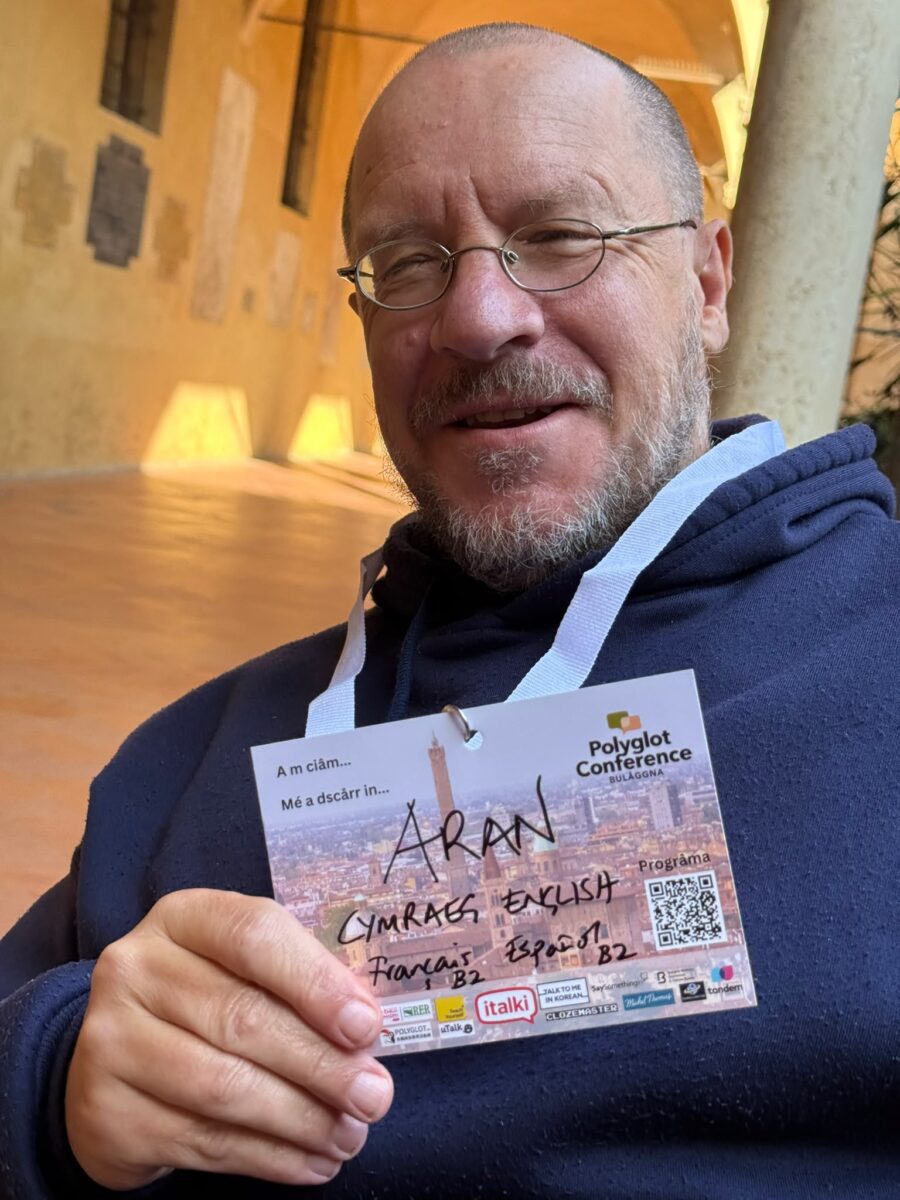
And several times a day, in the middle of feeling bits of my brain break as I tried to keep up with conversations in Spanish and French, I was able to slip back into Welsh with Richard, which made it feel as though we’d taken part of y Fro Gymraeg to Italy with us.
There was something intangible in the range of exercises and discussions that was firing up all our creative neurons. Tom (SaySomethingin‘s main source of creativity) and I were talking about new ideas almost all the time we weren’t doing group exercises or eating pizza – new ways to help our learners practise with each other, new content for our listening exercises, new ways to talk about what makes SaySomethingin different, it felt as if our brains were in a blender.
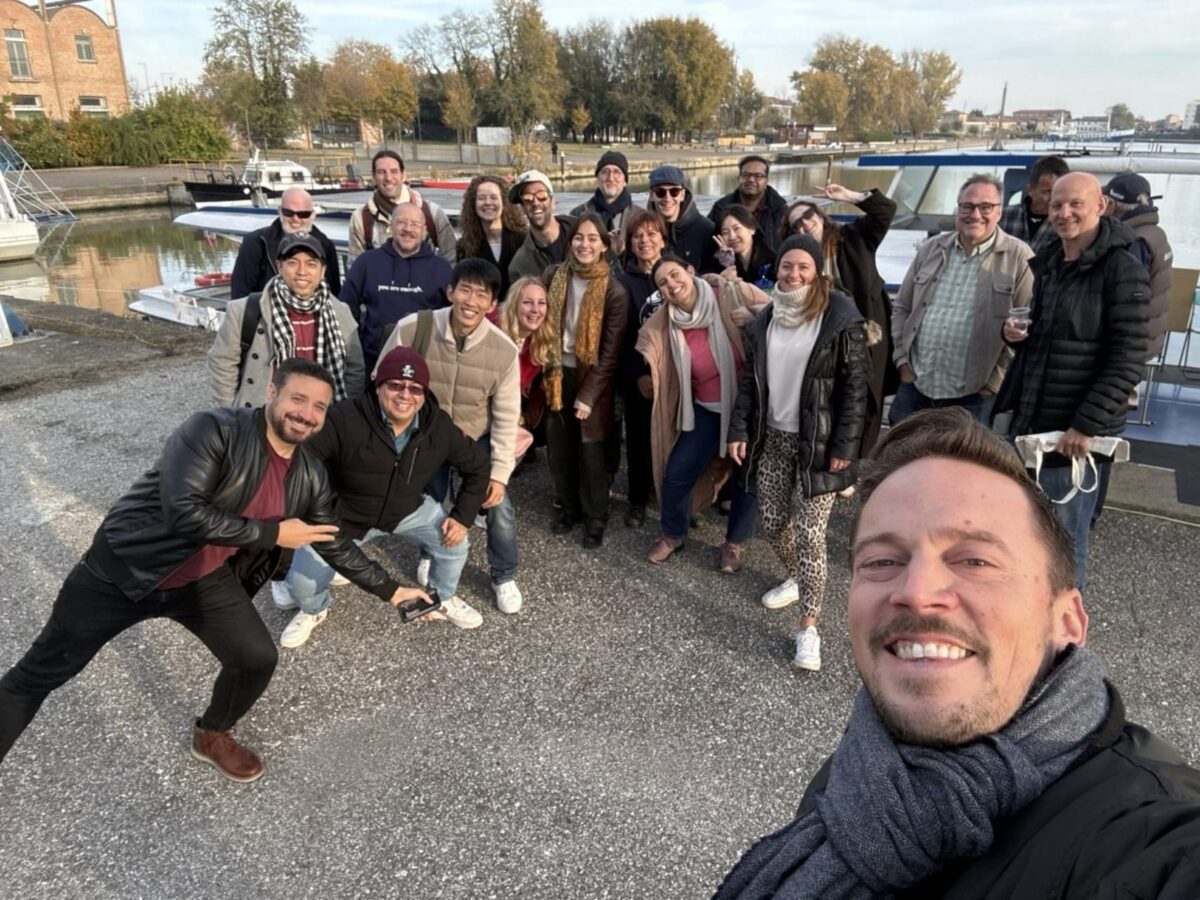
The ideas probably weren’t the most important part of it, though. We got to know some genuinely lovely people, and I think it’s safe to say that in the course of next year, we’re going to be able to announce some fascinating new projects about minority languages, as well as something particularly unexpected to do with Wales and Korea. We’ll also hope to stay in touch with all the other attendees, especially where there’s anything we can do to lend a helping hand.
If you’d like to see what’s happening at the cutting edge of language teaching – the new ideas that are bubbling up from people who keep on learning new languages – and what some of the best 1:1 teachers are doing – then you absolutely should take a look at these links:
All languages
Richard Simcott: https://speakingfluently.com/
Luca Lampariello: https://www.lucalampariello.com/
David Allen Martin II: https://www.linguathor.com/
Dick and Aditya: https://utalk.com/
George Dick: https://fluencystreak.com/
German
Anja Spilker: https://zaloa.online/
Lara Boțoc: https://www.deutschmitlara.de/
Korean
Hyunwoo Sun: https://courses.talktomeinkorean.com/
Lily Sa: https://koreancheatcode.com/
French
Elisa: https://www.frenchmornings.com/
Charles Colonna-Césari: https://www.instagram.com/bonjourfrench_/
Spanish for Mandarin speakers in Taiwan:
Fernando Lopez: https://fernandolopez.world/
Mandarin, Cantonese, Japanese:
Ash Henson: https://www.outlier-linguistics.com/
German, Spanish, French, Russian
Alex Senoner: https://kameleonapp.com/
English conversations for intermediate/advanced learners
Lizzie Hug: https://lizziehug.com/
Portuguese
Jessica Sintra: https://native-portuguese.webflow.io/
Pronunciation coaches
Ruben Adery: https://www.linguistixpro.com/
Adrian Lin: https://www.accentamazing.com/
Language conferences
Natascha Moser: https://www.expolingua.com/ and https://nataschamoser.de/
Philipp Marxen: https://asiaglot.com/ and https://philippmarxen.com/
Support our Nation today
For the price of a cup of coffee a month you can help us create an independent, not-for-profit, national news service for the people of Wales, by the people of Wales.
Get more trusted Welsh news
Choose Nation.Cymru as a preferred source in Google News to see more of our journalism.