


Abandoned mines in Wales are leaking huge quantities of methane
Martin Shipton
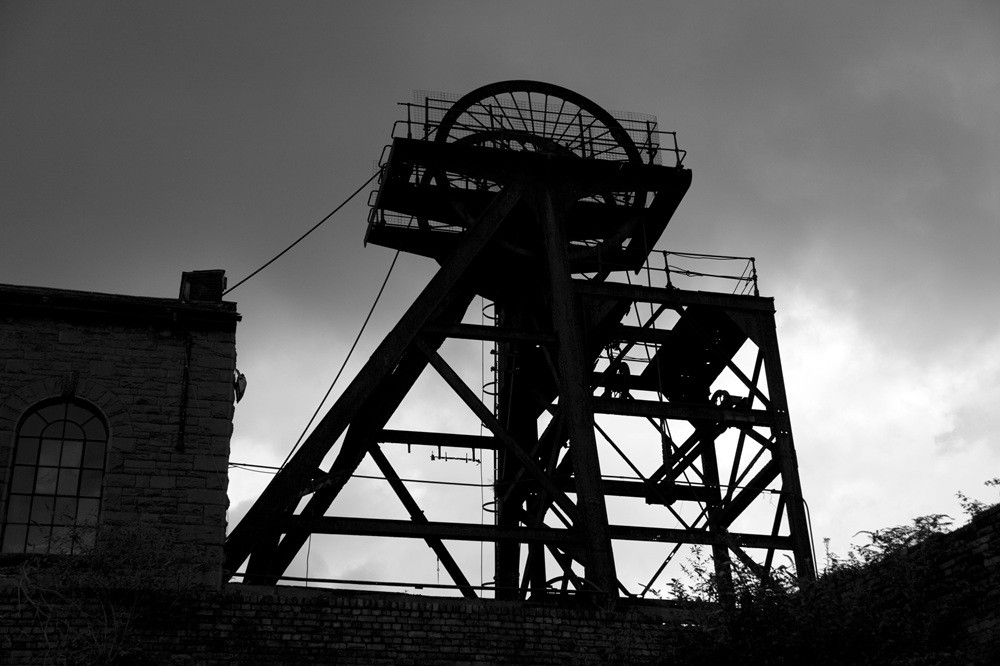
New research shows that abandoned coal mines across south Wales are leaking unknown quantities of methane – and that by 2050 they are likely to be exceeding the combined annual equivalent carbon emissions of Wales’ entire industrial and agricultural sectors.
A report from energy think tank Ember reveals that methane leakage from abandoned Welsh coal mines is unmonitored, unreported, and could be releasing levels of gas with significant climate impacts.
Abandoned mine methane (AMM) is the gas left in coal mines after operations cease, typically trapped within mine voids and unworked seams.
Once a mine closes, this gas can migrate through underground workings and escape through inadequately sealed shafts or fractured surface rock, posing public safety risks such as gas accumulation in buildings or explosions.
Methane is also a highly potent greenhouse gas, with a global warming potential up to 82 times greater than carbon dioxide over 20 years.
There is currently no official reporting of AMM emissions for Wales; instead, they are estimated as part of the UK total. Ember’s report shows that UK AMM estimates rely on a 2010 DEFRA study, and under this model Wales accounted for 49% of UK AMM emissions in 2023.
Cumulatively, this could amount to 168,000 tonnes of methane between 2026 and 2050 — equivalent to 14.1 million tonnes of carbon dioxide using methane’s short-term climate impact.
This exceeds the most recently reported annual emissions from Wales’ industrial and agricultural sectors combined.
Coal Action Network, which campaigns for the full remediation of sites blighted by the coal industry, commissioned the research after learning of significant methane leakage from Wales’ last coal mine, Aberpergwm in the Neath Valley.
Anthony Collins from Coal Action Network said: “This is a huge issue that we don’t even know the full extent of right now. We hope that bringing this to light will result in the new Welsh Government prioritising this issue and dealing with it quickly, so that this unnecessary damage to the climate can be limited.”
Coal Action Network supports Ember’s call for new regulations requiring site-by-site monitoring and measurement, and for a ban on methane venting or flaring in line with the EU’s 2024 methane regulation.
Capture
Ember’s report also highlights opportunities to capture and use the methane as an energy source.
Abandoned mine methane utilisation is the process of extracting and repurposing the methane gas that continues to be emitted from coal mines once they have ceased operations, transforming it into an energy resource rather than venting into the atmosphere.
It also prevents the public hazard of uncontrolled migration of flammable and toxic gases to the surface and can help support former coal communities by supplying low-cost fuel.
Depending on the quality of the gas and local infrastructure, the most common commercial applications for captured AMM are electricity generation, combined heat and power (CHP) and direct sale to gas pipelines.
Its capture and use have been successfully deployed across several countries, including the UK, which currently hosts 16 projects, mitigating around 17–22 kilotonnes of methane per year.
Spatial data on coal mine methane vent sites across the UK identifies 49 known methane venting sites. Of these, only 22 are currently operating; 12 have never started and a further 12 have ceased.
Three venting sites have been identified in Wales, none of which are currently operational: Ogmore Vale/Wyndham (South Wales) never started, and Pontycymmer (South Wales) and Llay (North Wales) have ceased.
While the UK had a fledgling AMM industry, its commercial growth suffered due to falling wholesale electricity prices and the fact that AMM does not qualify for renewable energy incentives.
Infinis is one of the only companies that operates on AMM capture and usage in the UK, reportedly covering 16 sites. In 2025, AMM generated a £2.3m gross profit for the group. The company reportedly exported 100 GWh of power in 2022 and 132 GWh in 2021. In 2022, this was estimated to be equivalent to around 17–22 kilotonnes of methane.
To the best of the report authors’ understanding, there are no AMM utilisation projects currently active in Wales.
Ember estimates that if the estimated Welsh AMM reserves were captured and utilised, they could generate approximately 880 GWh of electricity on average, delivering an estimated profit of approximately £19.5 million.
Monitoring programme
The report concludes by stating that the Welsh Government can act in three ways:
* Mandate source-level direct measurement: Establish a measurement and monitoring programme that requires site-level, direct measurement of methane emissions from closed and abandoned mines. The Welsh Government should work through Natural Resources Wales (NRW), planning authorities and environmental permitting systems to standardise monitoring methodologies, improve emissions transparency and develop a national evidence base for methane mitigation in Wales.
* Prohibit venting and flaring: Develop a Welsh AMM mitigation framework to minimise and progressively phase out routine venting and flaring of abandoned mine methane in Wales. The framework should align with international best practice, including principles reflected in the EU Methane Regulation, while working with the UK Government where reserved energy and emissions powers limit devolved action.
* Introduce targeted financial incentives: Develop targeted Welsh financial support mechanisms to improve the economic viability of AMM mitigation and utilisation projects. In designing these measures, the Welsh Government can draw on successful European approaches, including Germany’s long-term guaranteed energy tariffs for mine methane generation and France’s combination of tax incentives and streamlined permitting processes for AMM operators. The Welsh Government should also work with the UK Government to advocate for complementary UK-wide market incentives that support long-term investment in AMM technologies.
Support our Nation today
For the price of a cup of coffee a month you can help us create an independent, not-for-profit, national news service for the people of Wales, by the people of Wales.
Get more trusted Welsh news
Choose Nation.Cymru as a preferred source in Google News to see more of our journalism.



Measuring and valuing the methane gas given off by old coal mining shafts and adits is hugely challenging. Mining of coal in some areas started in the 16h Century. But as an example of the amount of gas produced, the Bersham coalmine near Wrexham, which closed in 1986, used to supply the Ruabon tile works with all the gas for it’s ovens baking tiles and bricks. While gas may well be able to be captured at shafts from shafts from the larger mines it would be very difficult to do so from many older workings with very limited or non-existent… Read more »
A very sensible response. There will be limited opportunities to exploit this but in those cases, it is worth considering.
Here’s how I’d approach it from a triple pronged perspective of addressing the environmental, public health and economic concerns: Install long‑term monitoring and emergency systems: Even after capture begins, mines can shift, settle, or reopen leak paths. Fit permanent methane sensors in nearby buildings and land Add automatic shut‑off valves and alarms for pressure spikes. Conduct annual integrity checks on all sealed shafts and wells Seal abandoned shafts and fractured ground: Once gas is being safely extracted, the remaining pathways must be closed. Inject grout or expanding foam into old shafts and cracks. Generate electricity or heat from the captured… Read more »
Dealing with this issue is a win-win. Every bit of methane not on the atmosphere leads to less greenhouse gases, and every bit captured is fuel that doesn’t need to be extracted from somewhere else.
The issue as with any method of energy is whether communities are properly compensated for the cost of extraction. We definitely weren’t for the coal that came out of those mines, and people have the same concerns about profits from renewables now.