
Aberfan survivors’ fight for change brought to light ahead of 60th anniversary
Amelia Jones
As Wales prepares to mark 60 years since the Aberfan disaster, a new documentary revisits the villagers’ fight to remove the danger that remained above their homes.
The story of Aberfan did not end when the rescue operation was over. For the families and survivors left behind, the years that followed brought another battle, one that would see a grieving Welsh community take on powerful institutions to protect its future.
That struggle is the focus of the documentary presented by Ammanford-born broadcaster Alex Jones, which explores the campaign to remove the coal waste tips that remained above the village after the disaster of October 21, 1966.
Aberfan: The Village That Fought Back revisits a chapter of the tragedy that has received less attention than the devastating events of that morning, when a colliery spoil tip collapsed and engulfed Pantglas Junior School and nearby homes.
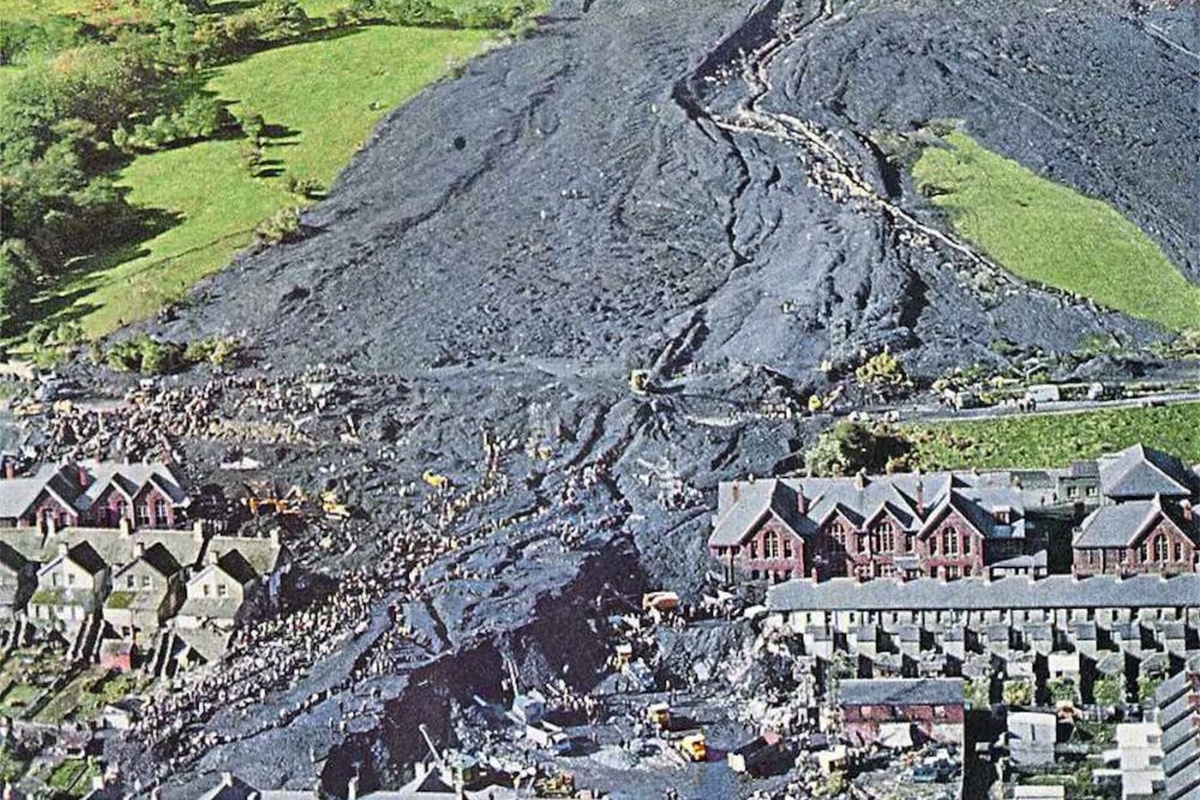
The Aberfan disaster was the catastrophic collapse of a colliery spoil tip on 21 October 1966. The tip had been created on a mountain slope above the Welsh village of Aberfan, near Merthyr Tydfil, and overlaid a natural spring.
Heavy rain led to a build-up of water within the tip which caused it to suddenly slide downhill as a slurry, killing 116 children and 28 adults as it engulfed Pantglas Junior School and a row of houses.
The tip was the responsibility of the National Coal Board (NCB), and the subsequent inquiry placed the blame for the disaster on the organisation and nine named employees.
The documentary examines how residents continued to demand action in the aftermath, challenging the National Coal Board over the dangers posed by the remaining tips and fighting to ensure their concerns were heard.
It is due to air on BBC One Wales, with a network broadcast on BBC Two. S4C will also broadcast a Welsh-language programme, Alex Jones: Un Diwrnod yn Aberfan.
In making the programme, Jones returned to south Wales to hear from people whose childhoods were shaped by the disaster.
Speaking to Radio Times, she described the experience of interviewing survivors who, despite now being in their late sixties and seventies, appeared to relive their childhood fear as they recalled that morning.
She said: “The people in front of me were in their late 60s, early 70s, but when they went back to the morning of the disaster, they were schoolchildren again. They looked so frightened.”
Jones, who has three children, spoke of the profound effect the visit had on her. She added: “I don’t know whether it was tougher being a mum myself, but it’s the saddest thing I’ve ever seen. It absolutely floored me.”
Jeff Edwards
One of the people Jones met during filming was Jeff Edwards, who was seven when he survived the collapse at Pantglas Junior School. He was the last child to be pulled alive from the wreckage.
A photograph of Edwards being rescued as a young boy remains a powerful image associated with the disaster.
Jones said: “There’s a photograph of Jeff when he’s seven years old with bright blond hair, being pulled out of the rubble, and that picture tells a thousand stories.”
His account forms part of the documentary’s wider exploration of the lives forever altered by the disaster and the determination of a community that continued to fight for change long after the world’s attention had moved elsewhere.
As the 60th anniversary approaches on October 21, the documentary offers an opportunity to remember not only those who died at Aberfan, but also the people who continued to demand answers and action in the years that followed.
You can watch it on October 21 on BBC One Wales or watch it in Welsh on S4C.
Support our Nation today
For the price of a cup of coffee a month you can help us create an independent, not-for-profit, national news service for the people of Wales, by the people of Wales.
Get more trusted Welsh news
Choose Nation.Cymru as a preferred source in Google News to see more of our journalism.