


Adults feel disconnected from society and lack faith in others – poll
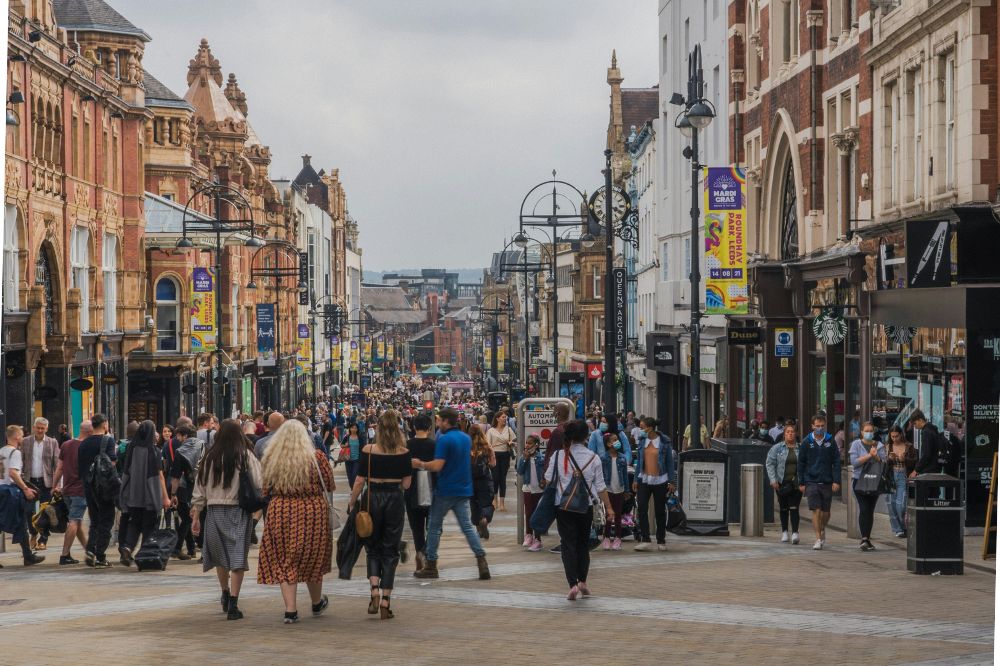
Adults in the UK feel disconnected from society, wary of other people and worried about community tensions, a major new poll has found.
A survey of more than 13,000 British adults found 50% said they felt disconnected from society, while 44% said they sometimes felt like a “stranger” in their own country.
The findings come a week after Sir Keir Starmer argued that Britain risked becoming an “island of strangers” if immigration did not come down.
But the poll by More In Common suggested that the reasons for disconnection went beyond immigration and culture, with 47% of British Asians saying they felt like a stranger in their country – more than the 44% of white adults who said the same thing.
Insecurity
The survey found economic insecurity that was most closely related to alienation, with two-thirds of people who said that they struggled to make ends meet also saying they felt disconnected, compared to only 37% of the financially comfortable.
Focus groups also suggested that a decline in face-to-face interaction, driven by technology, social media and working from home, had changed how people interacted with each other.
Luke Tryl, director of More In Common, said the research showed “an urgent need to think again about how we rebuild a united and cohesive society”.
He added: “The polling puts into sharp relief something that will come as no surprise to many Britons – a growing sense that we’ve turned inward, away from each other, becoming more distant and less connected.”
The study marks the launch of a new national project – This Place Matters – focused on strengthening social bonds and backed by the UCL Policy Lab, campaign group Citizens UK and More In Common.
Listening
Matthew Bolton, executive director of Citizens UK, said: “The answers to this don’t lie in Whitehall.
“By listening to people closest to the ground about what causes division and what builds unity in their neighbourhood, we can build a blueprint for cohesion rooted in local leadership and community power.”
As well as increasing feelings of isolation, the poll suggested significant rates of mistrust, with 53% of people agreeing that “you can’t be too careful with most people”.
But younger people were far more likely to lack trust in others, with the figure rising to 65% among 18-24-year-olds and 62% among 25-34-year-olds.
The public is also split on whether multiculturalism benefits or threatens Britain’s national identity, with 53% saying it is a benefit and 47% saying it is a threat, with some telling focus groups they believe there has not been enough integration.
More In Common said focus groups had shown the fallout from last year’s riots “continues to reverberate and affect community cohesion”, with many seeing the Prime Minister’s response as “one of his most impressive moments”, but a minority feeling the Government had been “too heavy-handed”.
The More In Common poll surveyed 13,464 British adults between March 14 and April 7.
Support our Nation today
For the price of a cup of coffee a month you can help us create an independent, not-for-profit, national news service for the people of Wales, by the people of Wales.



So Keir, it’s the economy, stupid. That and the damage done by social media. Maybe taxing and regulating the latter properly would improve the former?
It’s a thought. Or you could just carry on going after the wrong people to try and fix the economy and increase people’s disconnection from society, while jumping on the populist bandwagon of blaming immigrants. The “country of strangers” speech was again, extremely disappointing. What kind of government is this?
I thought it was generally agreed that you don’t ask leading questions in surveys.
There’s no such thing as society.
‘The public is also split on whether multiculturalism benefits or threatens Britain’s national identity, with 53% saying it is a benefit and 47% saying it is a threat, with some telling focus groups they believe there has not been enough integration.’ My impression is that this trend has been brewing at least since the 1960s when I was a teenager. I grew up in Manchester, a city which experienced significant inward migration from the Commonwealth which became noticeable from the 1950s onward. The first wave was of people from the British Caribbean, which in my recollection didn’t trigger much adverse… Read more »
Pa syndod. Broken Britain. Dyma geir o arddel y diwylliant Sacsonaidd unigolyddol a materol.
Since the stupidity vote in 2016, it’s easy to feel isolated from the surge of populism and deeply historic racism that’s fed back into society. I personally distrust anything that goes down the multi culture road,never fill in a survey on cloour or faith. As its weapons for the people I feel threaten our way of life. What is it to be British, no idea as I have never felt its my identity. Now to be Welsh felt something positive, once you ignored the insults. But even that is tainted by the feed of far right lies.
It wasn’t a stupidity vote. For some it was an act of desperation. For the rest it was an eyes-wide-open vote to destroy for kicks and giggles, no different to the kids that set fire to mountains.