


AI Minister Kanishka Narayan criticised in new book
Martin Shipton
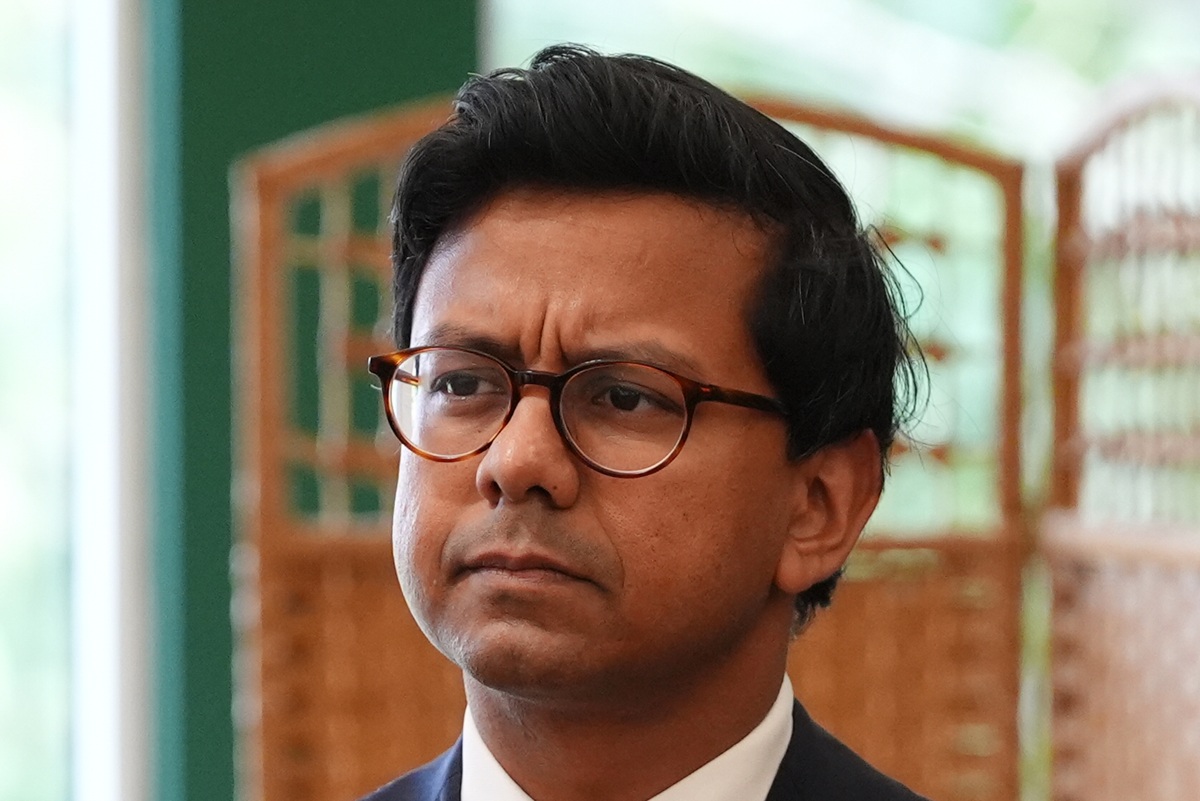
Concerns have been raised about the network of public- and private-sector connections involving Artificial Intelligence Minister and Welsh Labour MP Kanishka Narayan.
Author Thomas Vale has investigated Mr Narayan’s career in The Bridge, a book of more than 400 pages examining those connections.
Born in India, Mr Narayan was educated at Cathays High School in Cardiff before winning a scholarship to Eton.
Asked to explain his findings, Mr Vale told Nation.Cymru: “My concern about Kanishka Narayan is a pattern: he helps shape government policy, moves into private finance, then returns with authority over technologies that remake public services and private fortunes. Revolving doors, donor access, overlapping networks and ‘British’ branding need published safeguards — not reassurance.”
Mr Vale questioned the safeguards surrounding Mr Narayan’s move into private finance, citing his work on the government’s 25-year environment plan and his subsequent employment at Lazard.
“His reported Lazard employment began in 2016; the finished plan was not published until January 2018,” he said.
“He was advising businesses while a policy he had helped prepare remained closed to the public — existence known, confidential detail not. Environmental rules can move asset values.
“What unpublished proposals had he seen? Could that have benefited him, Lazard or its clients? Who approved the move, and were commercial assignments checked against his government work? Where are the records?”
The author also called for clarity about any continuing interests or relationships arising from Mr Narayan’s work with Atomico and California-based Clocktower, and how these were separated from his ministerial responsibilities.
“Finance experience can qualify someone for office. It also makes transparent safeguards non-negotiable — especially once he delivers bilateral technology and trade deals,” he said.
Mr Vale linked those questions to Mr Narayan’s involvement in technology and trade arrangements with India. He cited a description by the minister’s uncle of him as “a proud Bihari and an Indian first”.
“Birthplace is not the issue. Conduct, interests and accountability are — when the same minister delivers sensitive technology and trade arrangements with India,” Mr Vale said.
He argued that Parliament needed independent technical expertise and access to the terms of the Technology Security Initiative, which covers AI and biotechnology.
“Jonathan Powell leads the security discussions; Narayan explains delivery to Parliament. One man sells the programme politically; another, from the Blair machine, holds the security relationship. Ministerial assurance is not enough,” he said.
Mr Vale also drew attention to the timing of the announcement of Britain’s trade agreement with India on May 6, 2025, and the start of Operation Sindoor that night.
“Trade, technology and geopolitics sit around the same relationship — which is why money and access that touch it matter,” he said.
Donations
The author raised questions about donations and subsequent contact with donors.
“In July 2025, Vijay Goel’s company, India Legal Services, donated £4,000 to Narayan. He returned it on 6 September, the day before he became AI minister,” Mr Vale said.
“Later that month he appeared at Goel’s IEBF forum. Goel also became a director of Prisma AI (visual AI and biometrics). Access continued after the cheque was returned. What meetings and conflict checks accompanied that sequence?”
Mr Vale said Mundev Wouhra subsequently donated £20,000 in two instalments: £10,000 on December 6, 2025, and £10,000 on February 6, 2026.
“Wouhra’s interests include the Indian agro-commodities company NDSW — a sector exposed to opportunities opened by the UK–India free trade agreement. What meetings, representations and decisions sat beside that money?” he asked.
The author also called for a consolidated account of interests and responsibilities involving NHS data, AI investment and people connected to former prime minister Tony Blair.
“Narayan has declared that a close family member holds a senior NHS clinical-information role. His brother Gautam works in the NHS,” Mr Vale said.
“Euan Blair’s Multiverse trains NHS staff to use Palantir’s platform. Euan’s wife, Suzanne Ashman, leads Sovereign AI investment inside Narayan’s portfolio. Separate declarations are not enough: the public needs one account of responsibilities, interests and recusals across the set.”
Mr Vale pointed to the Tony Blair Institute’s promotion of government AI adoption and its support from Oracle founder Larry Ellison. The institute denies promoting Oracle’s commercial interests.
He also cited Mr Powell’s former role as Mr Blair’s chief of staff, Mr Goel’s description of himself as a Hinduja Group adviser and earlier reporting involving Mr Powell and Hinduja donations.
“Who examines these relationships together? Fragmented forms cannot show whether overlapping interests shape advice or decisions,” Mr Vale said.
Control
The author questioned whether the government’s description of “sovereign AI” was supported by enforceable British control over privately owned computing infrastructure.
He cited Mr Narayan’s appearance at Founders Forum on February 10, 2026, where, he said, the minister celebrated Arm as a British pioneer and presented the UK AI Security Institute as a national strength.
“Arm’s British base does not erase SoftBank’s majority ownership. A data centre on British soil, powered by British electricity and accelerated by British planning, does not put computing power under British control,” Mr Vale said.
“Ownership, operating rights and contractual access decide who can use the machines — not the building’s postcode.”
He argued that the existence of publicly funded research computing did not resolve questions about the much larger private developments planned for AI Growth Zones.
“Can Britain reserve capacity in an emergency, stop a supplier prioritising another government, or control the software public services depend on?” he asked.
Mr Vale raised similar concerns about the AI Security Institute’s access to systems developed by private companies.
He cited what he described as Anthropic’s temporary worldwide suspension of Fable 5 and Mythos 5 in June following US export controls, and reports that Mythos 5.1 had been withheld from the institute’s pre-release testing.
“The institute Narayan holds up as British safety leadership still depends on suppliers for the systems it must assess. How does Britain independently test systems suppliers can withhold?” he said.
“‘AI safety’ is not an answer without independent access and the power to challenge the companies that make the systems.”
Military uses
Mr Vale also questioned what control Britain would have over the use of privately owned computing infrastructure during an international conflict.
“Across the five AI Growth Zones, eight of the twelve principal commercial organisations already had a documented role serving, financing or building for the American defence, intelligence or classified computing system,” he said.
“Those same firms sit on British land and power, accelerated with planning speed, grid priority and public backing.”
He asked whether computing capacity supported by British infrastructure could be used for foreign military or intelligence purposes through private contracts.
“Public Growth Zone documents have not published a programme-wide prohibition on foreign military or intelligence workloads, nor a British right to see customer nationality and workload category across the private estate,” he said.
“Without those terms, ‘sovereign AI’ is a slogan, not a guarantee.”
Mr Vale concluded by calling on the minister to publish safeguards and explain any continuing interests arising from his career in government and finance.
“My concern is this: public policy is creating private opportunity — and private dual-use capacity — faster than the public can understand or challenge it,” he said.
“The public deserves evidence of independence, enforceable control, and identifiable people with the power to say no.”
We sought a response from Mr Narayan’s constituency office, which referred us to the UK Government’s Cabinet Office.
We sent Mr Vale’s comments to Mr Narayan via his ministerial office but received no response.
A Kindle edition of The Bridge by Thomas Vale can be bought for £4.99 from Amazon UK.
Support our Nation today
For the price of a cup of coffee a month you can help us create an independent, not-for-profit, national news service for the people of Wales, by the people of Wales.
Get more trusted Welsh news
Choose Nation.Cymru as a preferred source in Google News to see more of our journalism.


