


AI-powered device developed by Welsh researchers could revolutionise fruit ripeness testing
Nation.Cymru Team
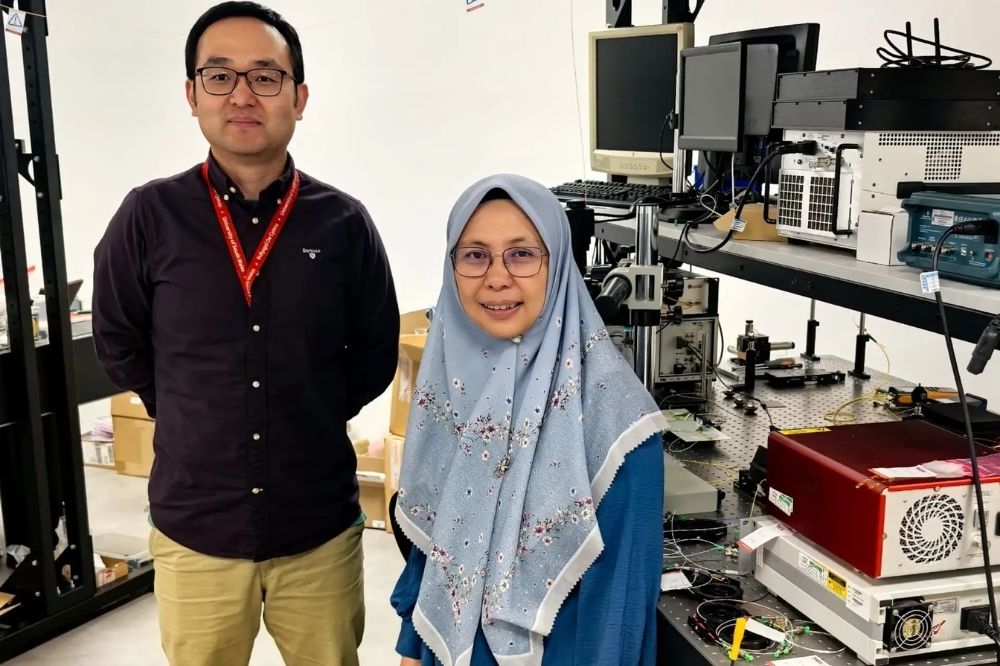
Researchers at a Welsh university are part of an international research and innovation partnership to develop a low cost, portable, AI assisted device that could transform how the ripeness of one of Malaysia’s most valuable fruit exports is assessed.
The project brings together UK and Malaysian researchers to address a long‑standing challenge with durian, a fruit whose ripeness is traditionally judged through tapping, smelling, or visual inspection.
These methods are subjective and often inconsistent, and, as a result, fruit is frequently harvested too early or too late, contributing to post‑harvest waste, rejected exports, financial losses, and uneven quality, particularly in premium markets such as China and Singapore.
The University of South Wales (USW), which has received £80,000 from the International Science Partnerships Fund for the research, is working in collaboration with Universiti Kebangsaan Malaysia (UKM) and the Malaysian Agricultural Research and Development Institute (MARDI), to develop a hand‑held Raman spectroscopy device enhanced with artificial intelligence. The Malaysian government has given £80,000 to the project.
This technology allows durians to be scanned non‑invasively, analysing subtle molecular changes inside the fruit to determine its ripeness, both accurately and in real time.
Optical sensor
USW researchers are responsible for the design and engineering of the compact, low‑cost optical sensor, drawing on the University’s expertise in optoelectronics and portable photonic systems. Unlike existing laboratory‑based technologies that are expensive and impractical for farms, the new device is specifically designed to be affordable, robust, and field‑ready – making it accessible to farmers, processors, and exporters.
The system uses a simplified optical approach focused on key spectral markers associated with starch breakdown during ripening. These measurements are combined with machine‑learning models to classify fruit as unripe, ripe, or overripe, with results delivered through a simple, user‑friendly interface suitable for non‑specialists.
Field research and AI model development are led by UKM, with data collected from orchards and packing facilities, focusing particularly on Musang King, Malaysia’s flagship durian variety.
Ripeness is tracked from harvest through the first seven days after the harvest and validated against established indicators, such as firmness, sugar content, and expert sensory grading.
MARDI supports the project through access to orchards, logistics networks, and industry stakeholders, helping ensure the technology is practical, scalable, and aligned with real‑world farming needs.
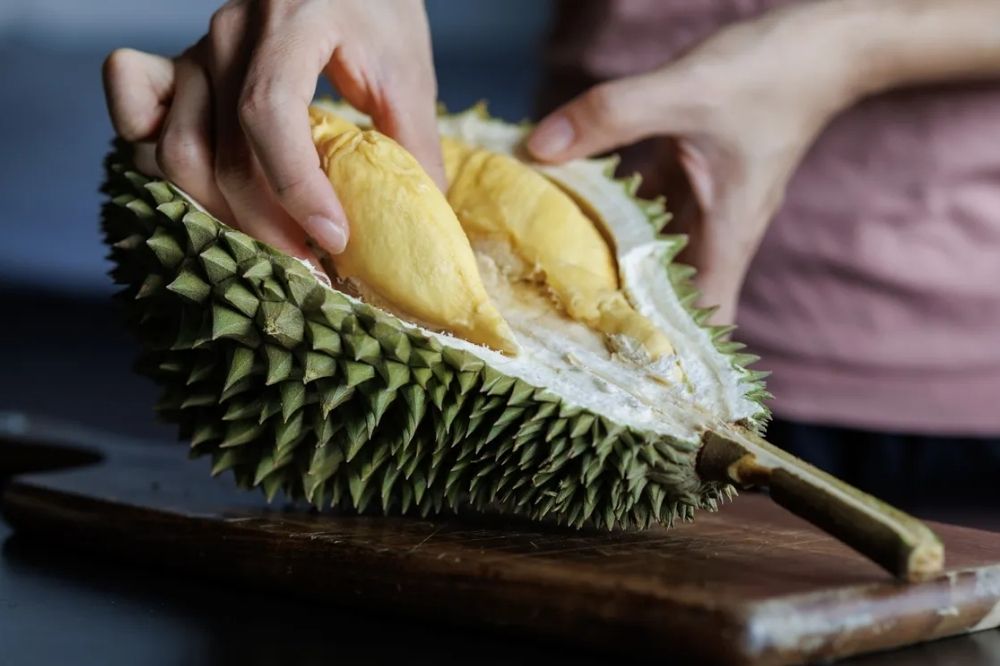
The project also has a strong economic and social focus. Around 70% of Malaysia’s durian producers are smallholder farmers, many of whom lack access to objective quality‑control tools. By enabling more accurate grading at the farm level, the technology aims to reduce waste, improve export reliability, and increase incomes, while supporting more inclusive participation in the agri‑food economy.
The initiative aligns with Malaysia’s National Agrofood Policy 2.0 and demonstrates how international collaboration in research and innovation can support digital transformation, sustainability, and prosperity.
The research team sees potential to adapt the approach for other tropical fruits, reinforcing the UK–Malaysia partnership in smart agriculture.
“This project demonstrates how AI‑enabled photonics can move beyond the laboratory and into real agricultural environments,” said Dr Kang Li, Senior Research Fellow in Optoelectronics at the University of South Wales.
“By developing a low‑cost, portable sensing device, we aim to deliver practical, reliable tools that help farmers improve quality, reduce waste, and strengthen international supply chains through research and innovation.”
This research was supported by the British Council under the International Science Partnerships Fund (ISPF).
Support our Nation today
For the price of a cup of coffee a month you can help us create an independent, not-for-profit, national news service for the people of Wales, by the people of Wales.
Get more trusted Welsh news
Choose Nation.Cymru as a preferred source in Google News to see more of our journalism.


