


All monitored salmon rivers in Wales now ‘at risk’
Nation.Cymru staff
Every principal salmon river monitored in Wales has been classified as “at risk” as populations of the species continue to decline.
The latest annual assessment found salmon numbers remain below the levels needed to give confidence that populations can be sustained in the long term without continued intervention.
The 2025 assessment also recorded the lowest rod catches since records began in 1956.
Across England and Wales, just two of the 64 principal salmon rivers assessed were estimated to have populations above their Conservation Limit, with the vast majority considered at risk.
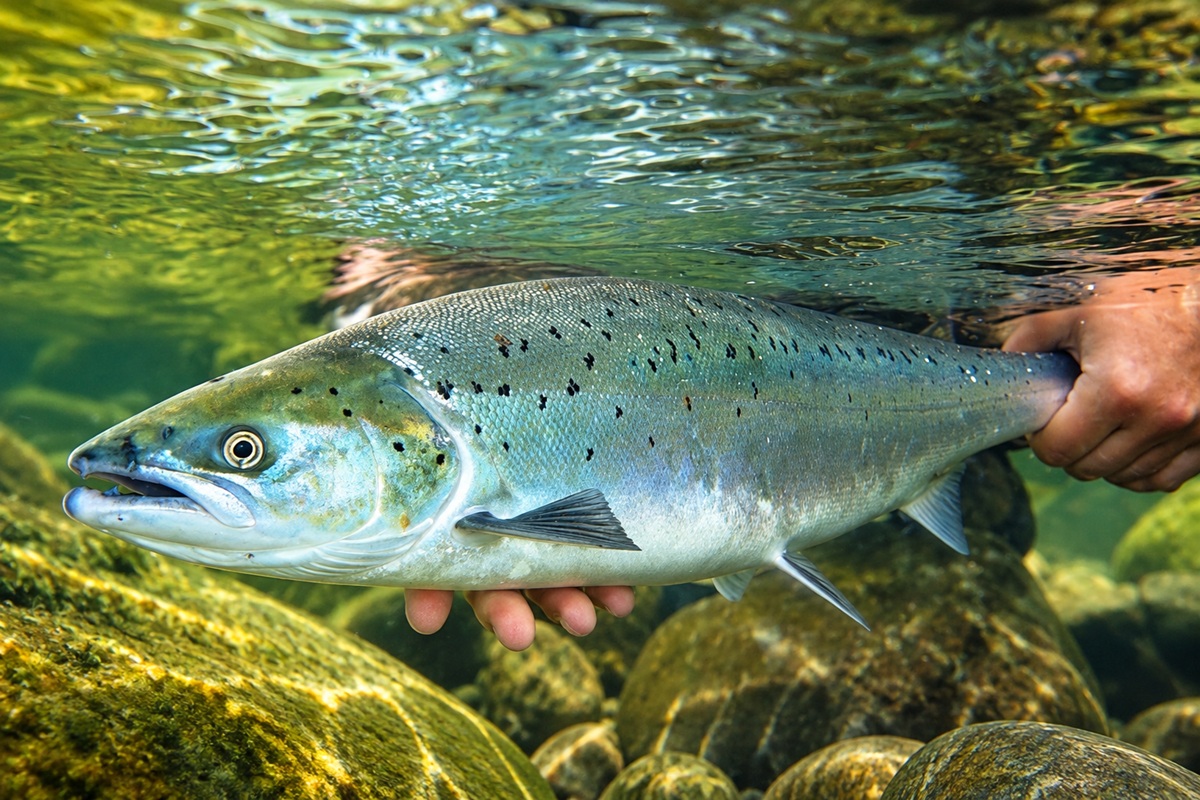
Natural Resources Wales (NRW) said Atlantic salmon were facing pressures throughout their lifecycle, including climate change, deterioration of habitats, barriers preventing migration and problems with water quality.
Dr Ben Wilson, NRW’s Principal Fisheries Advisor, said: “The picture for salmon in Wales remains deeply concerning. All of our assessed salmon rivers are now classified as ‘at risk’, and too few salmon are returning from the sea to sustain healthy populations into the future.
“We understand the seriousness of that situation, and we are treating it with the urgency it deserves.
“While there is no quick fix for a species facing pressures at sea and in our rivers, we are working with partners across Wales to restore habitats, improve fish passage, strengthen river resilience and give salmon the best possible chance of recovery.”
A series of projects are under way in an attempt to reverse the decline.
NRW said three major fish passage schemes delivered through the Salmon 4 Tomorrow programme had improved access to more than 50km of river habitat for migratory fish.
Other restoration projects have improved access to more than 33km of river and enhanced more than 42km of riverside habitat.
Work is also being carried out through the LIFE Dee River and Four Rivers for LIFE projects.
The schemes have included removing barriers to fish migration, improving river habitats and planting thousands of trees to increase the resilience of rivers.
The latest assessment comes shortly after the publication of the Climate Resilient Fisheries Strategy 2026-2031, which sets out plans to support fish populations and sustainably managed fisheries in Wales.
Dr Wilson added: “Our new Climate Resilient Fisheries Strategy provides a clear framework for this work.
“It will help us focus our efforts where they can make the greatest difference for fish populations, river ecosystems and the communities that care about them.”
Migrate
Atlantic salmon migrate from rivers to the sea before returning to freshwater to spawn, meaning conditions in both marine and freshwater environments can affect their survival.
The annual salmon stock assessment is produced jointly by the Centre for Environment, Fisheries and Aquaculture Science (Cefas), the Environment Agency and NRW.
Its findings are used to inform fisheries management and conservation measures across England and Wales.
The full results of the stock assessment can be seen here.
Support our Nation today
For the price of a cup of coffee a month you can help us create an independent, not-for-profit, national news service for the people of Wales, by the people of Wales.
Get more trusted Welsh news
Choose Nation.Cymru as a preferred source in Google News to see more of our journalism.


