


Andy Burnham backtracks on return of Parthenon sculptures to Greece
Nation Cymru staff
Andy Burnham has been attacked for seemingly backtracking on his previous calls for the British Museum to send the Parthenon sculptures back to Greece, ‘no strings attached’.
In a report from The Financial Times, titled Andy Burnham retreats from backing return of Parthenon sculptures to Greece, the news organisation has reported that the Prime Minister now maintains that the future of the 2,500-year-old sculptures is an issue that the British Museum must resolve.
The Financial Times writes that in 2023, Burnham said that the Parthenon sculptures should be sent back to Greece with “no strings attached” – and over two decades ago, in 2002, the new Prime Minister supported a change to the law to facilitate the move.
In the new interview with the Financial Times this week, Burnham is quoted as saying: “Ultimately it’s an issue for the British Museum, isn’t it?”
“Legally that’s where that issue rests, but I’m all in favour of using British cultural diplomacy. That’s something that I’m hugely in favour of.”
The article adds that Burnham’s bid for PM raised hopes across Greece that he might intervene, with Greek paper Ta Nea running the headline: “Will Britain’s next Prime Minister become Greece’s strongest ally yet in Downing Street?”
The paper investigated Burnham’s record on the sculptures, which the Financial Times says includes “his co-sponsoring in 2002, a year after being elected MP for Leigh, of an unsuccessful House of Commons private members’ bill to facilitate their transfer”.
They write that this bill would have amended the 1963 British Museum Act, which stops the British Museum permanently handing back the sculptures.
During the reopening of the Manchester Museum in February 2023, Burnham, then Greater Manchester mayor, was asked directly if British Museum chair George Osborne should give the sculptures back to which he replied: “Yes, George Osborne should give the Elgin Marbles back.”
Shortly afterwards, the now-PM wrote on social media: “Send them back, no strings attached. And let’s use culture to change how Britain is seen around the world.”
The British Museum told the Financial Times: “Discussions with Greece about a Parthenon Partnership are ongoing and constructive.
“We believe that this kind of long-term partnership would strike the right balance between sharing our greatest objects with audiences around the world, and maintaining the integrity of the incredible collection we hold at the museum.”
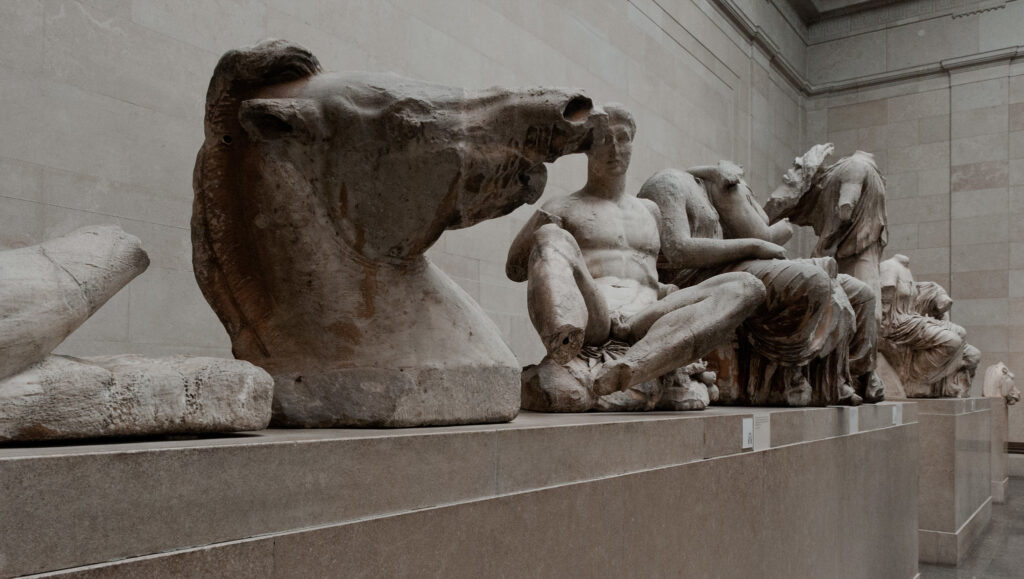
Elgin Marbles
The sculptures were removed from the Acropolis in Athens by English diplomat Lord Elgin in the early 1800s and have since been kept in the British Museum.
Greece has long maintained that the Parthenon sculptures were illegally removed from their place high atop Athens’ acropolis during a period of foreign occupation, and has called for their return.
The British Museum is forbidden by law from giving away any of its artefacts, and the Labour Government under Kier Starmer had maintained that they have “no plans to change the law that would permit a permanent move”, according to the then-Prime Minister’s official spokesman.
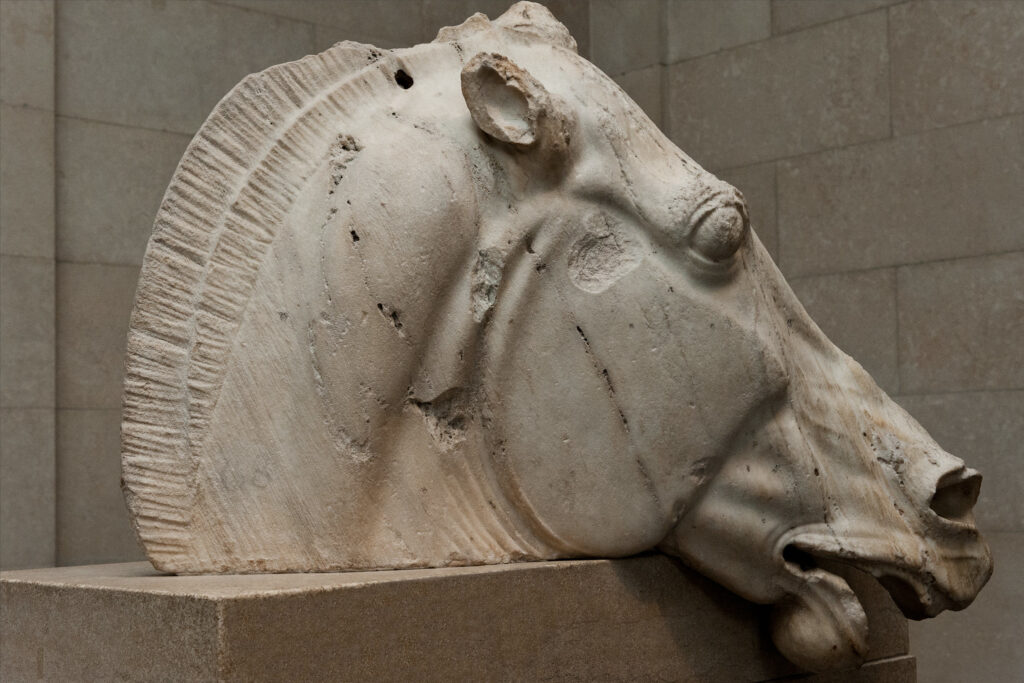
The Greek government contends their removal was illegal and has long sought their return, seeking to reunite them with other Parthenon artefacts displayed in a museum in the Greek capital.
The President of Greece, Constantine Tassoulas is a leading advocate for the return of the Elgin Marbles from the British Museum to Greece.
A lawyer by trade, Mr Tassoulas is a member of the governing centre-right New Democracy party and served as culture minister a decade ago.
During this time, he helped reinvigorate Greece’s campaign to reclaim the 2,500-year-old sculptures, which were previously referred to as the Elgin Marbles, having been named after Thomas Bruce, the 7th Earl of Elgin, who removed the ancient Greek sculptures from the Parthenon in Athens between 1801 and 1812 while serving as the British ambassador to the Ottoman Empire
During his tenure as culture minister, Tassoulas hosted lawyer Amal Clooney in Athens, who lent her support to the country’s bid for the sculptures’ return. Mrs Clooney helped raise international awareness of the campaign.
In December 2024, No 10 said the Parthenon sculptures’ future is “entirely” in the hands of the British Museum, amid reports its negotiations with the Greek government are progressing, but the issue was buried soon after the fanfare of a visit from Prime Minister of Greece, Kyriakos Mitsotakis died down.
Mr Mitsotakis had compared splitting the Elgin Marbles from those still in Athens to cutting the Mona Lisa in half.
Some of the remaining temple statues are on display in the purpose-built Acropolis Museum in Athens, and Greece continues its called for the collections to be reunited.
Greek officials had been hopeful that a return of the sculptures would be more likely due to the Labour Government’s perceived openness to loan agreements, but Burnham’s latest statements only serve to provide more uncertainty.
Read the Financial Times article in full here.
Support our Nation today
For the price of a cup of coffee a month you can help us create an independent, not-for-profit, national news service for the people of Wales, by the people of Wales.
Get more trusted Welsh news
Choose Nation.Cymru as a preferred source in Google News to see more of our journalism.


