


Andy Burnham prioritises tackling homelessness with vow to end rough sleeping
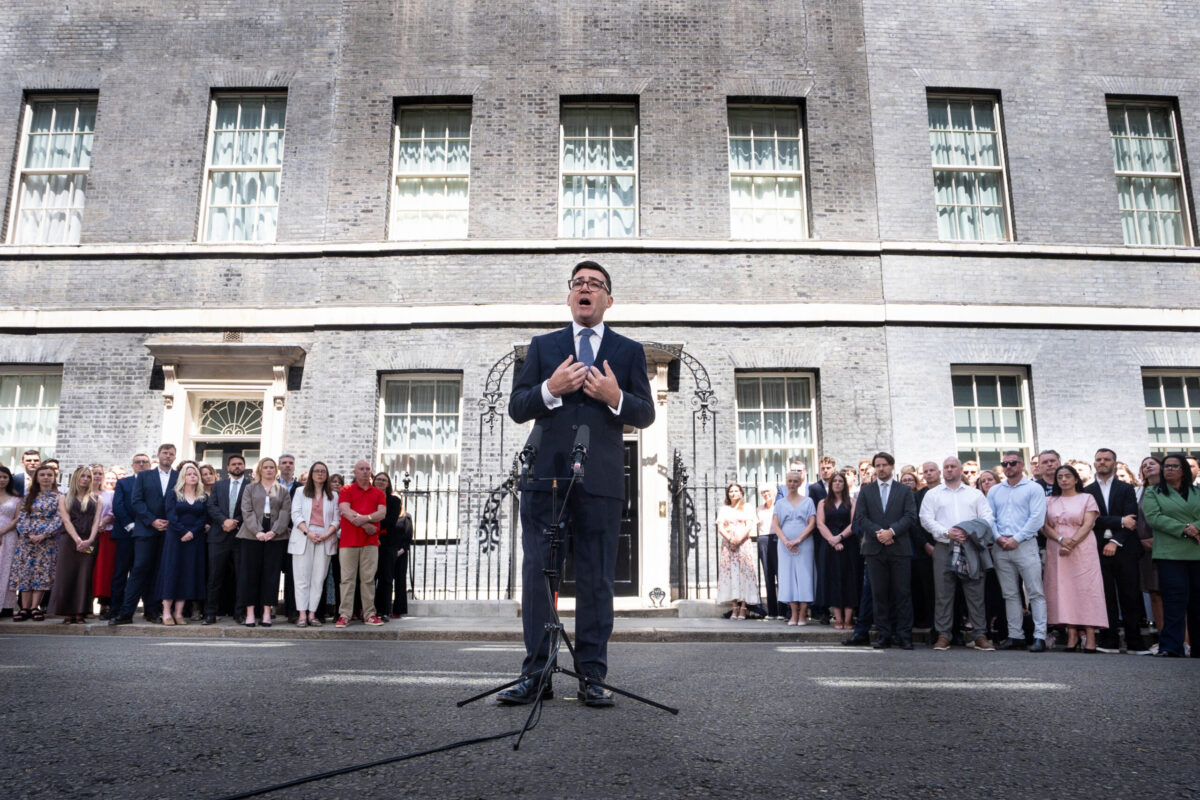
Andy Burnham pledged millions in funding to help at least 3,000 rough sleepers, as he made tackling homelessness his first official policy announcement as prime minister.
The new leader, in a promise which does not appear to have a specific target deadline, committed his Government to “finally end long-term rough sleeping across the UK at the earliest opportunity”.
The issue is something he also had a focus on as Greater Manchester mayor – although official figures suggested the number of rough sleepers rose there in recent years.
Speaking in Downing Street, in his first speech as PM, he told gathered supporters and journalists that the first instruction he would deliver as leader would be “to end rough sleeping in our country”.
In further details set out by No 10, £340 million funding was announced to go towards acquiring suitable homes, identifying those most in need and starting to provide housing and support “without delay”.
The funding will provide 1,200 homes and intensive support for at least 3,000 long-term rough sleepers over a five-year period, the Government said.
The money, said to be from within uncommitted Ministry of Housing, Communities and Local Government budgets, will be on top of the previously announced £3.6 billion funding under the National Plan to End Homelessness – which came under Sir Keir Starmer’s premiership – bringing the total to over £3.9 billion.
In a written statement provided by No 10, Mr Burnham said: “For too long, we’ve been told that ending rough sleeping will take decades or even that it’s impossible. I’m not having that.
“This is something a government can fix if it chooses to. Today, I’m choosing to.
“On my first day as Prime Minister, I’m announcing this Government’s commitment to finally end long-term rough sleeping across the UK at the earliest opportunity.”
He said the move will bring together national and local government “with the investment needed to get it done” and said it was part of an effort to “bring back hope”.
No 10 described the funding as the first phase of investment “in a wider five-year programme that will provide homes and support for thousands of the people facing the most severe and long-term homelessness”, with further steps to be set out before autumn.
Just hours before formally becoming the UK’s new leader, Mr Burnham visited homelessness charity The Passage in Victoria, London.
The organisation has the Prince of Wales as its royal patron, with William having first visited in 1993 alongside his mother Diana, then Princess of Wales.
Mr Burnham said his early morning visit was the “best place to start” ahead of his premiership, visiting such a charity to see “the lives that are being turned around”.
His pledge fits with a focus of William, with the future king having launched his Homewards initiative in 2023, working to end homelessness.
In a speech the following year, the royal stated: “Homelessness is a complex societal issue and one that touches the lives of far too many people in our society. However, I truly believe that it can be ended.”
Rough sleeping is one form of homelessness, involving people sleeping on the streets, while other forms can include living in temporary accommodation provided by a local council.
Under Mr Burnham’s mayorship, Greater Manchester ran “A Bed Every Night” programme – to which the politician pledged to donate at least 15% of his salary – to help bring rough sleepers in off the streets.
But official figures published in 2025 by the Greater Manchester Combined Authority showed the number of people seen sleeping rough on a single night in Greater Manchester rose by 3.4% to 154 in autumn 2024 from 149 in 2023.
The authority said this was still below 268 at the peak in 2017.
Pressed on the rise, during an interview at The Passage on Monday, Mr Burnham suggested support is needed across the board to make a difference.
He referred to the “Everyone In” scheme during the Covid-19 pandemic, when thousands of rough sleepers across England were taken in off the streets – and said the 600 beds-a-night Manchester scheme could not tackle the issue alone.
He said: “It taught me that the only way is to do this together. Everybody pulling in the same direction, Everyone In, as we did in the pandemic – because we did bring people inside in the pandemic and that’s what I’m saying as I go into government today.
“We did it then. We can do it now. Get the basics right. Put a care for people at the heart of everything that we do and just get this country working as it should again.”
He described The Passage as “an amazing shelter that supports people who are street homeless, people recovering from homelessness”.
After accompanying charity workers out on the streets on their daily check-in with rough sleepers, Mr Burnham helped chop mushrooms for the day’s meals.
The latest annual national statistics, published by the Government in February this year, estimated there were 4,793 people sleeping rough on a single night in autumn 2025 in England.
This was a new record high and the fourth annual increase in a row.
Figures published in April showed 3,944 people were sleeping rough in London in January-March 2026.
Homeless Link, which manages the Combined Homelessness and Information Network (Chain) homelessness database report, said this was down from 4,427 in the same period in 2025.
Analysis of annual figures showed that around a fifth of London’s new rough sleepers were people who had last been in asylum accommodation.
The findings show the asylum system remains “a significant route onto the streets of the capital”, researchers from Chain said.
There were 4,978 people on London’s streets in the year to March with information recorded about where they were last settled.
Of those, 21% or 1,037 people reported that they had been staying in asylum support accommodation.
Meanwhile, official Government figures showed a slight fall in the number of households in temporary accommodation – the first reduction in three years.
Temporary accommodation is a form of homelessness and can include hostels, refuges, and bed and breakfasts.
There were 134,210 households in such accommodation at the end of December 2025, down from 134,700 at the end of September 2025, according to official data published by the Ministry of Housing, Communities and Local Government in April.
But while the latest number dropped slightly below the previous record levels, it was still 5.0% higher than the figure for the end of December 2024 which was 127,820.
The number of children in temporary accommodation has, however, continued to rise, standing at 176,130 at the end of December, up from 175,930 at the end of September.
The number was up 6% year on year, from 165,450 at the end of December 2024.
Lord John Bird, crossbench peer and founder of the Big Issue, described Mr Burnham’s first pledge as PM as “bold”, commending him for being “a Prime Minister with his priorities straight”, while the Crisis charity praised him for taking “a significant shift away from a series of expensive temporary fixes and towards a Housing First approach to homelessness”.
The Conservatives, on leaving government in 2024, failed to meet their pledge to end rough sleeping – instead seeing the number double compared with when the party took power in 2010.
The Tory government strategy had committed to “intensify” efforts to tackle homelessness and rough sleeping, stating that an end goal was for “rough sleeping to be prevented wherever possible but when it does occur, it must be rare, brief and non-recurring”.
Instead, the latest available figures at that point estimated the number of people sleeping rough on a single night in autumn in England in 2023 was 3,898 – more than twice that of the 1,768 figure in 2010.
Support our Nation today
For the price of a cup of coffee a month you can help us create an independent, not-for-profit, national news service for the people of Wales, by the people of Wales.
Get more trusted Welsh news
Choose Nation.Cymru as a preferred source in Google News to see more of our journalism.


