


Animal testing in Wales falls amid ‘meagre’ decrease across whole of Great Britain

Stephen Price
Animal testing in Wales fell by over 19% in 2024 according to recently published figures, but an overall decrease of just 2% across Great Britain highlights the urgent need for the UK Government’s strategy to phase out animal testing according to campaigners.
In newly published figures, there were 25,718 uses of animals in scientific procedures in Wales in 2024, compared to 31,940 in 2023.
Animal protection NGO Cruelty Free International (CFI) has acknowledged the slight decrease in the total number of animals used, as reported by the Home Office, but warns that the pace of change remains so painfully slow that cruel animal testing looks set to continue for decades to come.
There were 2,637,578 uses of animals in laboratories in Great Britain in 2024.
This incremental progress, a ‘meagre’ 2% decrease from 2023 according to CFI is not enough to meet public expectations or scientific potential, and leaves the government at risk of falling short in its manifesto commitment to work to phase out animal testing.
Procedures
The number of animals used in experimental procedures fell by 3% in 2024, to 1.43 million. There was virtually no change in the creation and breeding of genetically altered animals – those whose genes have been modified but have not then been used in further
tests. This accounted for 54% of all uses (1,430,020).
Animals used in regulatory testing, including the standardised tests designed to assess the safety or effectiveness of chemicals, medicines and other products and routine production, using animals to produce things like antibodies, accounted for 22% of the total (315,290), a 3% increase on 2023.
Basic research, curiosity-driven research that attempts to shed light on biological processes, accounted for 52% of the total number of animals used in experiments (741,555), a 4% decrease on last year; translational research, research that attempts to develop treatments or cures for diseases, 24% (339,673, an 8% decrease); and other areas of animal use, including higher education, species preservation and protection of the environment, 2% (33,502, an increase of 36% on 2023).
Of the 2.64 million uses of animals in 2024, 18.5% were considered by researchers to have caused moderate or severe pain and suffering to the animals involved, including long-term disease and even death. These two categories involved a total of 488,255 animals.
Rise in use of some animals
The total number of experiments on dogs fell by 30%, to 2,646. There was an 11% decrease in experiments on monkeys, to 1,936, a 31% decrease in the use of rabbits, to 6,195, and a 28% decrease in the use of guinea pigs, to 2,698. However, there was a 30% increase in experiments on cats, to 82, and a 1% rise in the use of horses, to 11,483.
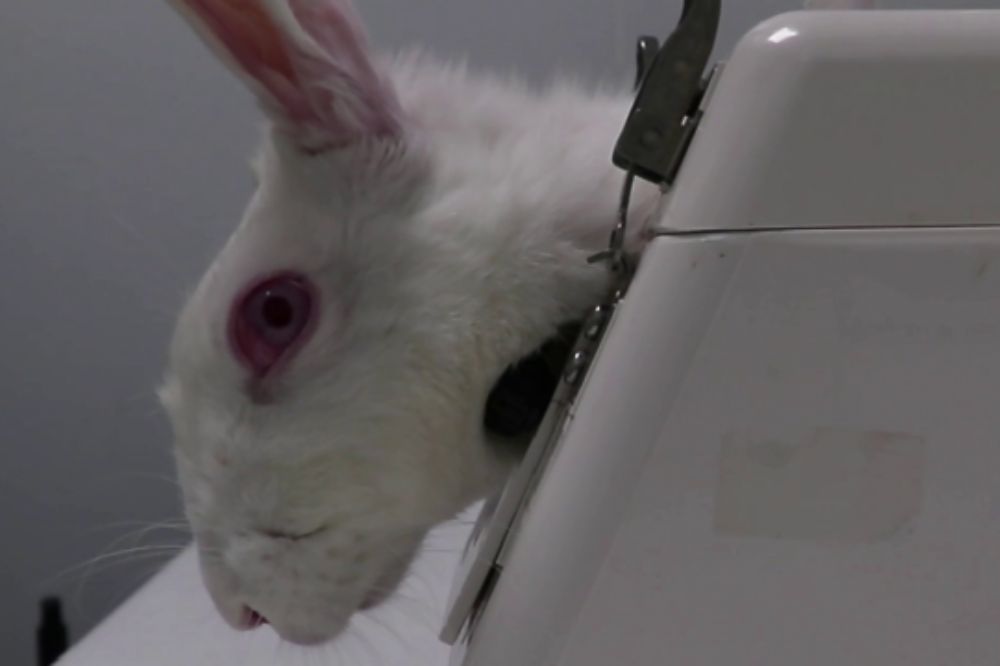
Mice and rats continued to be the most frequently used animals in scientific procedures, with 1,869,064 mice and 150,221 rats used in 2024.
The statistics also show that, despite progress in some areas, the full elimination of increasingly outdated tests is yet to be achieved and, in fact, an increase for some tests has been observed for 2024. Cruelty Free International’s Replace Animal Tests (RAT) List describes animal tests that are conducted in Britain despite having approved non-animal replacements and whose abolition could save over 80,000 animals every year. This list includes the batch potency testing of Botox on mice, which rose by 5% to 52,213 in 2024. The number of eye irritation and corrosion tests fell to three, from seven in 2023; skin sensitisation tests on mice decreased by 50% to 148; and skin irritation and corrosion fell to zero from three in 2023.
The number of uses of animals in the testing of chemicals, including ingredients used in everyday consumer products, rose by 33% in 2024, to 59,814. Other sectors which used animals included the testing of human medicines (148,694), veterinary medicines (84,046), plant protection products, such as pesticides (11,756) and tests for food production (9,971). There were no animals used in the testing of ingredients exclusively used in cosmetics products in 2024.
Cruelty
Cruelty Free International has reiterated its call for the government to publish a bold, ambitious and deliverable strategy to phase out animal testing, ensuring it is:
- Bold and ambitious, with a clear vision for ending tests on animals in this country;
- Concrete, with specific targets and timelines;
- Action-oriented, delivering tangible policy measures and regulatory reform;
- Led from the top, with ministerial accountability and departmental coordination through a cross-government taskforce;
- Collaborative, engaging civil society, NGOs, academia, and industry to boost innovation and reduce the number of tests on animals;
- Forward-looking, defending existing protections and building on initiatives already underway both inside and outside of government;
- Well-funded, providing long-term funding for education and training, replacement-focused research to meet evolving regulatory needs, and investment in the further development of centres of excellence.
Dr Emma Grange, Cruelty Free International’s Director of Science and Regulatory Affairs, said: “With 2.64 million uses of animals in British laboratories in 2024, the rate of decline remains painfully slow. We hope that the government’s commitment on a strategy for the phase-out of animal testing in Great Britain means that this is one of the last years where the use of animals is anywhere near this level.
“The general public are ready for animal testing to end, and science is ready to make the transition – now there must be action to ensure that animal testing does not continue for decades to come.
“We need bold, forward-thinking policies which can begin to free us from the use of outdated experiments on animals, to the benefit of all, including the animals used in tests. The focus must now be on plans to end animal testing and the transition to exclusive use of non-animal approaches, some of which have already been shown to perform at least as well, or better, than tests on animals.
“The government must make good on its promise to partner with scientists, industry, and civil society to proactively contribute to the progression away from animal testing. Any cruel animal test is one too many and we will continue to fight for zero animal experiments in Great Britain.”
According to PETA, the slight dip in numbers is no victory for the millions of animals who are still “drugged, drilled into, starved, mutilated, poisoned and bled under the guise of “science” and exposes the “disingenuity” behind experimenters’ public pledges over the years to reduce, refine and replace the use of animals; a move that would have brought the number to almost zero by now.
The statistics, PETA argue, encompass only reported procedures, leaving countless others—used for their body parts or trapped in the breeding supply chain—unseen and uncounted.
They also argue that while the Home Office continues to “stringently gate-keep ethical methods and green-light animal abuse”, cutting-edge, non-animal tools sit underused.
The charity added: “If the Home Office is to avoid squandering lives, public funds and progress, it must stop rubber-stamping animal experimentation licenses and erroneously treating animals as ‘models’ for human conditions like sepsis, and embrace kind, human-relevant methods that can actually help patients.”
PETA – whose motto reads, in part, that “animals are not ours to experiment on” – notes that while the British Government has already committed to phasing out experiments on animals and will shortly publish a roadmap to phase out animal testing, without decisive action, the Home Office’s roadmap risks becoming a hollow promise.
PETA added: “Kier Starmer’s government must match the momentum of the EU and the US, which are both currently driving forward the implementation of non-animal methods.
“To truly modernise medical research and testing, the Government must follow PETA’s Research Modernisation Deal – a detailed strategy for ending experiments on animals – in implementing its roadmap.”
The full report can be viewed at https://www.gov.uk/government/
Support our Nation today
For the price of a cup of coffee a month you can help us create an independent, not-for-profit, national news service for the people of Wales, by the people of Wales.
Get more trusted Welsh news
Choose Nation.Cymru as a preferred source in Google News to see more of our journalism.



Thank you for this comprehensive summary of the Home Office statistics on animal procedures in 2024. Wales is showing the way with a 19% decrease compared to 2023. If anyone is interested in helping Wales Against Animal Experiments’ efforts to persuade the Welsh Government to divert funding away from unreliable animal experiments to human-centred modern technologies, or just want to find out more, join us at https://www.facebook.com/groups/walesagainstanimalexperiments