


Assisted deaths should be decided by the courts, top barrister says
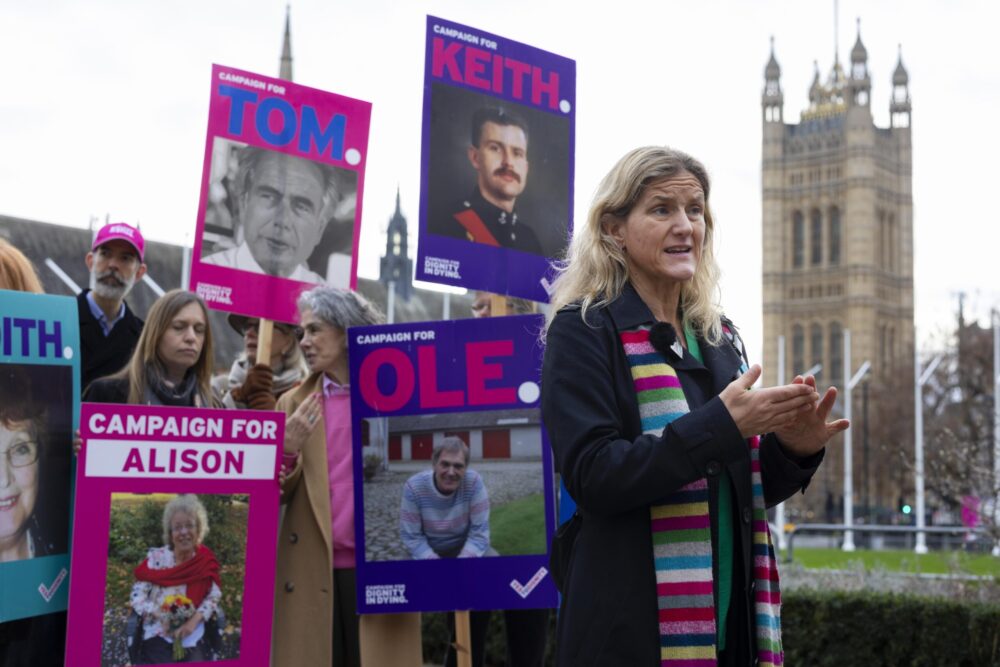
Courts should make the decision on whether to grant an assisted death, a top barrister has told Parliament, as peers continue their line-by-line scrutiny of the controversial legislation.
A previous draft of the Bill included a High Court judge safeguard, but this was dropped in favour of a three-member panel featuring a social worker, psychiatrist and a legal professional.
Lord Carlile of Berriew argued a court-based process would “provide confidence-inspiring judgment in this important and difficult new area of the law”.
However, another leading KC, Lord Pannick, said the court backlog means this would “build in delays” for people who have less than six months to live and that the decision-making panel set out in the Bill is preferable, due to the “range of expertise” it provides.
It comes after a call for extra time to consider the Terminally Ill Adults (End of Life) Bill was backed by peers on Thursday.
However, Lords’ chief whip Lord Kennedy of Southwark said he could not give any firm commitments on what would happen next, and ruled out any debates in Government time.
For the Bill to become law, both the House of Commons and the Lords must agree on its final drafting – with approval needed before spring when the current session of Parliament ends.
If passed, it would allow people with terminal illnesses in England and Wales who have less than six months to live to apply for an assisted death.
It was narrowly supported by MPs in the Commons in June last year, and received an unopposed second reading in the Lords in September before proceeding to committee stage.
Lord Carlile, an independent crossbencher, said designated family judges, of which there are 42 in the UK, could be responsible for the “momentous decisions”.
“That a judge should be involved is, I would suggest, self-evidently appropriate of what we should expect, given that third party participation in a death would otherwise involve the offence of murder,” he said.
The leading lawyer claimed there is “ample supply of skilled and diverse expert judiciary who would provide confidence-inspiring judgment in this important and difficult new area of the law”.
“The court has special powers, and they include: importantly, ordering the disclosure of documents such as relevant correspondence and medical records, power to examine in a balanced way the arguments and evidence of both sides of a question, and to make a reasoned decision as to what evidence to accept or reject”, he added.
‘Over-burdened’
Baroness Butler-Sloss, a retired judge who is a former president of the Family Division, said she “very much prefers” the idea of a court-based decision and that judges would “have to give priority to life and death cases”.
However, top barrister Lord Pannick argued the courts are “massively over-burdened” and that “delays are a serious problem”.
He said: “The legislation will only apply to those with six months or less to live and to have a system that builds in delays is going to damage the whole purpose of this Bill.”
He added that the decision-making panel set out in the Bill as drafted consists of three people “who have a range of expertise that, in my view, is highly desirable in this sensitive context”.
Backlog
Conservative peer Lord Shinkwin said this change to the Bill would “put immense strain on an already overloaded system”, also referencing the current court backlog.
Meanwhile, Labour peer Baroness Hayter of Kentish Town argued that the panel system is “holistic and patient-focused” compared to the “adversarial” nature of courts.
She said: “Surely, we do not want this to be an adversarial process. It shouldn’t be argued in front of a court that way.”
Supporters of the law change have accused some opponents in the Lords of filibustering and trying to “talk out” the contentious legislation, having tabled more than 1,000 amendments – a record number for a private member’s bill.
But opponents have insisted they are simply doing their job of scrutinising a Bill, which they argue is not safe in its current form and needs to be strengthened.
Consideration
Labour former minister Lord Falconer of Thoroton, who is shepherding the Bill through the Lords, pleaded with peers, saying: “We’ve got to get through this in time.”
Lord Kennedy had also urged peers to show “self-restraint”, as he opened the fifth day of committee in the chamber on Friday.
Friday sittings to debate the Bill so far have generally begun after 10am and finished by around 3pm.
There are 10 sessions listed for the Bill in the Lords between Friday and April 24.
Analysis by the Press Association has suggested the cost for peers to debate the Bill could reach nearly £2 million.
It shows that, if average attendance remains the same and the proportion of peers claiming the maximum income tax-reallowance of £371 per day continues, then the overall bill for peers alone will be £1.95 million for the 16 days allocated so far to the consideration of the legislation.
Support our Nation today
For the price of a cup of coffee a month you can help us create an independent, not-for-profit, national news service for the people of Wales, by the people of Wales.



While I agree a psychiatrist should be involved… I’m not so certain about the social work… and yes the final decision should be down to a judge. That we’re not allowed to choose for ourselves how and or when we die (it’s currently illegal) is somewhat a surprise given how brutal death can be and that we often have zero problem providing the courtesy to animals. People need to face some cold hard facts. Yes, all very nice of you to say we can get a better palliative care system, better social care… but these things have been argued for… Read more »