


Assisted dying Bill passes next stage in Lords ahead of further scrutiny
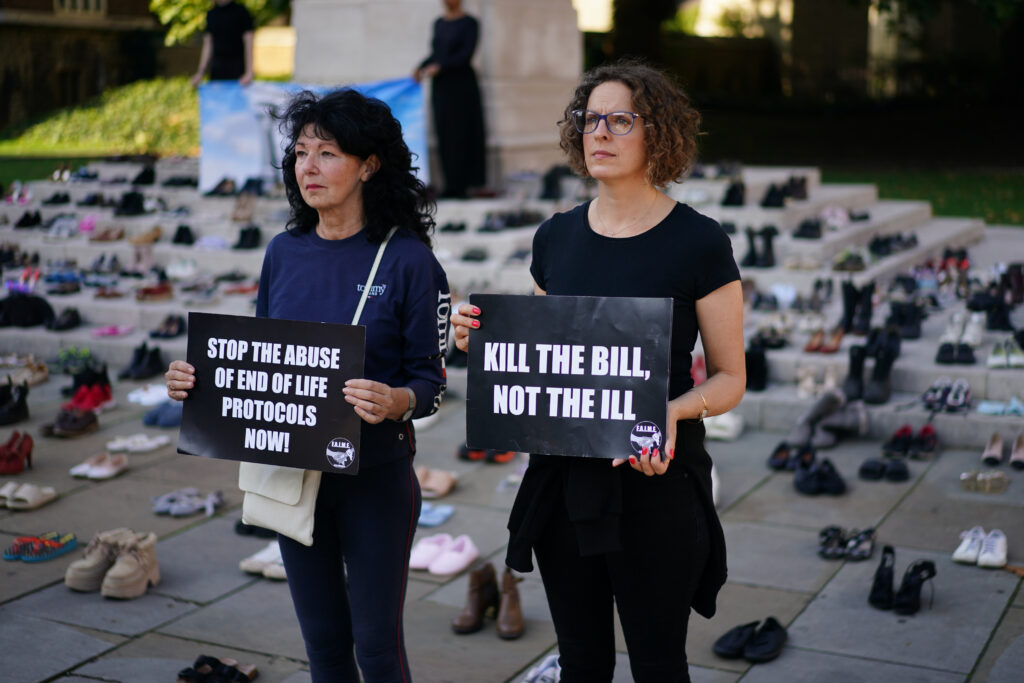
Bishops and peers were warned not to stand in the way of legalising assisted dying, as a proposed new law moved a step closer in England and Wales.
The Terminally Ill Adults (End of Life) Bill passed second reading stage in the House of Lords on Friday – the furthest any such legislation has progressed through Parliament at Westminster.
The Bill was nodded through, meaning no vote was taken – as is usual for this stage of legislation in the House of Lords.
But it is now set to go through further “unprecedented” scrutiny by a select committee of peers before moving along any further in the parliamentary process after an amendment by Baroness Luciana Berger was agreed to.
Baroness Berger told peers on Friday that the Bill “currently falls short”, adding: “We cannot legislate for irreversible decisions on the basis of incomplete protections.”
The committee of around a dozen peers would likely be formally launched next month and must report to the Lords by November 7.
Speaking ahead of Friday’s debate, Baroness Berger said there was “support from peers across the House of Lords for this unprecedented select committee because there is a deep concern about the lack of detail in the assisted dying Bill and how it would work in practice”.
Impassioned debate
Friday’s debate, the second of a two-day session which began last week and lasted around 12 hours in total, once again heard impassioned debate from staunch supporters and firm opponents.
Former archbishop of Canterbury, Lord George Carey, warned that both his peers in the House and Church bishops risked their legitimacy as major institutions in public life if they attempted to block the Bill.
Lord Carey – who was the Church of England’s top bishop for 11 years – is at odds with his religious colleagues on the issue and said they were not representing their own Church in their opposition to the Bill.
He told peers: “Do we really want to stand in the way of this Bill? It will pass, whether in this session or the next. It has commanding support from the British public and passed the elected House after an unprecedented period of scrutiny.
“Both this House and the Church are in the midst of renewed public debate as to our role in society.
“And I pray, indeed pray, that both these institutions – which I hold so dearly for the importance of our role in public life – do not risk our legitimacy by claiming that we know better than both the public and the other place (the Commons).”
An “illusion”
Archbishop of York Stephen Cottrell, the Church’s most senior bishop, sat alongside Bishop of London Dame Sarah Mullally on the Lords’ red benches as Lord Carey addressed them.
Mr Cottrell did not directly refer to Lord Carey’s comments but told the peers he was confident he represented “views held by many, not just Christian leaders, but faith leaders across our nation in whom I’ve been in discussion and written to me”.
He said the Bill “is wrong because it ruptures relationships” and would “turbocharge” the agonising choices facing poor and vulnerable people.
The first day of debate last week saw Dame Sarah argue that the “choice” to die “is an illusion” without “fully-funded palliative and social care services”.
Support our Nation today
For the price of a cup of coffee a month you can help us create an independent, not-for-profit, national news service for the people of Wales, by the people of Wales.


