


Astronaut highlights Wales’ growing role in the future of space exploration
Amelia Jones
A reserve astronaut with the UK space agency has said that Wales is well placed to have an increasingly influential role in the global space sector.
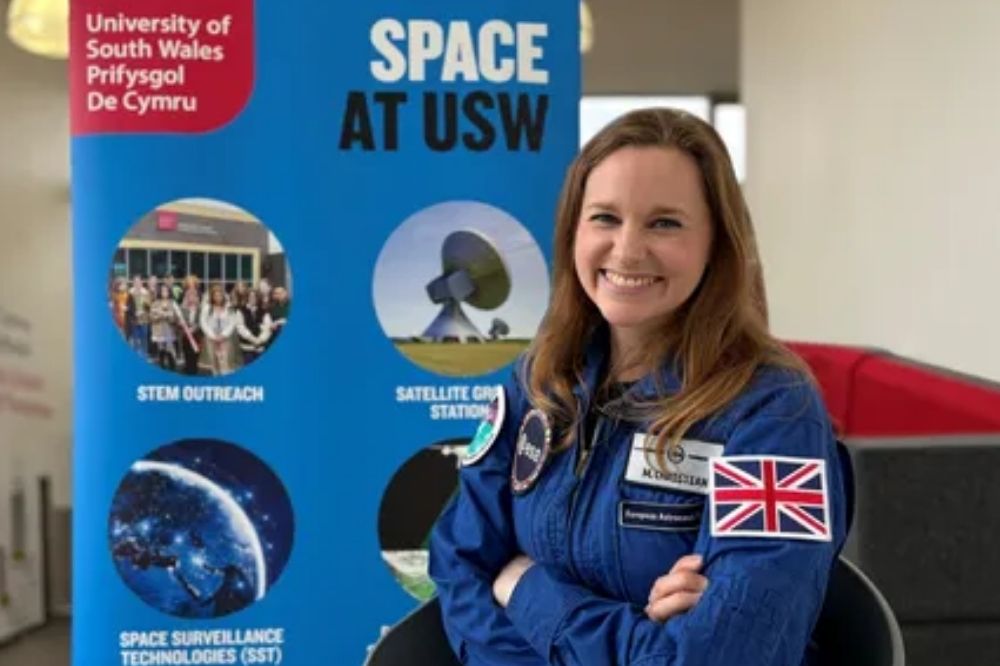
Prior to giving a special lecture at the University of South Wales (USW) – when she focused on her involvement in the space programme – Dr Meganne Christian, a Reserve Astronaut and Senior Exploration Manager (Commercial) at the UK Space Agency (UKSA) explained how she feels that Wales can capitalise on the expansion of space-related specialities and careers.
In her role as Senior Exploration Manager at the Agency, she is responsible for programmes supporting human activity in low Earth orbit, on the Moon, and on Mars.
This work focuses on future-facing projects, including the transition from the International Space Station (ISS) to a new generation of commercially-operated space stations.
She said: “These new stations will be run by companies rather than space agencies.
“It’s vital that we ensure researchers continue to have access to the facilities they need, and universities play a huge role in guiding what those facilities should look like.”
Dr Christian’s portfolio also includes oversight of space nuclear applications, as well as projects supporting astronaut wellbeing – such as next-generation exercise devices designed for the forthcoming Gateway lunar station.
She said that, in Wales, organisations are already pushing boundaries around in‑space manufacturing and research.
She added: “There’s huge potential for Welsh universities and industry to influence what comes next.
“As commercial space stations are developed in the coming decade, universities will be essential in helping define research priorities, from materials science to microgravity manufacturing.”
The UK space sector currently employs 50,000 to 60,000 people, and that number is expected to grow. And, according to Dr Christian, universities will play a critical role in training the workforce needed.
The astronaut said: “Where universities have a strong space focus – and the University of South Wales absolutely does – that’s where our future talent will come from.
“And the sector is far broader than just astronaut roles – specialists covering engineering, design, manufacturing, R&D, mission support, data, and lots more, are needed. The opportunities are endless.”
Researchers in Wales are already involved in space-related work, including into the physiological effects of long-duration space flight. At USW, work led by Damian Bailey examines how microgravity, hypoxia and extended missions affect the brain and cardiovascular system.
In December, the University became one of six applicants to have been successful in securing £247,000 funding under the Wales Space Cluster Catalyst Fund, including initiatives focused on skills development, satellite technology and connectivity solutions for rural healthcare providers.
Meanwhile, students are contributing through engineering projects such as university rocketry programmes, which aim to give practical experience in space technology and aerospace design.
Last year, the USW Rocketry Team won two national awards under the leadership of Masters student Emily Creedy and with guidance from Dr Phil Charlesworth.
Dr Leshan Uggalla, who is a Senior Lecturer and lead for Space Technologies research at USW, said the opportunities in education and business on offer from the space sector are phenomenal.
She said: “Space is no longer a ‘good-to-have’ capability – it is a ‘must-have’ capability. Satellite-based services contribute close to 20% of UK GDP and form part of our critical national infrastructure.
“With sustained annual growth of around 8–9% in recent years and increasing demand for high-level technical skills, the sector presents immense opportunities for the next generation,” he said.
“The global space economy is projected to be close to £1.3 trillion or higher by 2035 and will become an even more critical element across many aspects of human life than it is today, reflecting its growing importance to the economy, national security, and everyday life.
“At USW, we are leading the way in helping to develop this sector, and the four UK Space Agency-funded projects we are currently involved in, among many others, will see us work with outside experts on not only delivering transformative technologies, but also giving those who are currently involved in the sector, or will be in the future, a greater understanding of the possibilities on offer.
“These will lead to many more highly-skilled jobs, drive innovation, and deliver benefits for both people and the businesses they run or work in. It’s a very exciting time to be involved in this rapidly expanding sector.”
“At USW, we are proud of our journey, from our heritage in mining to now actively contributing to the space sector and to the Wales Space Strategy.
“We are helping to create the next generation of space engineers, scientists, policy leaders, and innovators here in Wales, building skills, strengthening capability, and supporting the long-term, sustainable growth of the space sector across the nation and around the globe.”
Support our Nation today
For the price of a cup of coffee a month you can help us create an independent, not-for-profit, national news service for the people of Wales, by the people of Wales.


