


Autumn timetable changes to affect rail passengers across Wales
Nation.Cymru staff
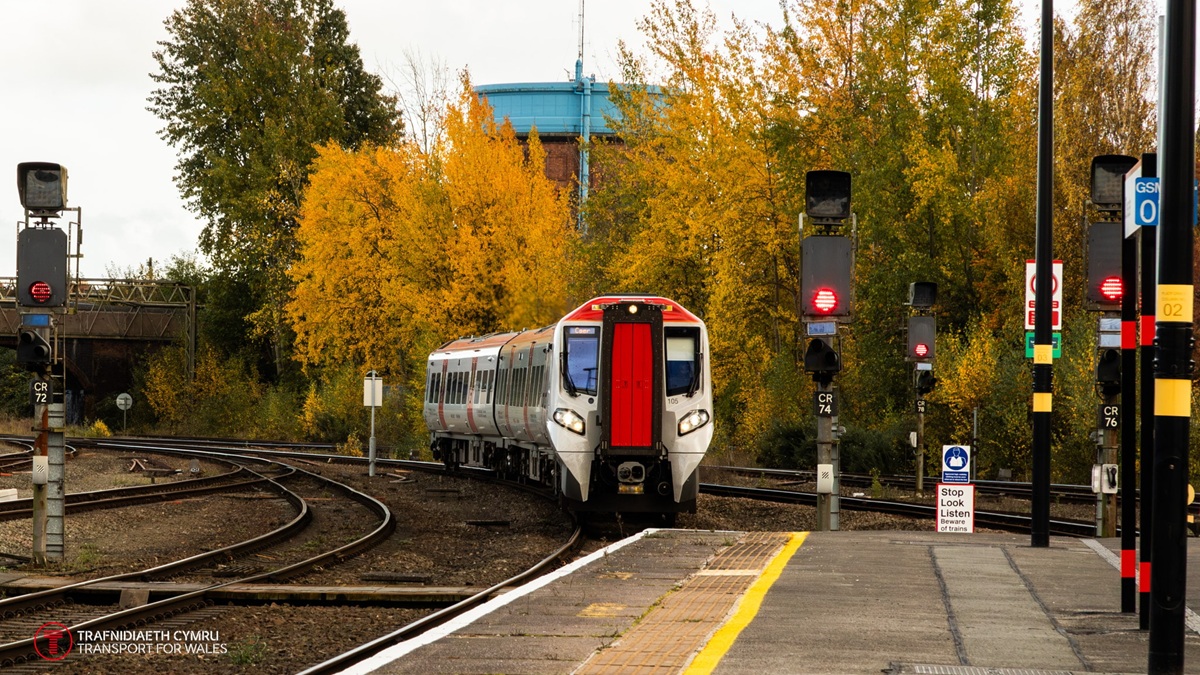
Rail passengers across Wales face temporary timetable changes from Saturday as Transport for Wales and Network Rail prepare for fallen leaves and an increased chance of wet and windy weather.
Some trains will leave earlier, most services on the Wrexham to Bidston line will start and finish at Wrexham General, and a late weekday service to Maesteg will be withdrawn.
The changes will run from October 10 to December 4, affecting routes in north and south Wales and across the border. Passengers are being urged to check journey planners before travelling.
TfW says the adjustments allow trains more time to operate safely during autumn, when crushed leaves can form a slippery layer on the rails, reducing grip.
Changes to services
On the Wrexham to Bidston line, most trains will start and finish at Wrexham General rather than Wrexham Central. TfW says it will seek to retain four peak-time services serving Central where possible, but no replacement transport will run between the two stations.
Journeys will be retimed by around one to three minutes, with connections maintained at Shotton.
Most Cardiff Central to Maesteg services will leave Cardiff one or two minutes earlier. The 10.13pm Ebbw Vale Town to Maesteg service will not run from Monday to Friday, allowing a rail treatment train to use the Maesteg line.
Passengers are advised to take the 11.30pm Cardiff Central to Carmarthen service as far as Bridgend, where a replacement bus will continue to Maesteg.
Conwy Valley journeys between Llandudno Junction and Blaenau Ffestiniog will take two to three minutes longer, with departures from Blaenau Ffestiniog slightly earlier.
There will also be minor timetable adjustments on the Marches line between Shrewsbury and Newport, between Shrewsbury and Wolverhampton on the Birmingham route, and on services linking Shrewsbury with Chester and Crewe.
Colin Lea, TfW’s planning and performance director, said: “While these timetable changes are relatively minor, they play an important role in helping us deliver a more reliable and consistent service during the autumn months, when trains are most affected by leaf fall.
“This year, we’ve been able to include these changes in journey planners 12 weeks in advance, giving customers more notice so they can plan their journeys with confidence.”
TfW said last year’s autumn timetable changes contributed to a 45% reduction in autumn-related delays on the Wrexham to Bidston line.
Track treatment
Network Rail is deploying four specialist trains across its Wales and Borders route to clear leaf residue using high-pressure water. They are scheduled to cover more than 54,400 miles across 224 circuits, also applying material to improve grip at selected locations.
Ten autumn response teams will be available to inspect tracks and deal with changing conditions. Drainage has been upgraded at locations repeatedly affected by flooding, while 10 new weather stations will provide local, real-time information.
TfW has also installed a new wheel lathe at Canton depot as part of a £2.5 million investment, following the opening of another at Holyhead earlier this year.
The machines restore wheels that have developed flat spots after slipping on contaminated rails, helping reduce the time trains spend out of service.
Martin Taylor, Network Rail Wales and Borders’ chief infrastructure officer, said: “We’re continually looking to improve our capabilities, making greater use of intelligence-led data and technology to support our decision-making. This helps us adapt to changing weather patterns and prepare for future challenges”.
Weather
The preparations come as the Met Office forecasts an increased likelihood of wetter and windier conditions through late autumn and early winter.
Heavy rain can cause flooding, while strong winds can bring trees and debris onto railway lines.
Sarah Davies, the Met Office’s head of environment and energy, said El Niño was one of several factors influencing the outlook, but cautioned against treating a seasonal forecast as a prediction of individual events.
“Seasonal forecasts indicate the most likely weather patterns over a period of several months rather than predicting exactly when or where impacts may occur,” she said.
Passengers can check revised services at tfw.wales or through the TfW app.
Support our Nation today
For the price of a cup of coffee a month you can help us create an independent, not-for-profit, national news service for the people of Wales, by the people of Wales.
Get more trusted Welsh news
Choose Nation.Cymru as a preferred source in Google News to see more of our journalism.


