


Bank holds UK interest rates at 3.75% and stands ‘ready to act’ over Iran war
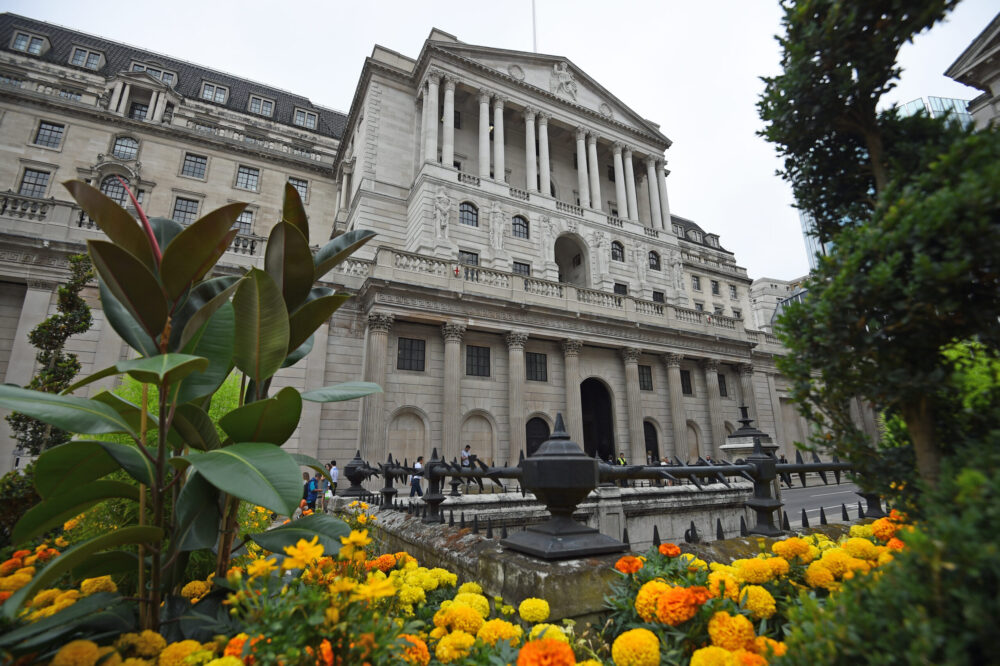
The Bank of England has held interest rates at 3.75% as policymakers hiked forecasts for UK inflation due to war in the Middle East pushing up energy prices.
The Bank left rates unchanged in a unanimous vote among all nine members of its Monetary Policy Committee (MPC).
It is the first time that all members have voted the same way since September 2021.
Governor Andrew Bailey said: “War in the Middle East has pushed up global energy prices.
“You can already see that at the petrol pump and, if it lasts, it will feed into higher household energy bills later in the year.
“The best way to tackle this is at the source by reopening energy supply lines.”
He said he would be monitoring developments “extremely closely” and that the Bank “stands ready to act” to make sure inflation returns to the 2% target level.
Consumer Prices Index (CPI) inflation fell to 3% in January, and MPC forecasts in February showed the rate falling toward 2% from April, largely due to Government efforts to cut household energy bills.
But, on Thursday, the MPC said recent increases in wholesale energy costs would delay the return of CPI inflation to target, as it was already leading to higher fuel prices.
It was now expecting inflation to be around 3% in the second quarter of 2026, up from the 2.1% that had been forecast in February.
Higher wholesale gas prices could then feed through into a higher Ofgem energy price cap from July, which could add around 0.75 percentage points to inflation over the third quarter.
This, combined with firms potentially passing on higher energy costs to consumers, could mean CPI inflation increases to up to 3.5% in the third quarter, up from the previous 2% forecast, the MPC said.
The Bank said that even a short-lived conflict was likely to leave energy prices elevated for a sustained period, and if the war continues to escalate then inflation could be pushed up further.
Events over the next six weeks could shed light on how long the war lasts and how big the ripple effect could be, particularly to the supply of oil, gas and other commodities such as fertiliser produced in the Middle East.
Mr Bailey stressed in his rationale in holding interest rates steady was that while monetary policy “cannot reverse the shock to supply”, it must “respond to the risk of a more persistent effect on UK CPI inflation”.
Britain’s biggest lenders have been hiking their mortgage rates over the past few weeks, while hundreds of homeowner deals have vanished from the market.
Support our Nation today
For the price of a cup of coffee a month you can help us create an independent, not-for-profit, national news service for the people of Wales, by the people of Wales.



Better warm up the printing presses for the coming cerdit crunch.