


Bank will not rush into moving rates despite ‘big energy shock’, says Bailey
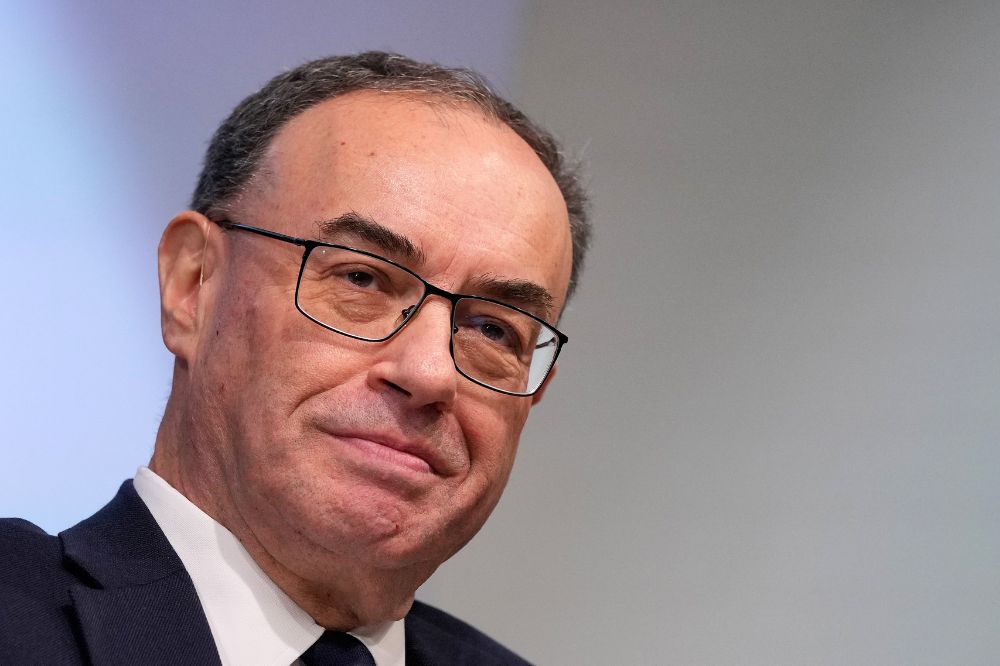
Bank of England governor Andrew Bailey has warned the global economy is set for a “very big energy shock” that will lead to surging inflation, but said policymakers would not rush to hike interest rates.
Speaking at the International Monetary Fund (IMF) spring meeting in Washington DC, Mr Bailey told the BBC the Bank is facing a “very, very difficult” decision on rates at its meeting on April 30.
The Middle East conflict has sent oil prices surging by around 60% since the start of the year, at one stage hitting nearly 120 US dollars a barrel, which is pushing up fuel and energy costs.
This is expected to feed through to wider prices, with forecasts for UK inflation to jump higher in the coming months and Britain’s growth outlook sharply downgraded.
But official figures on Thursday, which were released after Mr Bailey’s comments, showed the UK economy was far stronger than expected at the start of the year, with growth of 0.5% in February following upwardly revised expansion of 0.1% in January.
Experts said while welcome, UK activity is still set to slow sharply as higher energy prices weigh on spending and hamper growth.
Mr Bailey told the BBC: “There’s really difficult judgments to be made.
“We’re not going to rush to judgments on those things, because there are a lot of uncertainties around this, not just how it’s going to play out, but also how it’s going to pass through into the UK economy.”
The IMF’s economic outlook report earlier this week showed the UK facing the biggest downgrade to growth among the G7 group of countries, with 0.8% forecast for 2026, down sharply from the 1.3% predicted in January.
The influential financial body said the spike in energy prices caused by the war will help push UK inflation towards 4% – double the Bank of England’s target.
But the IMF cautioned central banks about making hasty decisions on interest rates.
The Bank of England had previously been expected to cut rates further this year, down from 3.75% currently, but the predicted inflation surge caused by the Iran war has led to forecasts that hikes could be on the way.
Mr Bailey said the Bank is taking the IMF’s “serious advice” into account.
On fears over supply shortages caused by the Iran war disruption and blockage of the crucial Strait of Hormuz shipping route, Mr Bailey said there is “a certain amount of resilience in the system” but that will only last so long.
He added: “The faster there is a resolution to this situation – I particularly mean in terms of the supply of energy coming out of the Gulf – the easier and better the outcome will be.
“That’s really critical at this moment.”
Support our Nation today
For the price of a cup of coffee a month you can help us create an independent, not-for-profit, national news service for the people of Wales, by the people of Wales.
Get more trusted Welsh news
Choose Nation.Cymru as a preferred source in Google News to see more of our journalism.


