


Be ‘clear-eyed’ on health challenges when moving to the country, England’s CMO says
Storm Newton, Press Association Health Reporter
People should think about the “practicalities” of moving from cities to more rural areas when it comes to health, according to England’s Chief Medical Officer (CMO).
Professor Sir Chris Whitty said there are “clear advantages” of being in the countryside, but also “particular challenges” as he called for a national strategy to be developed for rural healthcare.
It comes as his latest annual report warned there are “significant implications for health and social care need” in more remote areas, which are driven by an ageing population.
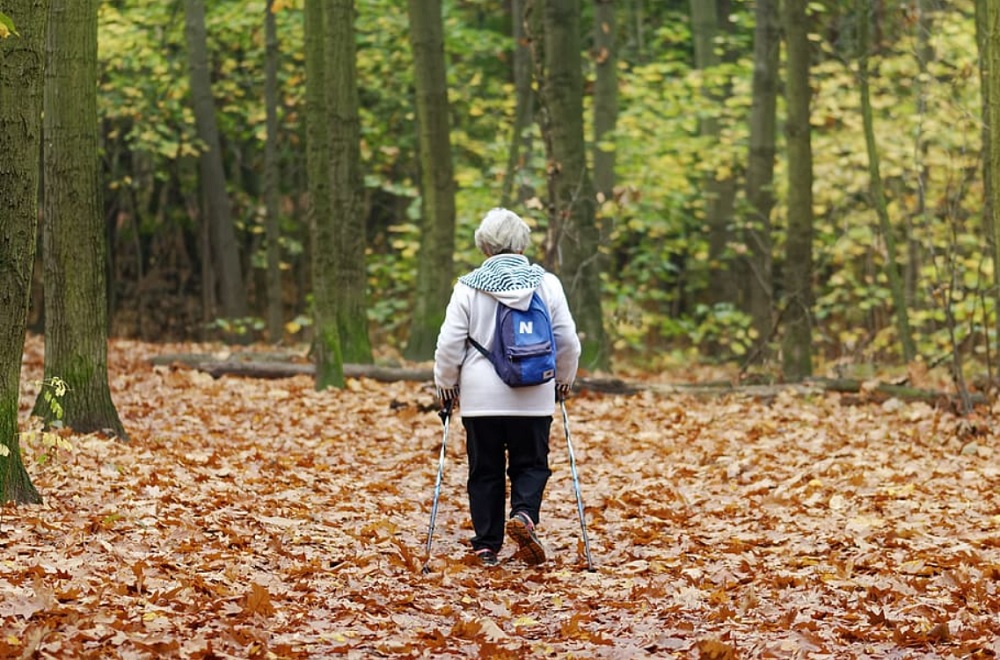
It highlights that rural communities are generally older and ageing faster than cities.
Figures suggest the proportion of people aged 65 or over in rural areas was 28% in 2024, compared to 12% in London.
This can compound health risks, such as challenges around physically accessing care and unsuitable housing for older people.
This includes homes that are often older and more poorly insulated, or newer homes not suited to older people.
Despite challenges, rural areas “also have some significant inbuilt advantages for health”, the report said, such as stable and supportive communities, minimal air pollution, and access to beautiful landscapes for exercise.
However, Sir Chris warned that people should be aware of “particular challenges” when moving from cities to rural towns.
He said there are “clear advantages” of being in the countryside for exercise, although getting to the network of paths can be “quite difficult” for people who do not drive.
He added: “You often end up with people who move as a couple to a rural area, then one of them becomes incapacitated or dies before the other.
“They can often be left isolated or as a carer in a relatively isolated area, and they don’t have a group of people necessarily around them who’ll be able to support them, particularly if they’re not from that area.
“What people have to do is be quite clear-eyed when they go in to moving from an urban area to a rural area where they don’t have links.
“They just need to think about the practicalities of it. That’s not a reason not to. These are very good places to go. There is a reason why people make that change, and why that has been the tradition in the UK for a long time.
“But with it comes some very practical issues, and people just need to think them through quite specifically.”
A major issue is housing, according to Sir Chris.
He said: “I don’t think it’s sensible; we’re basically encouraging the building of houses which are not capable of having older people with fairly standard levels of disability, where we know that up to 25% of the population can be over 75.
“That simply does not make sense.”
The CMO called for issues around health in rural and small towns to be “seen as a national, not just local, issue”.
Rural poverty is described as “often unseen, poorly measured, averaged out with more affluent areas or not registered in national statistics”.
Work in sectors such as farming and tourism can be low paid or seasonal, with limited public transport making cars essential for work, the report said.
And the risks and healthcare needs among agricultural workers and military communities are often “unique”.
Sparser populations also mean that healthcare is more spread out, with GP practices “often distant” and hospitals requiring “a day’s round trip”.
The CMO makes a number of recommendations, including accelerating digital healthcare and methods such as video calls and phone consultations with doctors in rural areas and small towns.
The report said these ways of delivering care are improving, though people in rural areas “face the most significant challenges in accessing them”.
Because of challenges around transport, these services “have the potential to have even greater impact in rural areas and small towns”.
The report also suggests more GP trainees should be placed in rural practice.
Sir Chris described general practice as the “bedrock” of small town health, but training is “often very urban-centric”.
The report also said patients who live a long way from hospitals should have more flexibility around appointments, and ensure home building schemes in rural areas are capable of being adapted for older residents.
It comes as Sir Chris called for a national strategy to be developed for rural healthcare.
He said: “Obviously healthcare should be designed locally, but in my view, there should be a national strategy for rural healthcare because it is systemically different from from urban systems.
“And most rural areas are more similar to one another than they are to their nearest big town.”
Greg Fell, president of the Association of Directors of Public Health, said there is a “significant opportunity” to act on the CMO’s recommendations through devolution.
“However, realising its potential will require sufficient investment, including adequate resourcing and robust data sharing across all levels of governance to ensure decisions remain grounded in evidence and responsive to local need,” he added.
Kerry Booth, chief executive of the Rural Services Network, said: “The report makes clear that geography and hidden deprivation matter.
“Rural communities need transport and digital infrastructure that supports access to care.
“Recognising rural health as a national responsibility means taking joined-up action across Government departments, working with the NHS, local partners and communities to meet local needs. Everyone should have the opportunity to live a healthy life, wherever they live.”
Support our Nation today
For the price of a cup of coffee a month you can help us create an independent, not-for-profit, national news service for the people of Wales, by the people of Wales.
Get more trusted Welsh news
Choose Nation.Cymru as a preferred source in Google News to see more of our journalism.


