


Beautiful avenue of trees ‘endangered by cycleway construction work’
Martin Shipton
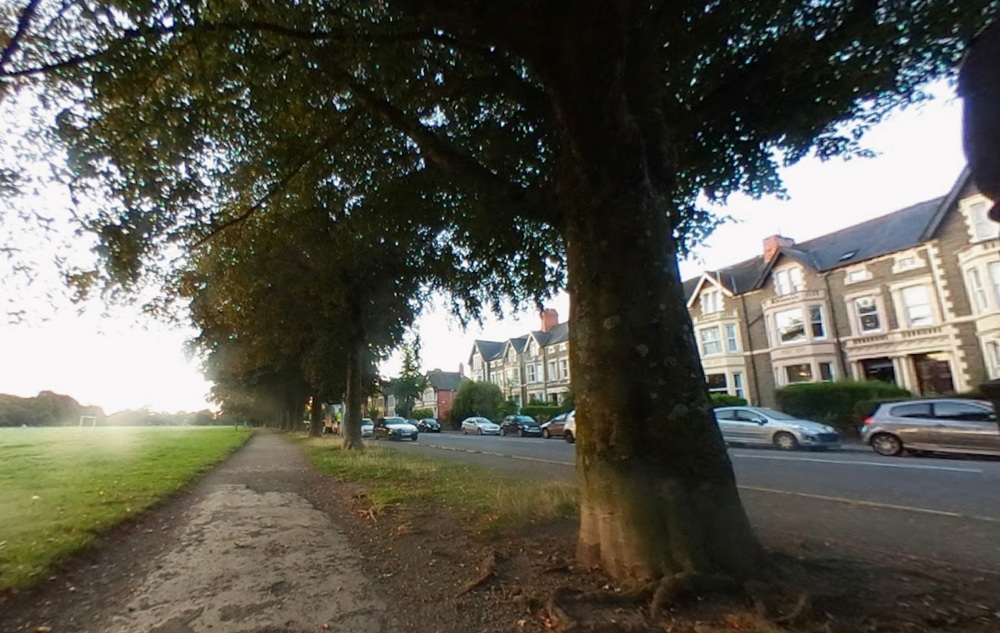
Environmental campaigners are demanding urgent action to save an avenue of magnificent copper beech trees in one of Cardiff’s most popular parks after they were endangered by mistakes made during the construction of a cycleway.
The trees were planted in the city’s Roath Recreation Ground to commemorate the coronation of the late Queen Elizabeth II in 1953.
Nerys Lloyd-Pierce, who chairs Cardiff Civic Society, said: “The trees are a huge asset visually as well as in terms of mitigating heat during our increasingly parched summers, and in mitigating poor air quality on such a busy road.
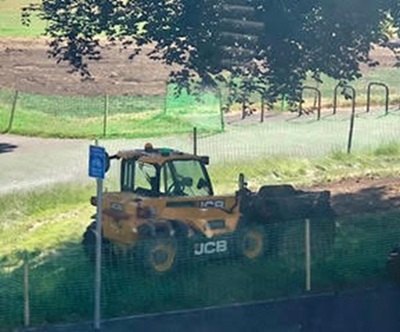
“Copper beeches are very vulnerable to the adverse effects of soil compaction. Various breaches of duty during construction meant that the contractors drove their machinery over the soil repeatedly, as well as dumping building materials at the base of these trees.
“Local residents complained, so the contractors put turf around the trees to hide the mess, further contributing to the trees’ inability to access nutrients and moisture via the roots close to the surface.
“In a biodiversity and climate crisis we cannot afford to lose these mature trees. The compacted area urgently needs aerating to save the trees. By the time they exhibit signs of distress, it’s already too late.
“This process would cost about £50k – a drop in the ocean compared to the eye-watering £5m cost of the cycleway.
Lucy Griffiths, whose home overlooks the copper beech avenue, said: “Contractors are obliged to ensure trees are protected during construction. Trees and roots must be safely behind fencing before any machinery or materials are brought on-site regardless of planning status. The Root Protection Area is a ‘sacrosanct’ exclusion zone.
“Stockpiling tonnes of spoil inside the exclusion area is prohibited because the massive weight crushes the feeder roots and compacts the soil around them. The air pockets collapse, cutting off the vital supply of oxygen for C02 exchange. Roots quickly suffocate in their own waste gases and rot.
“Setting up a works compound to stockpile materials and tonnes of aggregate is prohibited inside the exclusion area, as it not only causes compaction but aggregates wash through the earth, meaning fine dust particles clog the soil and prevent water intake. Sharp sand is toxic to roots and lime/concrete causes an alkaline run-off that alters the soil PH balance needed for the tree’s survival. It inhibits the fungi partner by chemically locking out nutrients and starving the tree.
“Storing machinery is prohibited in the exclusion area because it causes compaction and harmful substances to seep into the roots. Fuel / oil coat the roots creating a waterproof barrier and toxic chemicals kill delicate root hairs that absorb water. Portable toilet liquids sterilise organic matter killing the fungi partner that roots rely on for nutrients, causing rapid root death.”
Ms Griffiths hopes to put a question to Cardiff council leader Huw Thomas at a full council meeting on March 26. She will state: “The Sycamore Gap Tree [felled illegally in Northumberland in 2023] was valued at almost £623,000.
“The symbolic avenue of copper beeches in Roath Rec, planted for the late Queen’s coronation, represents a public asset worth between £10m and £15m. In March 2024, during Active Travel construction works in this Grade 1 registered historic park and garden, residents reported the absence of tree protection fencing, in clear breach of British Standard 5837:2012.
“Heavy machinery deposited spoil entirely across their hypersensitive roots. Evidence was provided to [local] Cllr Dan De’Ath, a stop notice issued and Knights Brown [the contractors building the cycleway] released a statement admitting the breach. Yet the malpractice continued, with non-compliant protections.
“ … In June 2025, As the works neared completion, and following public comments from tree husbandry, I sent you a full report, photographic evidence and a remedial method statement. But instead of addressing the damage, contractors covered up compacted soil with turf, worsening the situation.
“Experts advise root treatment within three years is critical. Remedial work now would cost the contractor around £50,000. Failure to act could lead to the loss of the avenue within five to 10 years.
“… I ask one last time. Please will you fulfil your fiduciary duty and hold the contractors to account before it is too late.”
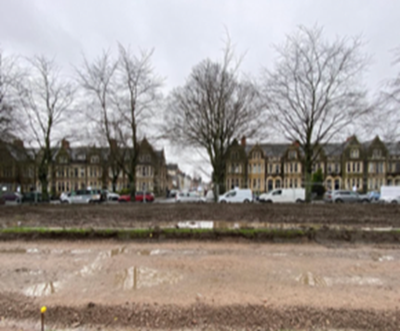
Cllr Thomas has previously stated: “I have been advised that while some excavated soil from the segregated footway works was redistributed over the verge area, this soil was not compacted. Officers are not aware of soil being stored near the zone areas after the tree root zone boundary line was updated and the temporary fencing installed.
“ … In respect of the works recently carried out, professional consideration was given to the methods available to remove debris from the ground and to open and make the fenced off areas usable again. A combination of hand picking of stones and collecting of arisings with a ride-on mower was used to prepare the ground to receive turf or seeding. The contractor also used a stone burying machine in some areas, which in turn cultivated the soil in preparation of laying turf.
“The base areas of the trees were avoided when undertaking this task and no roots were impacted upon or damaged during this process.”
Support our Nation today
For the price of a cup of coffee a month you can help us create an independent, not-for-profit, national news service for the people of Wales, by the people of Wales.



The £5 million spent on that little used path could have been used on something more urgent. Go and see that pet project , and you will see people jogging, walking and people pushing pushchairs along that couple of hundred yards of tarmac, but you will have to wait a long time for anybody on two wheels.
If we built motorways the way councils built cycle lanes you wouldn’t see any significant numbers of cars on them for years. No-one would use a motorway that just stopped in the middle of nowhere. That’s what cycle lanes do when they are unfinished. Experienced cyclists are happy to use the road and continue to do so, and everyone else carries on doing what they are doing now because they don’t want to cycle on the road when the cycle lane finishes and share with all the cars that might seriously injure them or worse. Once it’s finished and end… Read more »