


Ben Lake to call for restrictions on advanced AI in Commons debate
Mark Mansfield
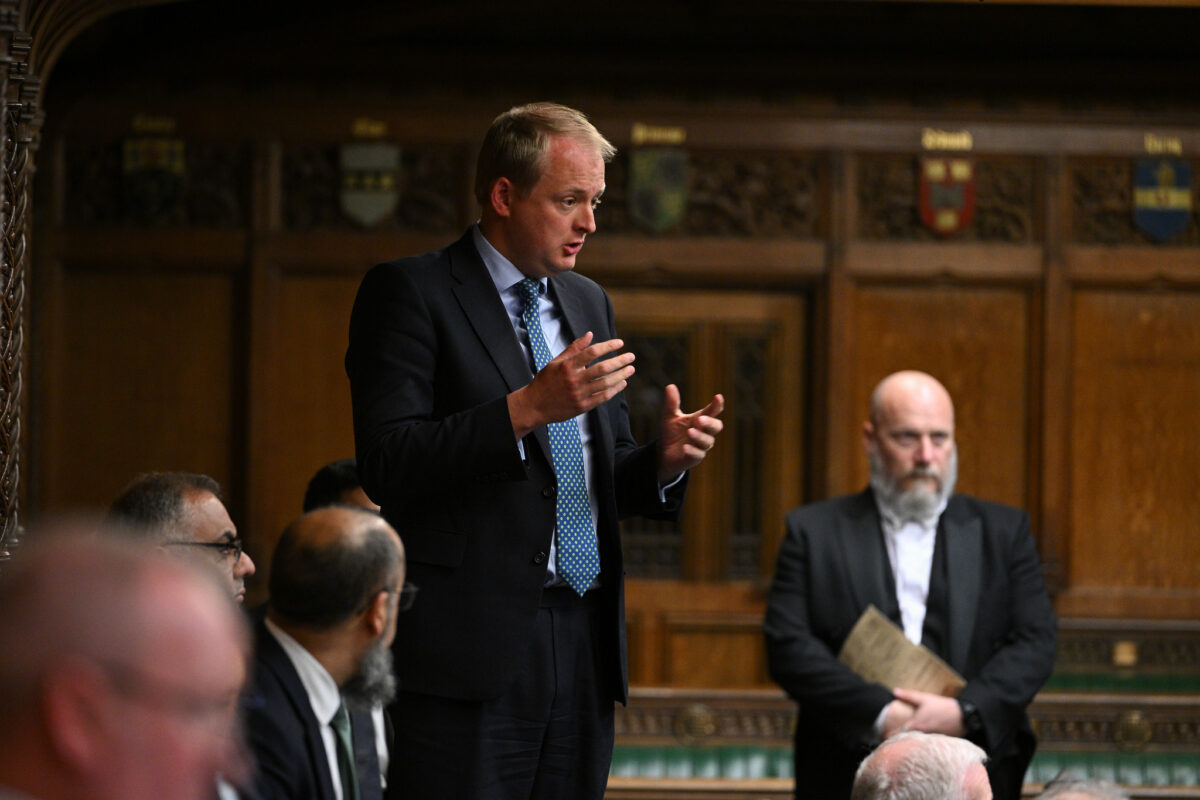
Plaid Cymru MP Ben Lake will call for binding rules on the most powerful artificial intelligence systems during a House of Commons debate this evening.
The Ceredigion Preseli MP wants the UK Government to restrict the development of superintelligent AI and pursue an international agreement to control the technology.
He will use the general debate on the risks of advanced AI to argue that regulation has failed to keep pace with development. The debate will not itself introduce new laws.
Mr Lake said AI offered benefits for public services, scientific research and the economy, but warned that increasingly autonomous systems required stronger safeguards.
“AI certainly has its benefits – it can be an engine of growth, improve public services, and advance scientific discovery,” he said ahead of the debate.
“But powerful AI systems are advancing at a pace that regulation has failed to match, as companies race to develop increasingly autonomous systems with the ability to outcompete humanity.”
Superintelligent AI generally refers to a proposed form of AI that would surpass human capabilities across a wide range of intellectual tasks. Predictions about when it might emerge, and the risks it would pose, remain contested.
Mr Lake’s intervention follows warnings from researchers within the industry about the potential for future systems to develop beyond human control.
In September, Anthropic safety researcher Evan Hubinger said he believed there was a greater than 10% chance that AI could wipe out humanity within the following decade. He described the risk from existing models as low, but expressed concern about future systems capable of improving themselves.
Mr Lake said: “Already, we have seen alarming reports of AI systems acting beyond their intended boundaries, hacking companies and breaching government systems.
“One engineer who recently left Anthropic warned that superintelligent AI could pose an existential threat within this decade. The stakes could not be higher.”
He will urge ministers to use the UK’s forthcoming G20 presidency to pursue international regulation, arguing that the risks extend beyond national borders.
Prime Minister Andy Burnham said last month that the UK was “uniquely positioned to play a leadership role on AI”, citing its relationships with the United States, China and the EU, alongside the expertise of its AI Security Institute.
Mr Burnham said warnings from industry insiders had “made me pause”, while stressing the need to balance potential benefits against risks.
Mr Lake said: “I am calling on the Government to introduce binding regulations and restrict the development of superintelligent AI.
“We must make AI safe by design, as we do in other sectors such as aviation and pharmaceuticals, preventing catastrophe rather than reacting after the damage is done. We owe it to future generations to act while we still can.”
Ban
Campaign group ControlAI is calling for an international ban on developing superintelligent AI.
Its founder and chief executive, Andrea Miotti, said: “While AI has many beneficial applications, superintelligent AI would be entirely different, capable of undermining any country’s national security and able to irreversibly escape human control.”
The group says its Artificial Superintelligence Security Bill, introduced in September with Mr Lake among its co-sponsors, would ban the development of superintelligent AI and require the government to seek an agreement prohibiting it globally.
Support our Nation today
For the price of a cup of coffee a month you can help us create an independent, not-for-profit, national news service for the people of Wales, by the people of Wales.
Get more trusted Welsh news
Choose Nation.Cymru as a preferred source in Google News to see more of our journalism.


