


Benedict’s Law: Welsh parents call for greater consistency in allergy care in schools

Jules Millward
A south Wales mum says that she’s so worried her seven-year-old son will be exposed to his allergen in school that she stays close by until he has finished lunch.
Ffion Jacobs, whose son has a severe peanut allergy sits in a café opposite his school between 12pm and 1pm because she is afraid he might have an allergic reaction without help arriving in time.
“I don’t leave the town we live in until I know he’s got through lunch time.”
“I go to every school disco and stand there with [his] EpiPens. There are so many children, I worry no one would notice in time if he needed help.”
Ms Jacobs said her son does not have an individual health care plan in place at school, having to provide an action plan to go with his EpiPens, and has never been asked about his allergy by his school.
But for another south Wales mum whose son is severely allergic to hazelnuts, pecans, and walnuts, the experience of starting school has been very different.
Becky Wilson said she is “very pleased” with how the school has handled four-year-old Theo’s allergies, with an individual healthcare plan, a nut-free policy and arrangements for him to sit at the end of the table during lunchtimes to help reduce the risk of cross-contamination.
But even with those safeguards in place, she understands why parents of children with allergies struggle to feel reassured when regular staff are absent.
“My uncertainty is more around supply teachers or anyone covering his regular teacher’s absence. I’m not entirely sure how his healthcare information is communicated to them, as it’s not something that’s been explained to us.”
Ms Wilson said that she would like Wales to follow England’s lead and introduce consistent allergy safety standards across all schools.
“I think every parent should have the same reassurance, regardless of which school their child attends.
“For me, staff training is a big one. It’s not just about knowing how to use an EpiPen, but recognising the early signs of an allergic reaction, understanding cross-contamination and making sure everyone, including supply teachers and lunchtime supervisors, knows what to do.”
She added: “I don’t think parents should have to wait until something goes wrong before changes are made.”
Their experiences raise questions about whether allergy care is consistent across schools in Wales, and for parents, introducing Benedict’s Law would mean that key safeguards would not depend on which school a child attends.
It depends on the individual school
Benedict’s Law was introduced in England in September and covers school allergy policies, training for all staff, individual healthcare plans and learning from serious incidents and near misses, and requires all schools to legal stock spare AAIs
Wales has statutory guidance on supporting learners with healthcare needs, alongside advice on administering emergency adrenaline auto-injectors. But whilst schools are legally allowed to buy and hold spare EpiPens, they do not have to, and any they do stock are strictly for use for those children with a known, prescribed allergy.
The difference between schools are also something Emily Jayne, who has worked as a supply teacher since 2025, has experienced first-hand.
She said that she is required to complete Benedicts Law training through some of the agencies she works for, but before this she had not been offered specific training in allergies or anaphylaxis.
“I always ask to read the class file and check whether there are any existing allergies or medical conditions I should be aware of before working in a class.
“Some school’s display allergy information on classroom doors, whereas others do not, [and some] have class files containing relevant medical information, although this is not always the case.
“Ultimately, the way this information is provided depends on the individual school.”
Emily believes that teachers should take responsibility for finding out about pupil’s medical needs, but her experience highlights how much procedures can vary between schools.
She said: “I think we as teachers should be proactive and ensure we are made aware of this information. As a professional, we should know to access this information without being told.”
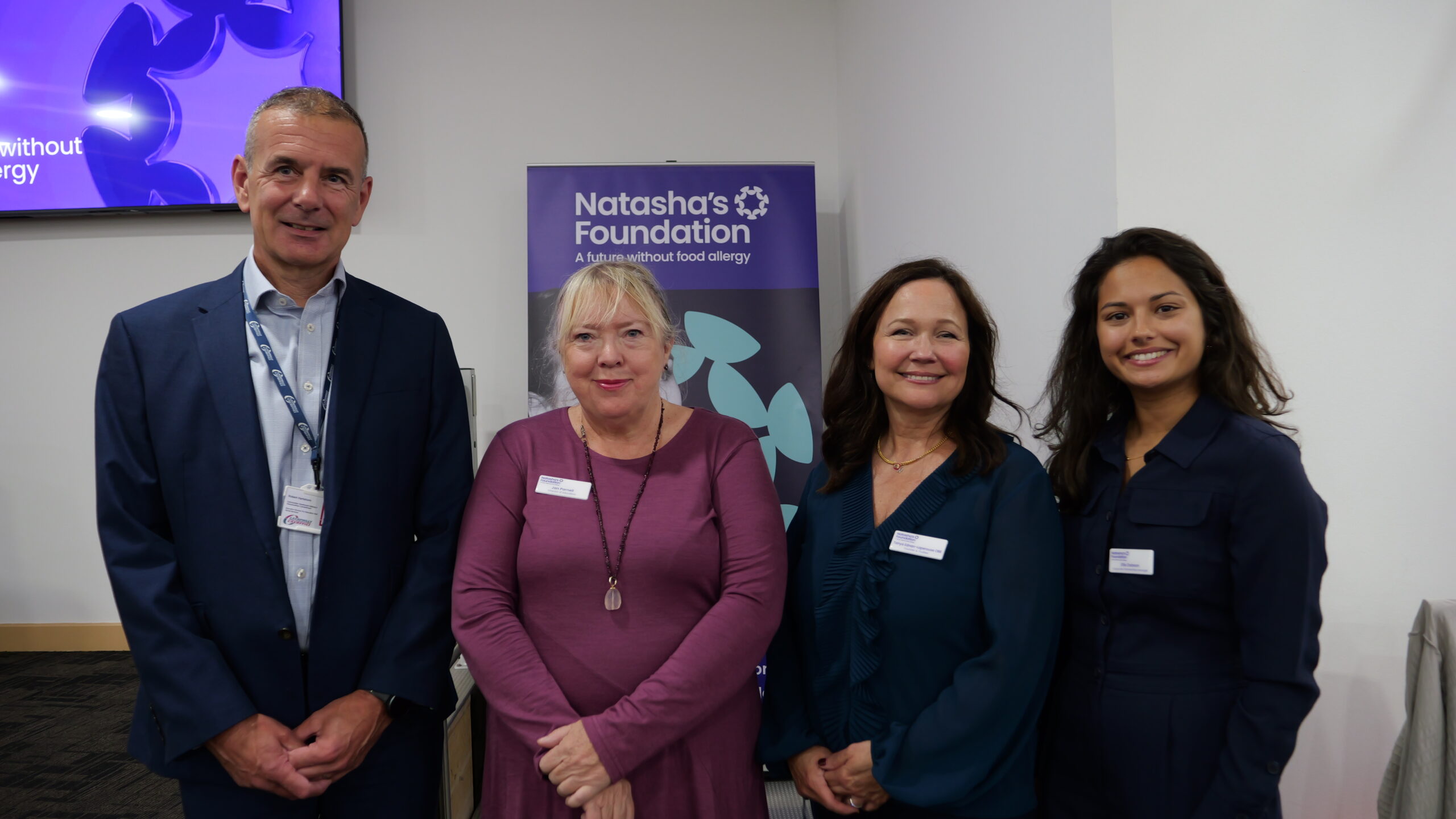
Natasha’s Foundation, the UK’s food allergy charity argues that children with food allergies should receive consistent protection regardless of what school they attend, and supports the introduction of Benedict’s Law in Wales.
Through their Allergy School, the charity provides Free Welsh Language food allergy awareness resources and training to schools in Wales, while continuing to campaign for stronger national standards.
Tanya Ednan-Laperouse OBE, founder of Natasha’s Foundation, was invited to speak at the Caerphilly Council Chamber by Wales’s leading food wholesaler, Castell Howell.
Alongside the Foundations Director of Education Jan Parnell, she presented to a packed chamber of 140 Council dignitaries, headteachers, cooks and assistant cooks from local primary and secondary schools.
Tanya Ednan-Laperouse said: “The care and protections that people living with food allergy in the UK receive vary hugely across the 4 nations. But at Natasha’s Foundation we are pushing for a fairer and more equal future, regardless of postcode.
“We firmly back calls for Benedict’s Law to be extended into Wales, Scotland and Northern Ireland, and through Allergy School we are already delivering free education resources and support to schools in these nations.
The Welsh Government said: “It is important that learners living with allergies are supported. All schools are already subject to legal requirements and have been issued with statutory guidance, which covers record keeping, storage and administration of medicines, emergency procedures and staff training requirements to support children and young people with healthcare needs, including allergies.
“We are currently reviewing and strengthening the existing statutory guidance and are considering Benedict’s Law to inform future policy in Wales.”
You can find out read an open letter to the Welsh Government on Benedict’s Law here, and find out more about Natasha’s Foundation Allergy School here.
Support our Nation today
For the price of a cup of coffee a month you can help us create an independent, not-for-profit, national news service for the people of Wales, by the people of Wales.
Get more trusted Welsh news
Choose Nation.Cymru as a preferred source in Google News to see more of our journalism.



The first thing in anaphylaxis is to call for skilled help so the school should call an ambulance at the first suspicion. The same applies to asthma. It can always stand down.
With respect to EpiPens and steroids it should be possible for a local pharmacy to provide stock rotated monthly kept in a sealed cupboard. This would be similar to defibrillators. To avoid waste the stock should be changed monthly on rotation and the outgoing can be dispensed if cold chain remains intact.