


Bird flu poses bigger pandemic threat than AI-generated virus – experts suggest
Ella Pickover, Press Association Health Correspondent
Viruses that already exist are more likely to be responsible for the next global pandemic than a virus generated by artificial intelligence (AI), experts have suggested.
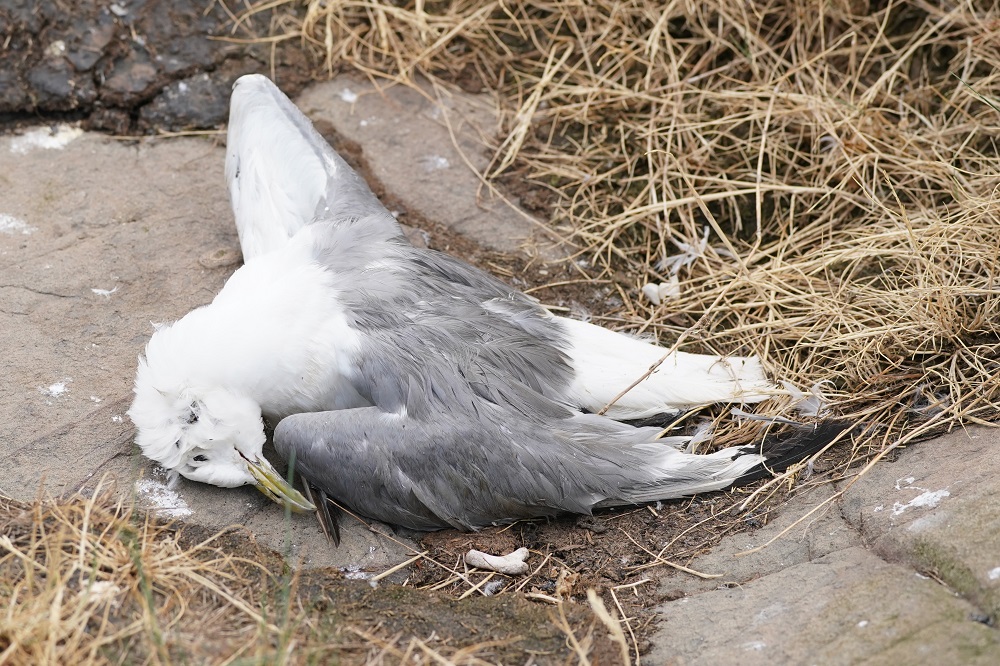
Bird flu should be considered to be a “high risk” pandemic source, researchers warned.
The virus, known as H5N1, has already led to the culling of 400 million chickens in the last four years, has been found in dairy cattle in the US and a few weeks ago crossed into mink farms “which creates an even higher risk to humans than before,” scientists added.
It comes after a warning that AI could kill off humanity within a decade, with leading experts calling for a co-ordinated slowdown of AI development to better understand the risks.
But experts from Imperial College London said that it was “highly unlikely” that a virus created by AI would lead to a human extinction event.
And they said the risks of generative AI advancing too quickly “are in areas not particularly related to biosecurity”.
They said people need to be “quite technologically sophisticated” to make use of advanced generative AI to engineer pathogens which could cause harm to humans.
The researchers acknowledged that barriers to entry will decrease over time as they called for certain protections to be put in place to prevent so-called “garage biologists” from making an “instruction manual” for viruses more readily.
But Imperial experts said that there should not be a blanket ban or a ceiling on AI, warning that such a move could be “dangerous” and “drive everything underground”.
Speaking about bird flu, Professor Wendy Barclay, regius professor of infectious disease at Imperial College London, said: “On a numbers game alone, it has to be considered high risk as a pandemic source.
“Just a few weeks ago, we heard that the virus has now passed into mink farms in Utah, in the United States, and this creates an even higher risk to humans than before… meanwhile, there is a lot of concern and focus about what happens inside laboratories and how the rise of AI might impact this, and so on.”
She referenced the Evo2 project, where AI designed a new bacteria-fighting phage.
Prof Barclay added: “Could this be done for other viruses? Well, yes, for sure.
“And the recent revelations from Anthropic describing ways in which bad actors have been trying to use AI are concerning.
“We should remember that we have been genetically engineering viruses in laboratories for some decades now.
“The potential for harm is going to depend on how comprehensive the knowledge base of the virus targeted is. There’s still a huge amount we don’t know, and the problem we’ve got is that the same knowledge base is needed in our efforts to counter these viruses, to make new drugs and vaccines against them, and detect them.
“So we have now a dual-edged sword.
“Some people could use this new knowledge for good, others for bad, and we need many voices around the table to find the way forwards.
“Knee-jerk reactions, such as total bans on work with viruses, are likely to only disadvantage scientists whose intentions are good, whilst not really impacting anyone with malicious intent.
“At Imperial, we’re advocating for open discussions that emphasise guiding principles for working with viruses.”
Professor Neil Ferguson, director of the Jameel Institute for Disease and Emergency Analytics, and director of the school of public health at Imperial College London, added: “It still requires quite technologically sophisticated actors to make use of even the advanced generative AI technologies to engineer pathogens.
“But the barriers to entry are going to decrease over time. And again, looking at our long-term time horizon, we need to be aware of how we’re going to mitigate those risks.
“As the hazards increase due to new technologies, so do our does our ability to respond to these new threats, detect them early, respond to them, develop countermeasures and Imperial’s initiative around building a biosecurity network is ‘how do we realise that potential to deliver those unprecedented advances in our ability to detect and respond to the threats’?”
Asked about concerns with AI developing too quickly, he said: “I think the risks of generative AI right now advancing too quickly are in areas not particularly related to biosecurity.”
And on the prospect of future mass human extinction caused by a virus created by AI, he went on: “I personally believe it’s highly unlikely we’ll get an extinction-level event from that type of technology.”
Prof Barclay went on: “I’d love to say, as a qualified virologist of 30 years, that ‘it’s all very, very hard, and nobody else can do this’.
“But we do know that there are garage biologists who meet together and make green fluorescing bacteria, so people can do this by themselves.
“And one fear is that AI allows people to put together the instruction manual more readily.
“And again, that is something already that that governments and people like Imperial are thinking about: ‘How can one understand that threat and mitigate against it’?”
It comes as First Secretary Louise Haigh said the Government will “heed the warnings” of AI experts who have highlighted the risks the technology could pose.
Support our Nation today
For the price of a cup of coffee a month you can help us create an independent, not-for-profit, national news service for the people of Wales, by the people of Wales.
Get more trusted Welsh news
Choose Nation.Cymru as a preferred source in Google News to see more of our journalism.


