


Bishop summoned to face questions over Catholic super-school scheme
Alec Doyle, Local Democracy Reporter
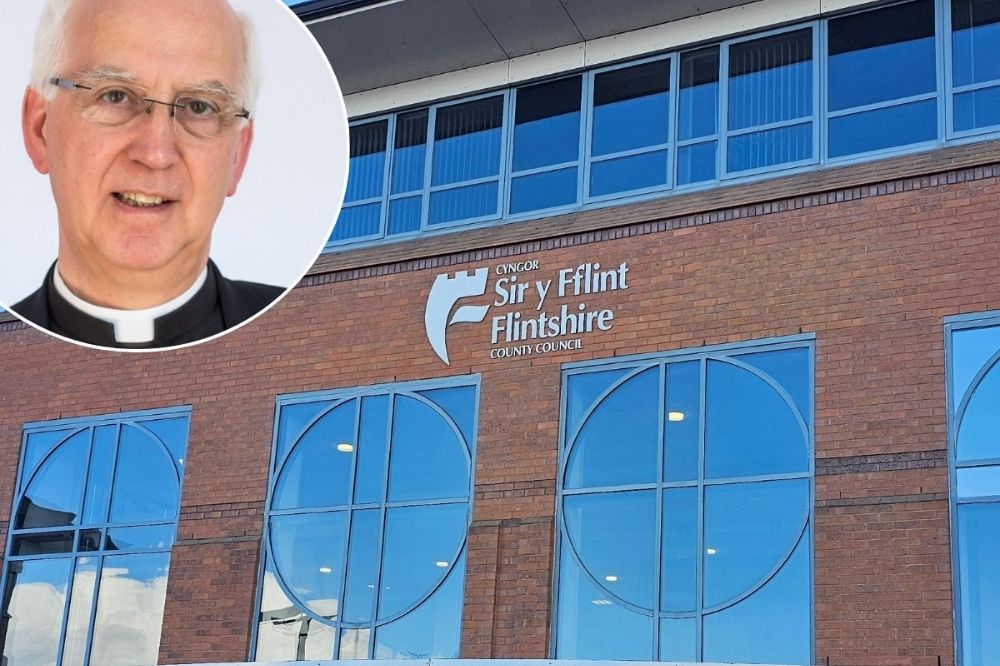
The Bishop of Wrexham will be summoned to face questions over the Catholic super-school scheme next month.
The special meeting has been scheduled to allow committee members to scrutinise the Flintshire Catholic Schools Reorganisation consultation report, 10 days before Cabinet considers its findings
Liberal Democrat group leader Cllr Andrew Parkhurst – a long-time critic of the proposal – put forward an amendment to the Education, Youth and Culture Overview and Scrutiny Committee inviting the Right Reverend Peter Brignall to a special meeting on Friday, February 13.
Committee members unanimously voted in favour of the recommendation.
The report will detail the assessment of responses to the consultation on the proposed closure of St Richard Catholic Gwyn High School in Flint plus the Catholic primary schools St Anthony’s in Saltney, St David’s in Mold and St Mary’s in Flint.
The super-school proposals seek to close the four schools and building a 3-18 Catholic super-school in Flint at an initial cost of £55 million. The Welsh Government’s Sustainable Communities for Learning Fund is expected to provide £46.5m with £8.5m provided by Flintshire County Council borrowing.
The amount Flintshire will repay with interest however is officially projected to be £30.9m, paid back over 50 years – meaning the actual cost of the super-school project runs to almost £78m.
Flintshire County Council has been managing the process at the request of the Diocese of Wrexham, which is responsible for delivering Catholic school education in Flintshire.
Until now the Diocese has insisted that the statutory processes be followed and has been reluctant to comment amid parent protests and petitions against the plans.
Now the consultation is over Cllr Parkhurst seeks to ask the Bishop to help councillors understand from the Diocese perspective what the long-term impact of the changes will be on the Flintshire communities affected, how the decision-making process worked within the Diocese and who is accountable for the scheme.
“These proposals have far-reaching implications for pupils, communities and the future of education provision in Flintshire,” he said. “It is entirely appropriate that those with a direct role in shaping them are willing to engage openly with scrutiny.
“Scrutiny exists to shine a light, ask difficult questions and make sure decisions are robust. When councillors, communities and teachers are raising the same concerns, it is a clear signal that those questions must be answered openly and in public.”
Support our Nation today
For the price of a cup of coffee a month you can help us create an independent, not-for-profit, national news service for the people of Wales, by the people of Wales.


