


Blind Society urges cyclists to be more aware of road safety laws
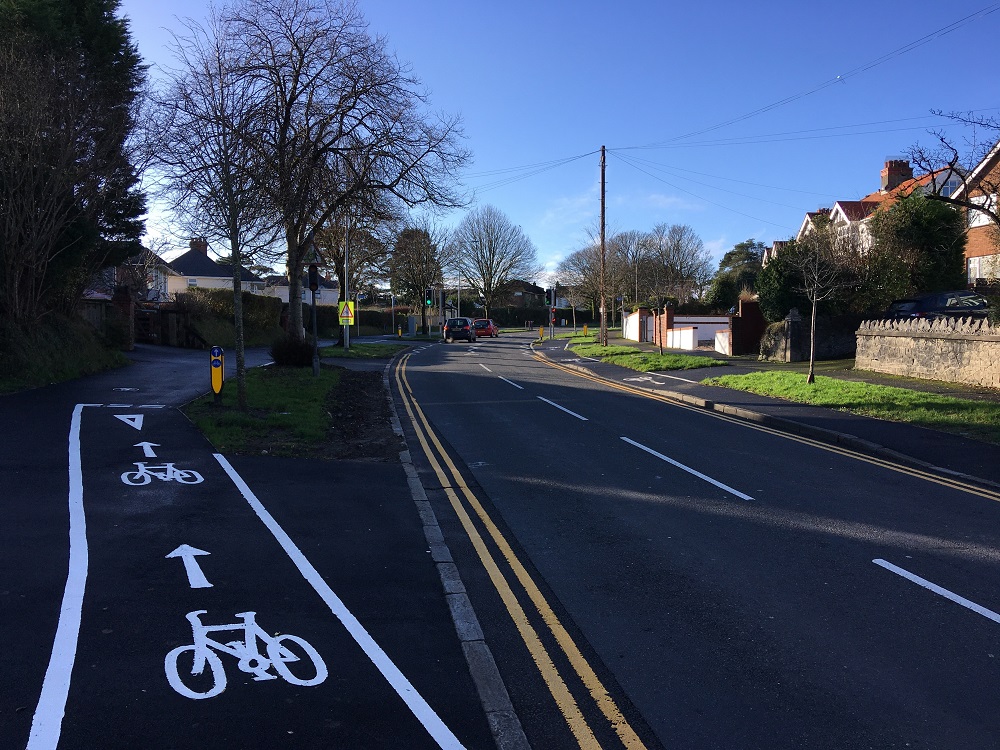
The North Wales Society of the Blind is encouraging cyclists to be more aware of road safety laws regarding pavements and cycle lanes.
The appeal follows an increase in the number of cases of cyclists crashing into blind people. Bicycles and electric bikes and scooters are already banned from using pavements acorrding to the Highways Act.
But the Society also wants to draw attention to complaints from blind people and people living with sight loss who do not feel safe walking on pavements, shared spaces and cycle lanes.
Accident
The charity from Bangor, Gwynedd represents the blind and people living with sight loss, supporting them to be as independent as possible.
The latest accident happened on a street in a North Wales town last week when a blind man was hit by an electric bike. The man – who did not want to be named – said he’d been left shaken by the incident.
He said: “I was walking on the pavement with my guide dog when the bike came from behind and hit my arm.
“I had just taken off my high-visibility jacket and was holding it in my hand when it happened.
“I said: ‘What are you doing? And she said, in English: ‘I rang my bell but you didn’t get out of the way!”
The man said: “I heard the bell but there was so much noise from cars etc on the street. Also I had no idea which direction the bell was coming from.
“You don’t expect someone to come behind you like that on a bike.”
He said that the woman’s reaction was disgusting despite having his guide dog with him. Now NWSB has called on cyclists to be more aware of the existing road safety laws.
Strong appeal
NWSB chief executive Steven Thomas said: “We are issuing a strong appeal to cyclists: please do not ride on pavements, and please take greater care when passing people on shared cycle paths.
“Pavements are designed for pedestrians, and cycling on them puts vulnerable people – especially those with visual impairments – at serious risk.
“Even on shared paths, ringing your bell doesn’t guarantee it will be heard, or that the person knows which direction you’re coming from.
“Many of our blind and partially sighted service users rely on these fantastic shared spaces to travel independently and confidently. Sadly, some feel unsafe due to the speed and close passing of certain riders.
“The recent incident, in which a gentleman was struck by a bicycle and then verbally abused by the rider, is absolutely disgraceful and deeply upsetting.
“This kind of behaviour not only endangers lives – it undermines the spirit of inclusive, respectful public space. Thankfully, not all cyclists act with such disregard; many are thoughtful and courteous, and we commend
them.
“Please remember: not all disabilities are visible, and some people cannot see or hear well enough to move out of the way in time. Respect, patience, and spatial awareness aren’t optional – they’re essential to
keeping our communities safe and welcoming for everyone.”
Support our Nation today
For the price of a cup of coffee a month you can help us create an independent, not-for-profit, national news service for the people of Wales, by the people of Wales.



I rang my bell…the arrogance, entitlement and lack of contrition sums up cyclists to a T.
“Get out of my way” culture is endemic amongst motorists, too. Anyone who has walked across a supermarket car park, for example, knows this full well.
The difference being, of course, that a car is a fully equipped, two ton death machine.
You didn’t need me to say that…
Yes, it is called “motonormativity” – the notion that motor vehicles should take precedence over all other road users, who should get out of the way of a tin box on wheels. Most drivers appear to be utterly unfamiliar with the Highway Code, especially its last revision a few years ago, in which a clear hierarchy of road use is given. Having said that, I would also come down hard on pavement cycling, e-scooters and the like, who give us all a bad name. I am a cyclist, but I am also a driver and a pedestrian.
Of course it does not sum up cyclists. You only hear about the bad ones, not the thousands of cyclists who stick to the rules. Stop reading Daily Mail headlines and start thinking.
It is part of the attitude of entitlement which has developed not helped by the failure of the state to prosecute cyclists. Also cyclists ride across pedestrian crossings which I always thought required you to dismount. Pedestrians also ought to be banned from wearing plugs and listening to audio rather than using all their senses while out.
Many cyclists wear ear plugs, have no lights , ignore traffic lights, ignore road markings , cycle too fast in crowded areas , cycle on the wrong side of roads or cycle in the middle of the road. People with electric bikes can do the same , but at a higher speed.
The Highway Code needs to be strengthened to give people-as-pedestrians and people-in-wheelchairs an absolute right of way over more highly energised modes – from e-scooters to HGVs – on pavements, across driveways, on shared pathways and wherever there is no marked route. Bicycle bells should be banned, as they provide no protection to cyclists from other traffics, and perpetuate a hierarchy over pedestrians which is indefensible. However, I wouldn’t want to ban cyclists (etc) from shared spaces, provided that new hierarchy was established and strictly observed. Riding a bicycle or scooter slowly among pedestrians is a skill which should be… Read more »
If the law regarded motor vehicle drivers as always responsible in case of an accident with a pedestrian, cyclist or horse-rider, regardless of circumstances, we might see a change of behaviour amongst motorists. A cyclist causing death or injury to anyone else is so rare as to receive extensive coverage in the media; not so with motorists who kill thousands every year.
I suppose we should be grateful that she had a bell, the majority do not!
Which ever mode of transport you are using Truck, Van, Car, Motorbike, bicycle, you have a legal and moral resposibility for those more vulnerable than you. But impatience and a sense of superiority seems to be all too common and overrides the caution that should be excercised.
Tipper truck drivers, taxi and van drivers seem to be the worst and motorcycles in North Wales. Then there are the idiot kids in black balacavas pulling wheelies and acting with impunity.
I will stop the rant.
Cyclists have a superiority complex brought on by their belief that their choice of transport is greener and therefore morally superior.
Well I choose to walk to work so my chosen means of transport has a much lower carbon footprint than a cyclist (as I don’t have the carbon footprint of a bike). Therefore, I’m morally superior to a cyclist.
The stupid thing is that cyclists and pedestrians should be allies against dangerous motorist, especially SUV drivers but the frankly arrogant attitude of cyclists doesn’t help.
When I cycle I am too busy avoiding or dodging dangerous drivers, so I don’t have time to feel morally superior. It is not a question of moral superiority, that is ridiculous. Most cyclists take their lives in their hands every time they go out, they don’t need your petty sniping.