


Blood test could accurately detect ovarian cancer in its early stages – study
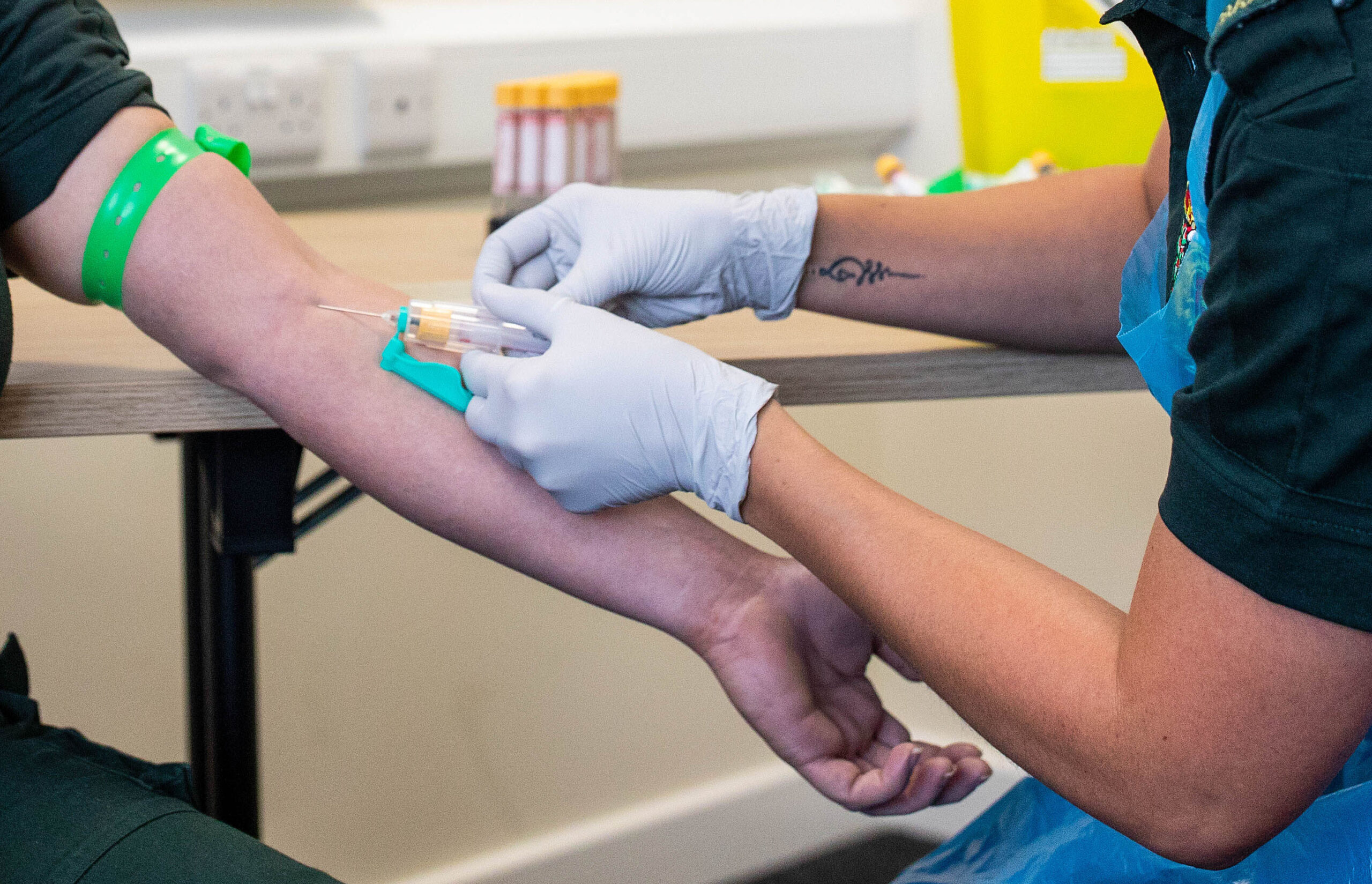
A simple blood test could accurately detect ovarian cancer in its early stages and has the potential to “significantly” improve care and outcomes for women with the disease, researchers suggest.
The test looks for two different types of blood markers in those showing symptoms of the disease, which includes pelvic pain and bloating, then uses machine learning to recognise patterns that would be difficult for humans to detect.
Experts are hopeful the test could one day be used on the NHS, subject to regulatory approval.
There are around 7,500 new cases of ovarian cancer in the UK every year, usually affecting women over the age of 50.
It is usually diagnosed using a mix of scans and blood tests, and sometimes biopsies, but is often detected too late when it is harder to treat.
Bloating
Symptoms such as bloating may not always be obvious, while other signs of ovarian cancer include persistent pain in the abdomen or pelvis, feeling full quickly after eating, and peeing frequently.
The blood test, developed by AOA Dx, looks for what cancer sheds into the bloodstream, even in its early stages.
Cancer cells release fragments into the blood which carry tiny fat-like molecules known as lipids, along with certain proteins.
This combination of lipids and proteins are like a biological fingerprint for ovarian cancer, according to AOA Dx.
Algorithm
The test also uses an algorithm which has been trained on thousands of patient samples to recognise subtle patterns across these lipids and proteins that signal ovarian cancer.
The test can detect the disease “at early stages and with greater accuracy than current tools”, according to Alex Fisher, chief operating officer and co-founder of AOA Dx.
Dr Abigail McElhinny, chief science officer of AOA Dx, added: “By using machine learning to combine multiple biomarker types, we’ve developed a diagnostic tool that detects ovarian cancer across the molecular complexity of the disease in sub-types and stages.
“This platform offers a great opportunity to improve the early diagnosis of ovarian cancer potentially resulting in better patient outcomes and lower costs to the healthcare system.”
A study led by researchers at the universities of Manchester and Colorado and published in the American Association of Cancer Research (AACR) journal Cancer Research Communications tested 832 samples using the AOA Dx platform.
In samples from the University of Colorado, the test was able to accurately detect ovarian cancer across all stages of the disease 93% of the time, and 91% in the early stages.
In Manchester samples, the test showed 92% accuracy at all stages and 88% accuracy in early stages.
Emma Crosbie, a professor at the University of Manchester and honorary consultant in gynaecological oncology at Manchester University NHS Foundation Trust (MFT), said: “AOA Dx’s platform has the potential to significantly improve patient care and outcomes for women diagnosed with ovarian cancer.
“We are eager to continue advancing this important research through additional prospective trials to further validate and expand our understanding of how this could be integrated into existing healthcare systems.”
Support our Nation today
For the price of a cup of coffee a month you can help us create an independent, not-for-profit, national news service for the people of Wales, by the people of Wales.


