


Bread of Heaven: Rhondda chapel saved by community marks anniversary of hymn’s first recital
Stephen Price
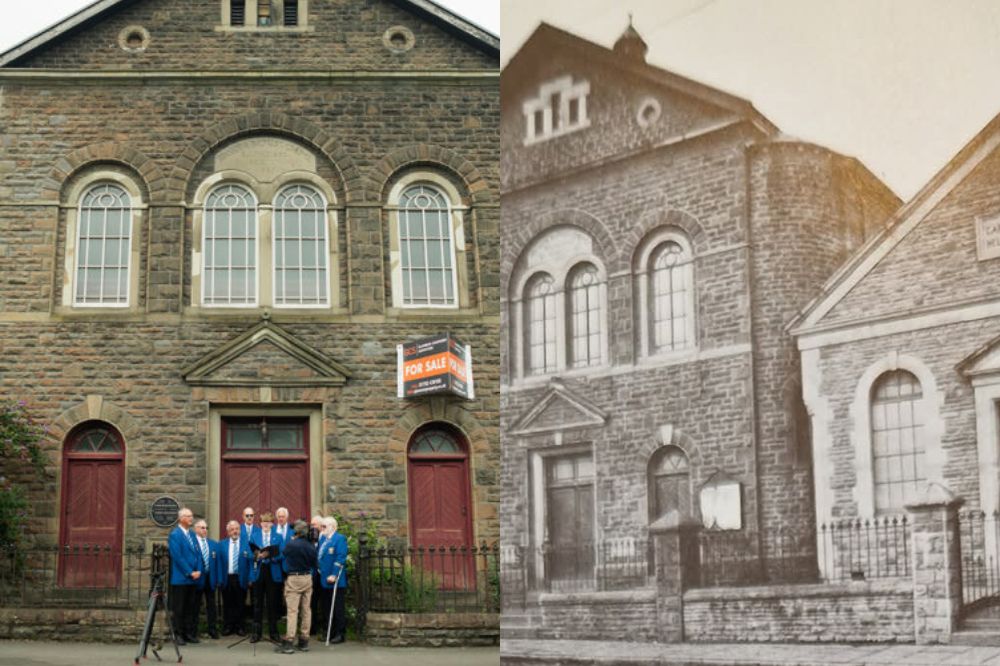
The organisers behind a recent campaign to purchase a nationally important Welsh chapel are marking the anniversary of the first time ‘Cwm Rhondda’ was sung today, and have shared some exciting updates on the chapel’s progress to date.
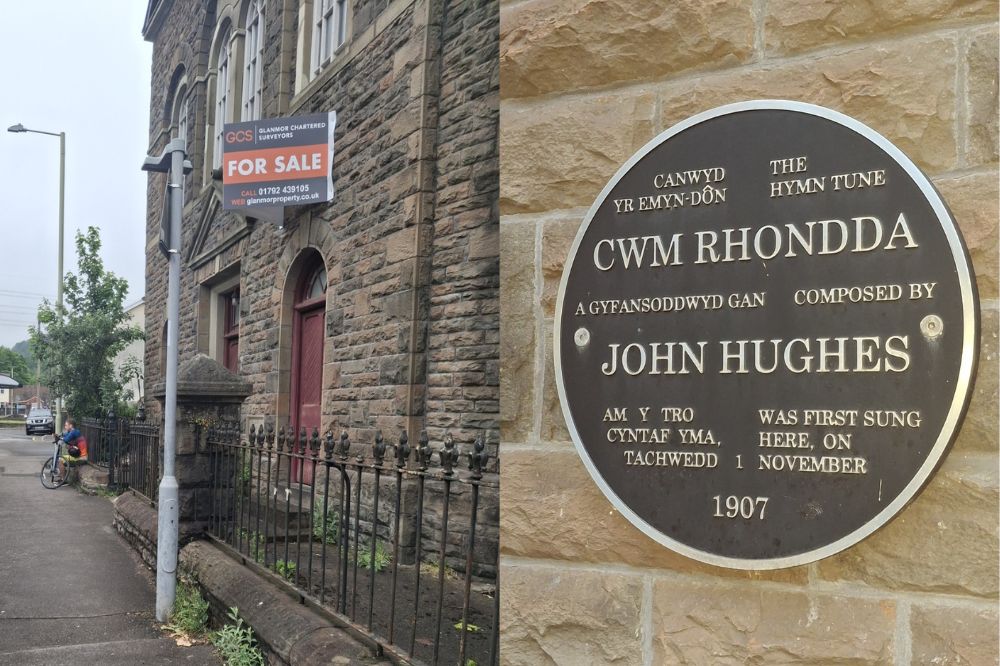
Cwm Rhondda, known to many as ‘Bread of Heaven’, has gone on to become an unofficial anthem of Wales, and was first sung at Capel Rhondda on Sunday 1 November 1907
Back in the early 20th century, it was the custom to hold a Cymanfa Ganu (Singing Festival) every year on the chapel anniversary.
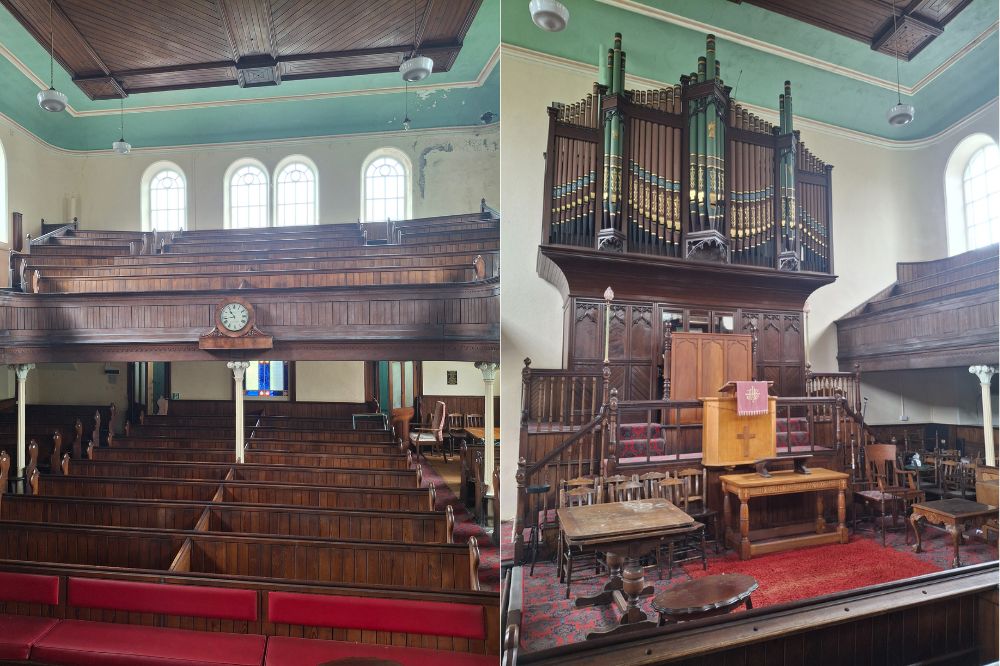
In 1907 there was also something special to celebrate – the chapel had just bought its first pipe organ, which is still in use a hundred years later. Pipe organs were only just becoming fashionable in Welsh chapels, and this was one of the first in Pontypridd.
The conductor of the singing at Capel Rhondda, DW Thomas, asked a friend of his, John Hughes, to compose a new hymn tune for the occasion. John Hughes called this new tune ‘Rhondda’ in honour of the chapel where it was to be first sung. However, there was already a hymn tune called ‘Rhondda’ composed by another local man, so John Hughes’ tune became known as ‘Cwm Rhondda’. It has become the best known of all Welsh hymn-tunes, and is a favourite in many countries.
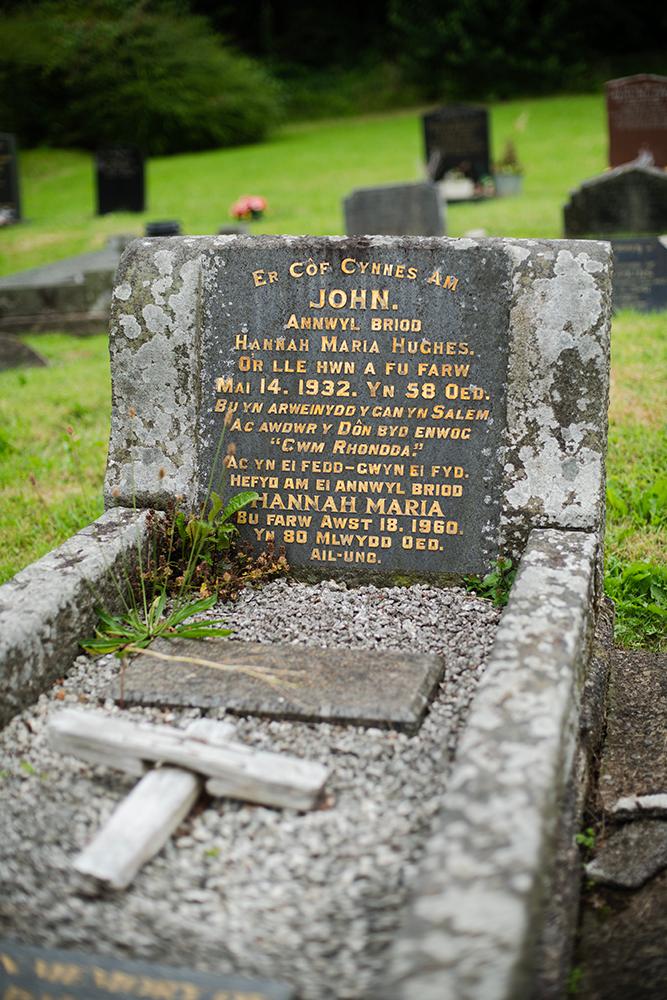
John Hughes was born at 95 Ivor Street, Dowlais, on 24 November 1873. When he was one year of age, the family moved to Llantwit Fardre, where he lived for the rest of his life.
At the age of 12 John Hughes began work as a doorboy at the Gelynog pit. A few years later he caught typhoid by drinking water from a stream, and when he recovered he was not strong enough to work underground. For most of the rest of his life he worked as a clerk at the Great Western Colliery, Hopkinstown, and travelled from Church Village on the Barry Railway.
John Hughes studied music, and soon became known as a conductor of choirs and a composer. At his chapel, Salem Llantwit Fardre, he was a Sunday school teacher and conductor of congregational singing. He directed chapel operettas and organised the annual Cymanfa Ganu of the local Baptist chapels. In addition to ‘Cwm Rhondda’, he composed over 30 other tunes, hymns and marches.
John Hughes died on the 14 May 1932.
Update
A crowdfunder was launched earlier this year to purchase the iconic Grade II listed Capel Rhondda, Hopkinstown, linked to Welsh hymn Bread of Heaven, fearing its potential sale to property developers.
And with news that the initial target has been met, the community is now rallying behind the Crowdfunder further to ensure that, following completion of the sale, important renovations and works to preserve the building can be met.
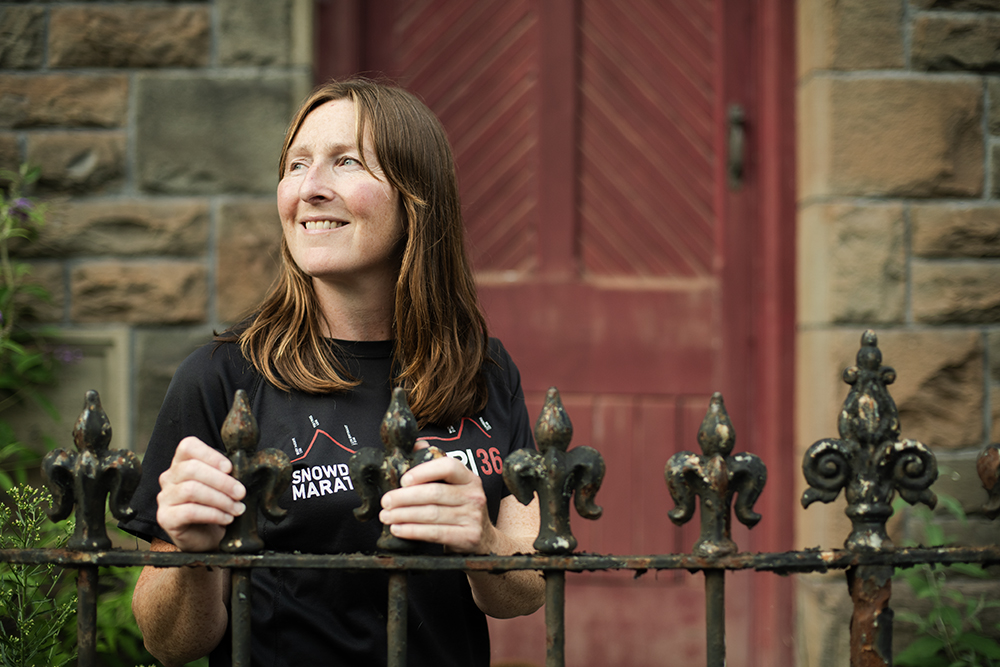
Since the Baptist Union of Wales accepted the community’s bid to purchase Capel Rhondda on 1 August, lots has happened behind the scenes, and Nation Cymru spoke with Rhian Hopkins, who originated the campaign, for an update on the anniversary of Cwm Rhondda’s first performance.
A Rhondda-based firm of surveyors contacted Rhian almost immediately and offered their services free of charge. The survey was completed in September and the report confirmed that significant investment will be required to repair and restore the chapel and vestry.
Repair work is estimated at almost £200,000. As well as the issues they were already aware of, such as the extensive Japanese knotweed in the graveyard and the rotten floor in the vestry, the survey revealed (among other things) that the vestry will require a new roof, several windows will need to be replaced and the electrics will need to be updated
A local firm of solicitors have recently offered them a significant reduction in their usual fees and will be managing the purchase of Capel Rhondda on our behalf.
Rhian shared: “Earlier this week, on 29 October, our community business, Capel Rhondda Cyfyngedig was finally incorporated. This feels like a huge milestone.
“Deciding on the most appropriate legal structure for our community business felt daunting, despite excellent advice and support from Cwmpas and discussions with other community businesses.
“We felt a certain pressure to complete the purchase of Capel Rhondda as quickly as possible but didn’t want to rush into establishing a community business without doing sufficient research. August isn’t an ideal time to be approaching potential directors as most people are in holiday mode or busy with family.
“Although the process has taken a little while, I’m confident that we now have a strong management board with a range of skills and experience. All 5 directors have connections to Hopkinstown or the surrounding area and we are all passionate about Capel Rhondda.”
Collaboration with Cardiff Met
For the past 6 weeks, the 2nd year Interior Architecture students at Cardiff Met have been using Capel Rhondda as a live project. Their brief, provided by their lecturer, was to design a ‘creative hub’.
The community’s vision is to transform the historic Capel Rhondda into a vibrant, forward-looking creative hub. The design will honour the building’s profound legacy as a centre of community, music, and Welsh nonconformist culture by reimagining it as a dynamic space for contemporary artistic practice. This project aims not merely to repurpose a building, but to reawaken its spirit, ensuring it remains a living, breathing heart for the community of Hopkinstown and a beacon for Welsh cultural heritage.
Now that the community business has been incorporated and solicitors have been appointed, there is a period of waiting for the purchase to complete.
Rhian told Nation Cymru: “While this is happening, we will be exploring funding options and planning community consultations.
“We’re really excited to be going to Cardiff Met to listen to the presentations by the Interior Architecture students. We will use their ideas to inspire discussions with the community about the future of Capel Rhondda.
She added: “I could never have imagined the impact of my eleventh-hour social media post. The 2-3 weeks which followed were unbelievably exciting and the support for the campaign from the community and the media was incredible.”
“Once the funds had been raised, the bid had been accepted and media interest had waned, there was a period of feeling the weight of responsibility.
“Most of those who had rallied to help with the fundraising campaign couldn’t commit to the project in the long term because of other projects they were involved in.
“Fortunately, one of those who was involved throughout the fundraising campaign and was, in fact, the first to donate to the Crowdfunder (Richard Huw Morgan) has been able to commit to the project and is now one of the directors of ‘Capel Rhondda Cyfyngedig’. His support has been invaluable.
“Most days, when I’m out and about, somebody will ask me, ‘What’s happening with the chapel?’ When I update them, many reply, ‘You still haven’t bought it?’ which can make me feel that progress has been slow, but I remind myself that this is a huge undertaking and although ‘still haven’t bought it’, we have made a lot of progress in 3 months.”
As for hopes for the building once it’s in the community’s hands, she said: “We really want this project to be community-led and we are committed to working with local ventures to ensure that we complement, rather than compete with, what is already available locally.
“We want to respect the building’s heritage while ensuring that it can meet the needs of future generations.”
Along with the other directors, she added: “I would emphasise that we will be working with other local community ventures to ensure that we are adding to the local offer and not competing.
“I think it would also be reasonable to say that we have had positive indications from RCT that the renovation and reinvigoration of the chapel aligns with their new Heritage strategy for the lower Rhondda.
“Definitely harder to get all the stages lined up in sequence but we are getting there! We recognise the importance of listening to and responding to what the various communities will tell us as to their aspirations for the chapel and vestry. And the need for ongoing support from volunteers and by donations and grant aid to allow those aspirations to be met.”
As for how can we at home help, Rhian said: “We’d be enormously grateful if people could get in touch to support the project in any way, by e-mailing [email protected].
“You can support us by volunteering your time or expertise or by providing financial support. We are so grateful to those who have reached out over the past few months.
“One individual has pledged £5,000 in memory of his grandmother, a local electrician has pledged a free day’s work, a company have offered to provide a team to tidy up the graveyard and a company which sells digital organs have pledged £10,000 towards the restoration of the organ.
“Seeing the community, and people who have never visited the chapel or even Wales, has been incredibly moving, and I’m sure together we can bring the building back to life if we keep this momentum going.
“Please follow our journey on social media and be sure to like, share and engage with posts so we can reach as many people as possible.”
Follow Capel Rhondda on social media:
To find out more and donate to the ongoing works, visit the crowdfunder here.
Support our Nation today
For the price of a cup of coffee a month you can help us create an independent, not-for-profit, national news service for the people of Wales, by the people of Wales.


