


Britain’s busiest and quietest railway stations revealed – with one Welsh station among the quietest
Rosie Shead, Press Association Transport Correspondent and Nation Cymru staff
Britain’s busiest and quietest train stations have been revealed today – with Cardiff named the busiest in Wales, and one Welsh station making the top ten among the quietest across Britain.
London Liverpool Street has retained its title of Britain’s busiest railway station for the fourth year in a row, new figures show.
The estimated number of entries and exits at the central London station in the year to the end of March was 102.7 million, up from 98 million the previous year, regulator the Office of Rail and Road (ORR) said.
London Liverpool Street first replaced Waterloo as the country’s busiest station in the year to the end of March 2023 and has retained this title ever since.
It has now became the first station in Britain in history to surpass 100 million entries and exits in a single year, the ORR said.
The opening of the central section of the Elizabeth line in 2022, which runs from London Paddington to Abbey Wood, led to a “large increase” in the use of Liverpool Street, according to the regulator.
Five of the 10 busiest stations in the country are all served by the Elizabeth line, with these being London Liverpool Street, London Paddington, Tottenham Court Road, Farringdon and Bond Street.
In 2025/2026, London Paddington was ranked second busiest, with 72.9 million entries and exits, up from third busiest the previous year.
London Waterloo (71.6 million entries and exits) was number three, followed by Tottenham Court Road (67.2 million) and London Bridge (57 million).
Birmingham New Street was the most used station outside of the capital, with 38.8 million entries and exits, followed by Leeds (28 million) and Manchester Piccadilly (26.6 million), according to the ORR.
In Scotland, Glasgow Central was the most used station and saw 25.1 million entries and exits while Cardiff Central was the busiest in Wales with 12.9 million entries and exits.
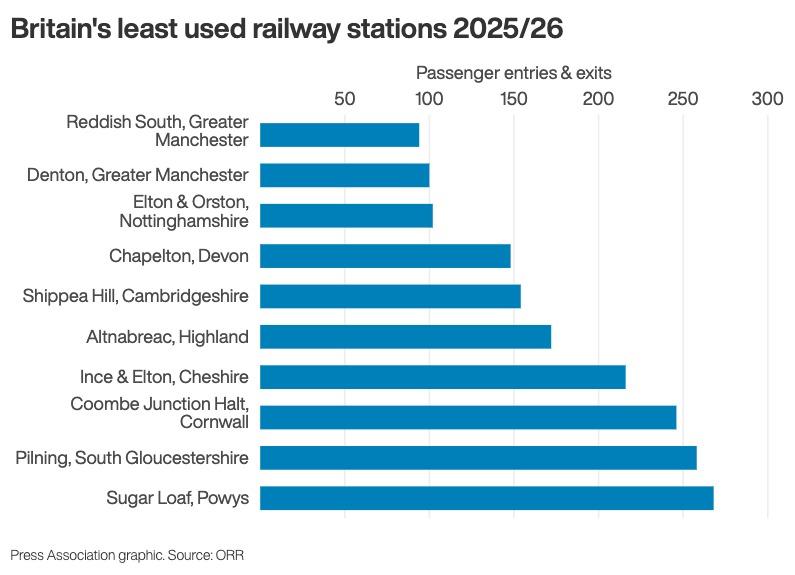
Reddish South, in Greater Manchester, was the least used British station of all those that were open that year and saw just 94 entries and exits, down from 102 the previous year.
The station is served by Northern Trains on the Stockport-Stalybridge line and sees just one service per week in each direction.
A total of 1,829 million passenger rail journeys were made between April last year and March 2026, an increase of 6% from the previous year, the ORR said.
Sugar Loaf
While no stations in Wales made the busiest, one in Wales came in at number ten in the least-used rundown.
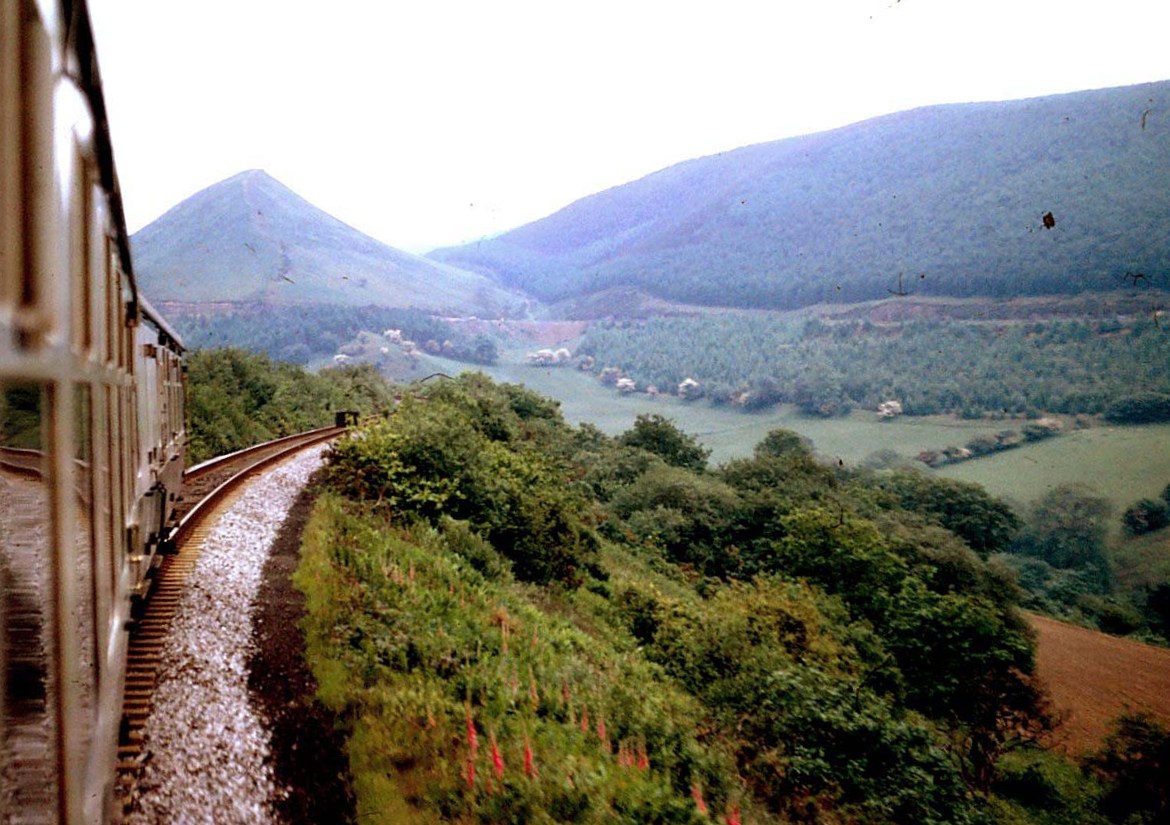
Sugar Loaf railway station is a railway station in Powys, and is on the Heart of Wales Line, between Cynghordy and Llanwrtyd, 50 miles 65 chains from Craven Arms South Junction, where the line joins the Welsh Marches line. It is the most geographically remote station in Wales, northeast of a small but prominent knoll known as Sugar Loaf, around which the A483 road loops.
The line through here was opened by the Central Wales Extension Railway on 8 October 1868 and the station opened in 1989, originally known as Sugar Loaf Summit and later as Sugar Loaf Halt (although it was only used by railway workers).
It was originally built to serve a number of cottages occupied by railway workers (such as signalmen and track gangers).
The children of the workers travelled by train to school in Llanwrtyd Wells.
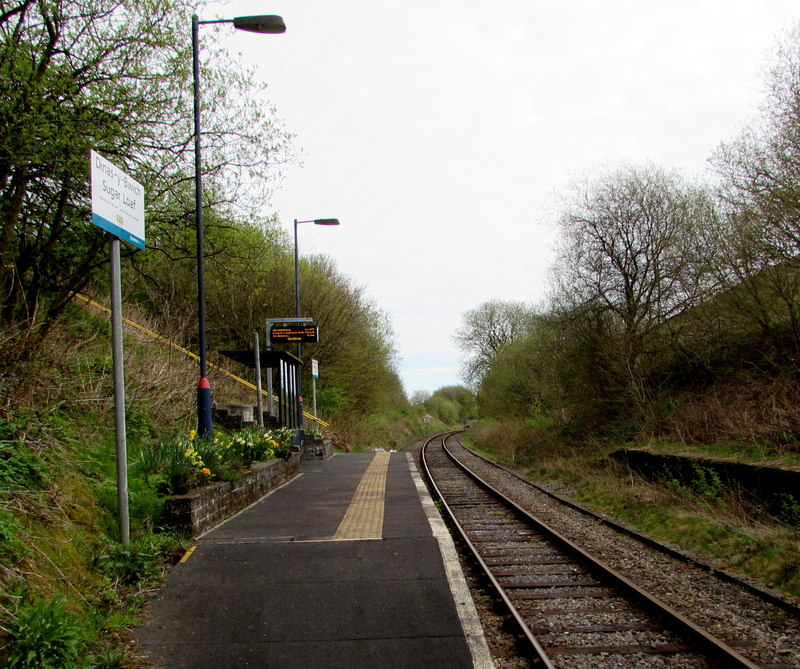
The station has basic amenities only – a waiting shelter and timetable poster boards – although it has had a digital CIS display fitted. There is no step-free access available, due to the station entrance being down some steps from the nearest road (the A483) along a narrow path and in a cutting. As there are no facilities to purchase tickets, passengers must buy one in advance, or from the guard on the train.
The station sees very few passengers; in 2010/2011 an estimated 84 passengers used the station and in 2014 it was reported that the station was averaging five passengers per month.
In 2017/2018, it increased its passenger usage by nearly 710% from the previous year, taking it to as many visitors in the year as the previous 17 years combined. Its low usage seemed to make it a popular attraction.
In 2020, with rail passenger numbers in general affected by the COVID-19 pandemic, the station saw 156 passengers, followed by zero the following year.
This station is a request stop used mainly by trekkers and cyclists, since it is the nearest stop to the Sugar Loaf vantage point.
Graham Richards, ORR’s director of planning and performance, said: “Liverpool Street becoming the first station to exceed 100 million entries and exits in a single year is a significant milestone for Britain’s railway.
“Our latest station usage estimates also show increases at major stations outside London, including Birmingham New Street, Glasgow Queen Street and Cardiff Central.
“This follows our recent passenger rail usage statistics, which showed a 6% increase in journeys across Great Britain in the year April 2025 to March 2026.
“Our rail usage statistics provide a valuable picture of passenger travel across the country, helping the rail industry understand changing demand and make informed decisions about services and future investment.”
Support our Nation today
For the price of a cup of coffee a month you can help us create an independent, not-for-profit, national news service for the people of Wales, by the people of Wales.
Get more trusted Welsh news
Choose Nation.Cymru as a preferred source in Google News to see more of our journalism.


