

‘Brutal’ harvest could be worst on record because of extreme summer – analysis
Emily Beament, Press Association Environment Correspondent
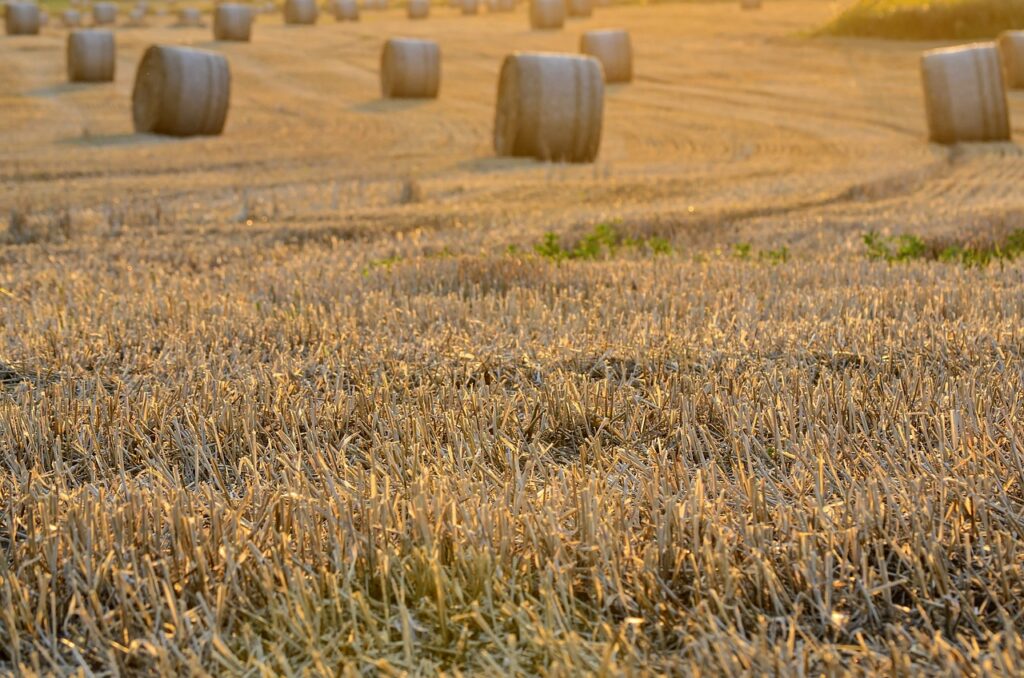
Farmers are warning the extreme summer has been “completely brutal” as analysis suggests 2026 could be the worst harvest on record.
Analysis by the Energy and Climate Intelligence Unit (ECIU) suggests the exceptionally hot, dry spring and summer could have cut the country’s cereals and oilseed harvest by 2.5 million tonnes compared to earlier forecasts.
The shortfall could be costing UK farmers as much as £390 million.
Forecasts in March and April from European and US agricultural bodies suggested that UK yields were on course to be at or above 10-year averages in 2026.
But the latest harvest data from the Agriculture and Horticulture Development Board (AHDB) suggests wheat, barley and oat yields will all be down, with wheat, around half of which has been harvested, averaging 6.8 tonnes per hectare, well below the 10-year average.
If the provisional yield estimates hold, the UK cereal and oilseeds harvest would be 19.5 million tonnes, overtaking 2020 as the worst on record since detailed records began in 1984, even after good yields for oilseed rape, ECIU said.
And even if things pick up, 2026 is likely to be one of the five worst harvests on record – four of which have occurred this decade, following extreme weather made more severe by climate change.
The UK is battling increasingly extreme weather fuelled by climate change, which is mostly caused by burning fossil fuels for power, to fuel cars, make industrial products and heat homes and buildings, along with agriculture and clearing forests.
This year, the UK has experienced record-breaking deadly heatwaves in May and June, followed by heatwaves and the driest July on record for England and Wales, plunging the whole of Wales and half of England into drought.
The extremely hot and dry summer comes after a dry spring – and is the second year in a row of extreme heat and drought, interspersed with extremely wet winters in what has been described as “weather whiplash”.
Martin Lines, chief executive of the Nature Friendly Farming Network (NFFN) and a farmer in Cambridgeshire, warned that there was “only so much you can do to adapt to these sort of extremes”.
He said the harvest this year had been “a real kick in the teeth”.
“After two terrible harvests in a row, the crops this year were looking good and full of potential coming out of spring, only for months of drought and heatwaves to destroy any prospect of a decent harvest,” he said.
“I’ve never known it this dry and hot on our farm.
“Even farmers I know who were sceptical of climate change are now saying they’re really worried about the future of their businesses and production, it’s just been completely brutal for our industry.”
And with high input costs because of the Iran war, he said planning crops for next year was “a total nightmare”.
“The nature-friendly practices we’ve deployed on the farm have helped our soils hold on to water for longer, but there’s only so much you can do to adapt to these sorts of extremes.”
Tom Lancaster, land, food and farming analyst at the ECIU think tank, said there was a danger of UK farming entering a “climate doom loop”, as the green and pleasant land transformed into a “parched and increasingly unproductive one” in the face of extreme conditions.
“At the start of spring farmers were hopeful of a better year, but the dry April and July and record-breaking heat have left farmers facing down the barrel of a third awful harvest in a row.
“Farming is now the sector most exposed to climate change and the risks and damage that it brings.
“From the wettest winter on record in 2024, to the hottest summer in 2025 and now unprecedented heat and drought this year, we are in danger of UK farming entering a climate doom loop, as repeated impacts undermine the capacity of farmers to drill next year’s crop,” he said.
Global temperatures will continue to rise until emissions of the greenhouse gases that are pushing them up are brought down to zero overall – known as net zero.
That means cutting emissions as much as possible by switching to technology such as wind and solar power, electric vehicles and heat pumps, and offsetting any remaining pollution by establishing forests, restoring peatland and potentially developing technology to capture carbon from the air.
Mr Lancaster warned: “Without reducing emissions to net zero, to bring the climate back into balance, conditions will continue to deteriorate.
“It is now a clear priority for the future of UK food production, farming and the countryside that sustains it.”
Support our Nation today
For the price of a cup of coffee a month you can help us create an independent, not-for-profit, national news service for the people of Wales, by the people of Wales.
Get more trusted Welsh news
Choose Nation.Cymru as a preferred source in Google News to see more of our journalism.



No it’s not. Reform and Tory say everything is fine and the farmers are making it up, it’s not global warming at all. Nope. Move along nothing to see.
(Kemi and Nige: oh hello oil man, thanks for the bung).
Over the last decade, in particular, there seems to have been an explosion of vehicles on our roads, mostly fossil fuel burning ones. We the general public need to do more regarding this issue but that isn’t easy. If I traveled to work (10miles away) by public transport it would take me 2 hours, rather than the 15 minutes by car. I’ve evolved to a hybrid car but that hasn’t been so easy with few charging points and long charging times. Even though I have noticed a big increase in charging points it’s going to take a long time to… Read more »
Whilst yields in the grain harvest is lower due to the early cropping, dry conditions, the quality is exceptional with high protein content. Of wheat in particular. At issue is the lack of crop diversity on individual farms and nationally. Agriculture has always been at the mercy of the weather, which is why we have the phrase of not putting all your eggs in one basket. As for woodland development that is only possible by a change in emphasis away from arable crops and towards livestock husbandry. You cannot drive a combine through the forest but you can graze your… Read more »
Agriculture has always been at the mercy of normal weather. This ain’t normal. Local farm is looking at crop failures at scale.
https://eciu.net/media/press-releases/uk-harvest-on-track-for-historic-lows-after-drought-and-heatwaves-desiccate-crops-new-analysis
If only someone had warned us this was going to happen, especially wildfires, something could have been done with a stroke of a pen, thousands of sausage eating ‘accidental’ arsonists roaming Tinderland…
There needs to be a new stiff brush in charge, muddling through will not do…