


Budget at a glance: What is in Rachel Reeves’ announcement?
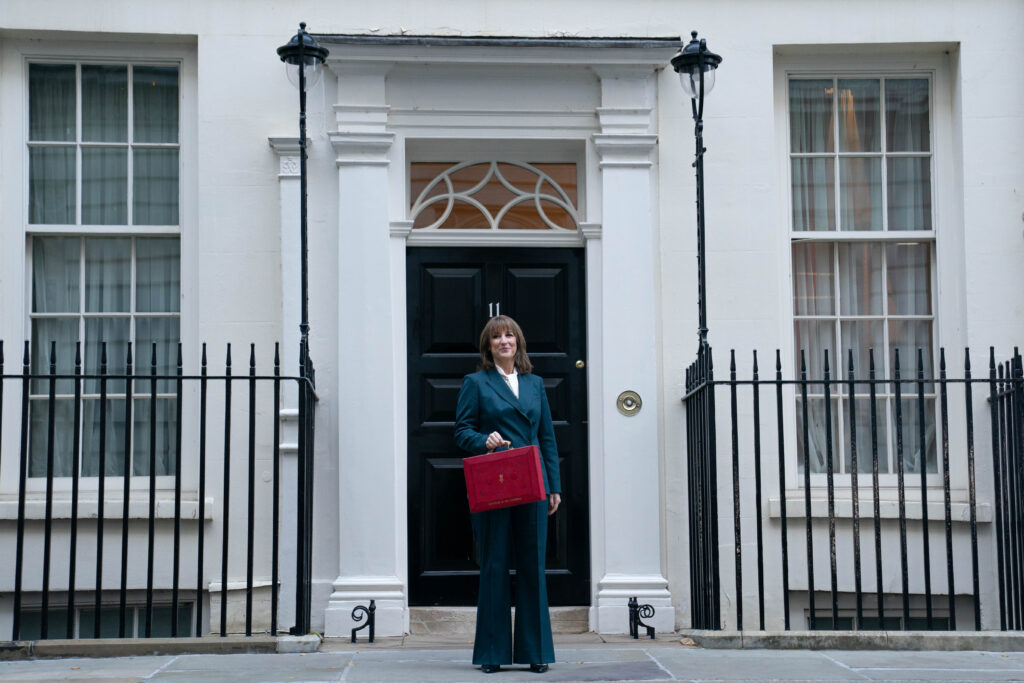
Rachel Reeves’s second Budget has been revealed ahead of time by the unexpected early publication of the Budget watchdog’s analysis, which lays out a series of tax rises Ms Reeves will introduce to fill a black hole in the public finances.
The Office for Budget Responsibility (OBR) also revealed Ms Reeves will introduce a series of measures aimed at helping people who are currently struggling with living costs, including a long-expected end to the two-child limit on benefits.
Here, the PA news agency looks at the tax rises and cost-of-living measures set to be in Wednesday’s Budget.
– Economic growth
The OBR has increased its forecast for economic growth this year from 1% to 1.5% but downgraded its forecasts for the following four years.
– Income tax thresholds
The Chancellor will extend a freeze of income tax thresholds until 2030, a move previously described as a “stealth” tax rise.
This will drag more people into paying the tax for the first time, and others into paying a higher rate as wages rise.
The OBR said the freeze in tax thresholds would result in 780,000 more basic-rate, 920,000 more higher-rate and 4,000 more additional-rate income tax payers in 2029/30, and estimated it will raise around £7.6 billion in 2029/30.
– Pensions and salary sacrifices
Ms Reeves will limit the amount of money people can put into their private pension pot, through a scheme called a salary sacrifice, before it incurs tax.
Anything above the new £2,000 cap will incur national insurance contributions from 2029, a move which has been estimated to raise £4.7 billion in 2029/30 and £2.6 billion in 2030/31. At the moment, there is no limit.
– Property taxes
A council tax surcharge will be introduced on properties worth more than £2 million, in a so-called “mansion tax”.
“There will be four price bands with the surcharge rising from £2,500 for a property valued in the lowest £2 million to £2.5 million band, to £7,500 for a property valued in the highest band of £5 million or more, all uprated by CPI inflation each year,” the OBR said.
It is set to raise £0.4 billion in 2029/30.
– Electric vehicles tax
Drivers of electric vehicles (EVs) will have to pay 3p per mile they drive under a new tax introduced by the Chancellor.
The move is in part to make up for falling revenues from fuel duty, as more motorists move towards using EVs.
– Two-child benefit cap scrapped
The two-child cap prevents parents from claiming universal credit or tax credits for more than their first two children.
The cap, introduced by the Conservative government in 2017, has been widely criticised by Labour MPs and anti-poverty advocate groups, who have said lifting it is one of the main levers ministers could take to alleviate poverty.
The move is estimated to cost £3 billion by 2029/30, according to the OBR.
– Travel costs frozen
A cut to fuel duty will be extended as a means of holding down the price of petrol at the pump.
The tax has been held at 57.95p since 2011, but the effective rate paid by drivers since 2022 has been 52.95p as a result of a “temporary” 5p cut.
Rail fares have also been frozen for a year.
Support our Nation today
For the price of a cup of coffee a month you can help us create an independent, not-for-profit, national news service for the people of Wales, by the people of Wales.



Well my takeaway was the increase in gambling taxes. About time. One of the worst and most depressing industry that’s grown over past 20 years
Agreed. As you mention gambling it is quite perverse to see Chancellor’s modification of Cash ISA rules hailed as shifting towards “business”. It does nothing of the sort. It will shift savings away from providers of mortgages and longer term loans and into the stock market which is another form of gambling. I don’t entirely disapprove of the stock market but it’s rather disingenuous to hail it as investing in business who only benefit when there are new issues on offer.
Depends on your perspective, of course. If more savers shifted money from cash savings into investments , ie UK equities, that could increase capital flowing into UK businesses and markets, which helps with growth, improve liquidity and long-term economic resilience. That in itself could brings greater stability. SnS ISAs are completely different to the gambling industry ….