


Burnham sets out plan to reform triple lock to pay for social care
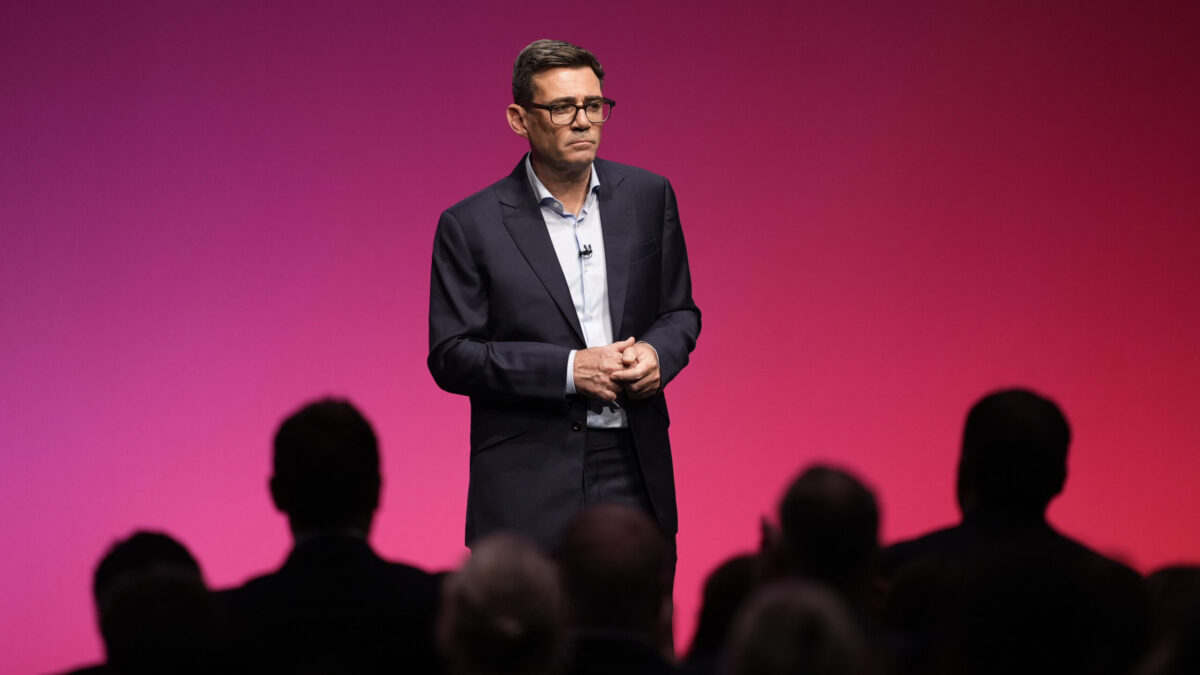
David Hughes, Christopher McKeon and Helen Corbett, Press Association
Andy Burnham has set out a radical plan to transform Britain, with proposals to reform the state pension triple lock to pay for social care, measures to pave the way for public control of water companies and a potential change in the UK’s electoral system.
In his first Labour Party conference speech as Prime Minister he vowed to overturn Margaret Thatcher’s 1980s reforms to give the public greater control over housing, water and energy.
Mr Burnham confirmed he wants to end the current pensions triple lock, which guarantees increases in line with the highest of inflation, earnings or 2.5%, in order to free up cash to fund his long-held ambition of creating a NHS-style care service in England.
And he said Labour will fight the next election with a commitment to change the first-past-the-post system used in Westminster contests.
Mr Burnham also set out the need for the UK to decide on its “long-term relationship” with the European Union, vowing to set out “options” for ties with Brussels around the major UK-EU summit later this year.
In an emotional speech, following the death of his father Roy earlier this month, Mr Burnham choked up as he said: “The United Kingdom my dad represented is the one I believe in.”
But addressing delegates in Liverpool, he said: “This country isn’t where any of us would want it to be.”
Mr Burnham, who replaced Sir Keir Starmer in No 10 in July, claimed there was a “sense of the powers-that-be pulling against the people, not with them”.
“If there’s one thing I want to put right, it’s that,” he said.
Taking aim at the changes introduced since the Thatcher administration in the 1980s, Mr Burnham said: “Britain has been on the wrong path for a long time.
“Deindustrialisation. Deregulation. Privatisation. Austerity. Brexit.
“And what has it given us? A country run for vested interests, not in the public interest.”
‘Common wealth’
He compared his task in building a new form of politics to the 1945 Labour government’s efforts to reshape the country in the wake of the Second World War.
Mr Burnham said: “We built the common good. Or at least we did until the 1980s.
“Suddenly, the common wealth we had created for the many was seen as an opportunity for the few.
“Homes. Water. Energy. Transport. Care.
“Broken up and sold off.
“The British right talk about ‘taking back control’.
“Never let them forget: they are the ones who gave it away in the first place.”
Setting out his plans for a new National Care Service, Mr Burnham said he wanted to build a “national consensus” around plans being drawn up following a consultation by Baroness Louise Casey.
“I accept I may pay a political price,” he said.
“But someone has to go through the pain barrier and rip the plaster off.”
Under the plan, the state pension would rise in line with inflation or 2.5% from 2030, breaking the triple lock’s automatic link with increases in average earnings.
But officials insisted it will also rise by more than this if needed in some years, to ensure it holds its value relative to earnings.
On water, Mr Burnham said new legislation would repeal “Margaret Thatcher’s ideological ban on public ownership of water companies”.
He said it would start a decade-long process to strengthen public control, with mayors getting “new powers to hold water companies to account, with tougher consequences for those which repeatedly fail”.
Welfare
Mr Burnham said a “fundamental rethink” of the welfare system is needed to fund new opportunities for young people, who would be “required to take up the help presented to them”.
On Brexit, Mr Burnham said leaving the EU “hasn’t given us control”, instead “we’ve lost some of the control we had over our economy, as a decade of low growth has put us in a weaker position”.
“Brexit has done more harm than good,” he said.
Labour was elected on a manifesto which promised no return to the EU’s single market, the customs union or freedom of movement.
But Mr Burnham indicated he wanted to explore much closer ties with Brussels, including measures to tackle immigration.
Ahead of talks expected later this year with EU chiefs, he promised to set out different options for the relationship with the bloc “and I will see if we can find consensus around one which will give us clarity about our position and the future of the continent that we live in”.
Support our Nation today
For the price of a cup of coffee a month you can help us create an independent, not-for-profit, national news service for the people of Wales, by the people of Wales.
Get more trusted Welsh news
Choose Nation.Cymru as a preferred source in Google News to see more of our journalism.



I watched it on Sunday and today he did not say social care in Britain but Social care in England and kept repeating England like a bloody Parrot no mention of Wales or even Scotland and Northern Ireland so he is going to take our small pension to pay for social care but the way he put it mentioning only England so us Welsh pensioners going to pay for England and not us he is P M of England Unionist party same as Tory and Reform the sooner we leave this corrupt DISUNITED KINGDOM THE BETTER
Social care is devolved, so it’s up to Welsh Government to address it here. If Burnham had talked about UK not England, then many on here would be howling about devolution undermined. Can’t have it both ways.
Indeed and the resulting consequentials might be the opportunity to merge health and social care, freeing up councils from this out of control spending and solving NHS bed blocking.