


Burnham urged to build new reservoirs amid ongoing drought
David Lynch, Press Association Political Correspondent and Nation Cymru staff
With a Welsh reservoir which provides water for central and north-west England currently at “exceptionally low” levels, Andy Burnham has been told to grip the problem of building new reservoirs, as Britain’s water stocks continue to fall amid the fifth heatwave of the summer.
MPs have urged the Prime Minister to deal with the “desperately worrying” strain on the UK’s water resources by speeding up the rate at which Britain’s new reservoirs are built.
Some nine new reservoirs are planned to be up and running by 2050 in England, aimed at helping to protect against water shortages by collecting more rain during wet periods, after a more than 30-year gap in which none have been built.
The issue has been thrown into stark relief by the ongoing drought across the country, with the Environment Agency revealing on Friday that the dry weather means that reservoir storage for England now stands at 66%, down from 69% a week ago and nearly 14 percentage points below the long-term average for the time of year.
Storage stood at 85% at the end of June, but has fallen steadily in recent weeks.
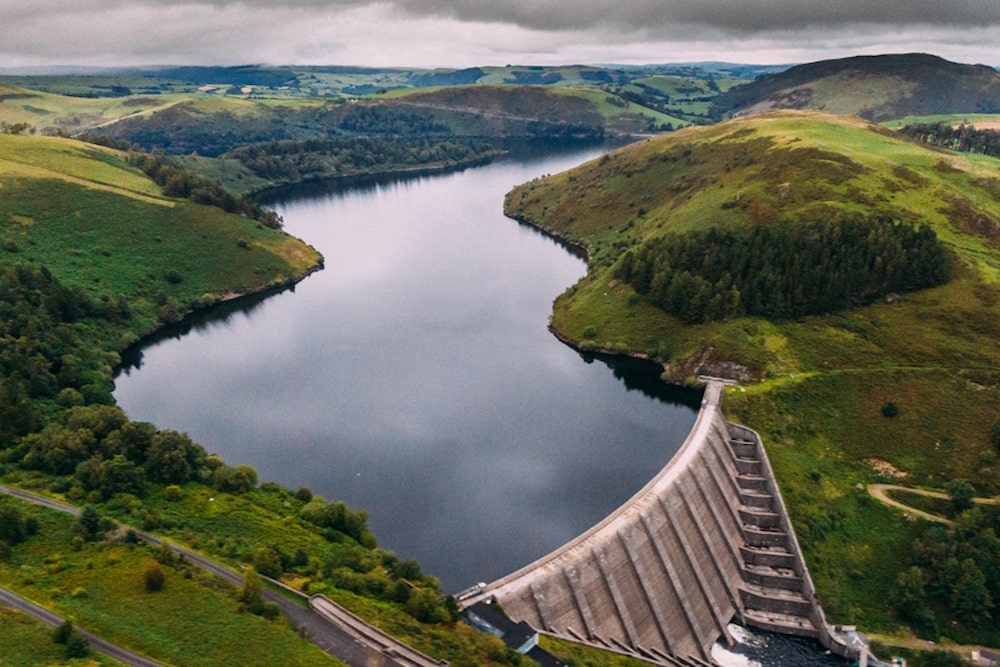
Five reservoirs are currently classed as having “exceptionally low” levels: Clatworthy in Somerset (48% full); Clywedog in Powys, Wales, which provides water for central and north-west England (56%); the Dove group of reservoirs in Derbyshire (69%); Hanningfield in Essex (56%); and Wimbleball in Somerset (46%).
A number of farming families were displaced when Llyn Clywedog was created in the mid-1960s.
The construction of the dam submerged 615 acres of agricultural land and forced the eviction of residents from several family farms in the upper Clywedog valley, including Aberbiga and Ystradhynod.
In 2022, the BBC reported how one farmer and his children finally got to glimpse their family’s home after over six decades.
Amid the upheaval of the summer drought that year, Aled Wyn Davies from Llanbrynmair, Powys, found a silver lining.
His father was evicted from their tenant farm, Aberbiga, in 1964, in order for the valley to be flooded.
Alistair Carmichael, a Liberal Democrat MP and chair of the Commons’ Environment, Food and Rural Affairs Committee (Efra), told the Press Association (PA): “It is desperately worrying. But worse than that, it is something which, had we made better decisions in the last couple of decades, or possibly even longer, we wouldn’t need to be here today.”
He said: “I think somebody within Government, probably the planning minister, has got to take control of the system and force the issue because there’s an awful lot of handwringing and ‘well, it’s awfully difficult and this is just the system’.
“For the Government, which is the most important part of the system, to blame the system – you can understand why people lose confidence in politics.”
Up to an extra 4,000 megalitres of water will be needed each day to meet Britain’s needs by 2050, the National Infrastructure Commission has previously estimated, which is calculated to cost at least £20 billion of investment.
A megalitre is the equivalent of a million litres of water. Each person in the UK uses an average of 136 to 142 litres each day.
Ministers have overhauled planning law to mark out reservoirs as critical national infrastructure, which takes planning decisions for them out of the hands of local councils and gives it to the Government.
But even with these steps, it will “still be years before you could even start construction”, Mr Carmichael said, as he called for farmers to be given more free rein to build small reservoirs on their land without planning permission as a means of protecting Britain’s food supply against drought in the shorter term.
Meanwhile, Helena Dollimore, Labour MP for Hastings and Rye, told PA that water companies should tighten up issues with leakage, something which accounts for nearly three billion litres of lost water each day across the country.
Ms Dollimore, a leading member of the influential Labour Growth Forum, previously the Labour Growth Group, said: “We’ve had a number of places in the country that have seen significant population growth and infrastructure growth, but not the change in water resources to come with that.
“So, we urgently need to build more reservoirs, and we need to see reservoirs as the important national infrastructure that they are.”
Water expert Roger Falconer said that the UK’s water needs were also set to grow because of the rising number of data centres used to run artificial intelligence and other digital services.
China and other eastern countries were “quantifying the amount of water that was needed to provide data centres in terms of equivalent population”, the emeritus professor of water and environmental engineering at Cardiff University said.
He also called for a more “holistic” approach to water management, where water usage was planned around the drainage basins of the country’s major rivers.
“If we had a river basin approach, as is the case for many countries in the world, or one organisation basically managing the water system, then I think we would have a much better holistic solution going forward into the future,” he told PA.
The Government was contacted for comment.
Support our Nation today
For the price of a cup of coffee a month you can help us create an independent, not-for-profit, national news service for the people of Wales, by the people of Wales.
Get more trusted Welsh news
Choose Nation.Cymru as a preferred source in Google News to see more of our journalism.



Not if you live on a spring, which is holding out nicely thanks to increased rainfall by 35% last Feb. We don’t moan when it rains, it’s manna, nor do we waste this best Adam’s Ale…
Tory rule has done for the country, Slash, Burn and Steal, The Fat Shanks Effect, how’s his moat of stinking liquid carbon doing…