


Business groups say Employment Rights Bill should be allowed to clear Parliament
Business groups have called on peers to back down and pass the UK Government’s workers’ rights legislation despite concerns with the package.
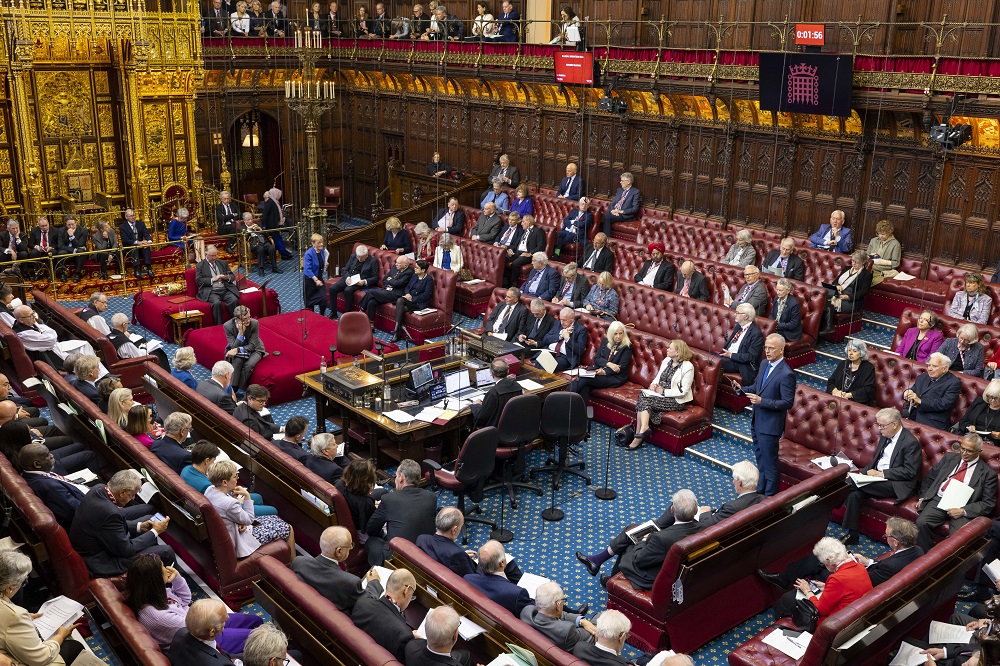
The Employment Rights Bill is caught up in a battle between the Commons and Lords, where the UK Government has suffered a series of defeats, but ministers still hope to get it through before Parliament shuts down for Christmas on Thursday.
Ministers have ditched a day-one right to protections against unfair dismissal, and replaced it with a six-month qualifying period in an attempt to get the legislation through.
But alongside this, the UK Government introduced an 11th hour measure to scrap the compensation caps for unfair dismissal, which are currently the lower of 52 weeks’ pay or £118,223 – something peers rejected in the most recent round of parliamentary “ping pong” between the Commons and Lords.
The business groups had argued that the cash cap should have been retained but increased to a higher sum.
Groups including the Confederation of British Industry (CBI) and the British Chamber of Commerce (BCC) acknowledged there were still issues with the legislation, but said “now is the time for Parliament to pass the Bill”.
In a joint message the CBI, BCC, Chartered Institute of Personnel and Development, Federation of Small Businesses, Recruitment and Employment Confederation and Small Business Britain said: “We were pleased to take part in the constructive discussions with the Government and trade unions that led to the agreement on a six-month qualifying period for unfair dismissal.
“This outcome came from meaningful, good-faith dialogue that enabled us to reach a consensus that represented a significant step forward which will have a positive impact on growth and opportunities.”
They added: “We confirm our position in agreeing to the removal of the 52-week cap on claims for compensation for unfair dismissal, as this change effectively removes the cap for all but the highest-paid workers.
“Unfortunately, we have not been able to reach a compromise that satisfies both the unions’ request for removal of the cash cap and our position of retaining it while raising the overall limit.”
They warned the proposed changes “will impact how the compensation system works and will exacerbate the challenges facing the tribunal system”.
But, they added: “On the Bill more broadly, we believe that the best way forward is to keep working with the Government and trade unions to find balanced solutions through secondary legislation.
“To avoid losing the six months qualifying period, we therefore believe that now is the time for Parliament to pass the Bill.”
The business groups added they had concerns about “several other powers” in the Bill, including measures on guaranteed-hours contracts, thresholds on industrial action and measures for seasonal and temporary workers, but “we are confidant that workable agreements can be found in due course”.
Business Secretary Peter Kyle said: “All parties – business, trade unions, Government and Parliament – have made difficult but necessary compromises to bring this Bill forward.
“In that same spirit of compromise, during the remaining stages of this Bill I urge everyone to recognise that the elected representatives of business, trade unions and the people are committed to passing this Bill without further delay.”
The legislation is being considered by MPs on Monday and will return to the House of Lords on Tuesday.
Support our Nation today
For the price of a cup of coffee a month you can help us create an independent, not-for-profit, national news service for the people of Wales, by the people of Wales.


