


Caerphilly by-election ‘taught Britain how to defeat Reform UK’
Martin Shipton
The Senedd by-election in Caerphilly in October 2025 provided a classic example of how Reform UK can be defeated by tactical voting, according to the anti-fascist group Hope Not Hate.
A new report from the group, Blocking the Path, analyses the opposition to Reform, and describes five separate categories of opponent who will figure in the run-up to the next general election, to be held by summer 2029 at the latest:
- Agitated activists. Passionate and impatient for radical left-wing change, but distrustful as to whether mainstream political institutions can deliver. Represents 6% of Reform’s opponents.
- Hopeful left. Progressive and optimistic. The anti-Reform voter who believes in the system and wants an open-hearted society. 14%.
- Pragmatic progressives. Left-leaning and values-driven, but worn down by economic realities. 30%.
- Comfortable moderates. Settled and conflict-averse. On the fence on culture wars, but decisively right wing on the economy. 30%.
- Disaffected right. Similar in some ways to Reform voters, but driven away from Reform by precarity and intense scepticism.
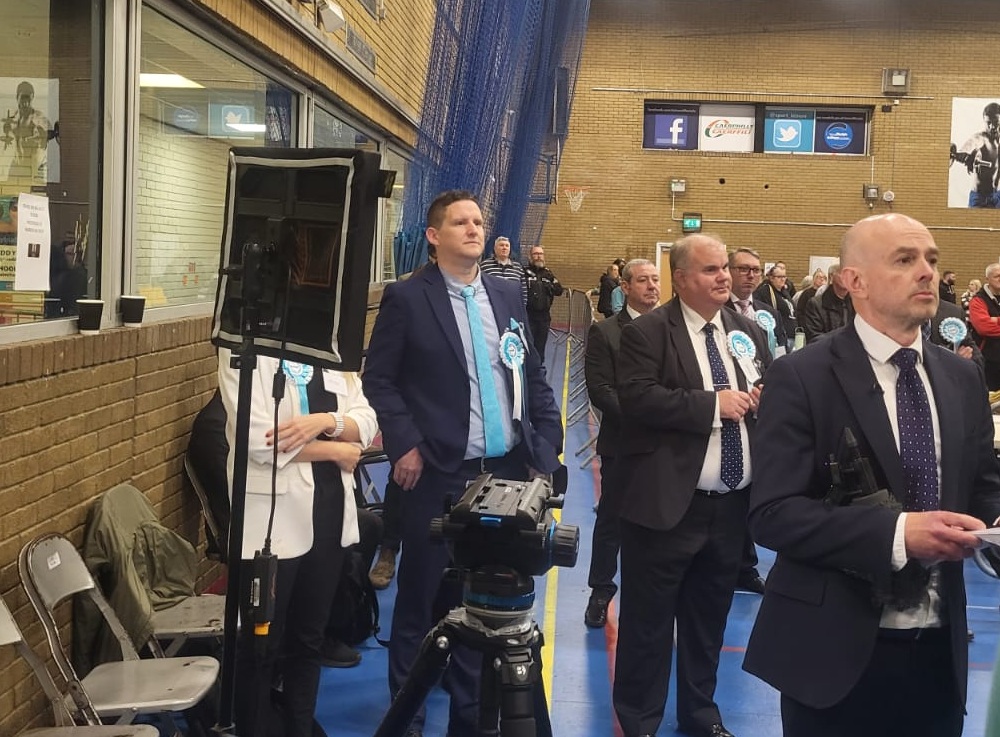
The report says of the Caerphilly by-election: “Perhaps the clearest example of anti-Reform tactical voting, this time in a Welsh Senedd constituency: Plaid Cymru won with 47% of the vote, with the vote shares for Conservatives, Liberal Democrats and Greens all 2% or less. Labour’s main obstacle was challenger viability, with a feeling that the party’s political position was fragile in Wales as a whole and also the seat, after some disagreement on candidate selection. Plaid Cymru positioned themselves both positively and as the party best-positioned to take on Reform.”
But attempts to get people to vote tactically are sometimes hampered by the parties themselves. The report states: “Unfortunately, tactical voting advice offered by political parties across the board has often been dubious – ‘only X can win here’ – and is not always primarily aimed towards beating Reform, even if it claims to be.
“There is very little evidence of tactical coordination at the 2026 local elections, despite many parties using literature to imply that their votes could stop Labour or Reform. There is a limit to which increasingly cynical voters will accept parties claiming to be the ones to beat Reform without seeing results.
“The belief that a party can stop Reform is hugely powerful to anti-Reform voters, but parties risk abusing this and discrediting it. Like the boy who cried wolf, dodgy data on leaflets and ‘it’s now or never’ could undermine public trust in tactical voting if overused before the next general election. More credible messengers could be important in coordinating local voters to participate.”
Overall, 43% of the British public say they would be unhappy with a Reform UK government [with 36% saying they would welcome a Reform government], but until recently, it has been the most likely outcome of the next general election.
‘Suspicion’
The report states: “Our study of 8,617 anti-Reform voters who would be unhappy with a Reform government reveals that they are not a coherent bloc. Instead, they are a coalition defined by suspicion of Reform’s ideological agenda and/or its ability to deliver.
“Our task is to understand why Reform deters these voters, what their current political preferences are and where they are situated across the electoral map. As Reform continues to be a legitimate electoral threat, we need a clear understanding of who can be targeted and coordinated to provide a strong electoral opposition. Reaching voters on the issues that matter to them, and not patronising them with moralising, will be essential.
“Two thirds of anti-Reform voters believe that Reform’s views are too extreme, with just 3% thinking the party’s views fall legitimately within normal debate. 91% of anti-Reform voters have a negative opinion of Nigel Farage. Although immigration is Reform’s flagship policy area, anti-Reform voters are most concerned by the prospect of Nigel Farage as Prime Minister, the impact on the NHS, health and social care and the consequences for the cost of living and the economy. Considering that there are anti-Reform voters who also hold anti-immigration views, Farage’s unpopularity and the risk a Reform government poses to the economy and household budgets are promising lines of critique.
“Being anti-Reform is not synonymous with being progressive, and voters differ on more than the traditional social and economic left-right axes. Amongst the issues that divide the anti-Reform coalition are institutional trust, attitudes to economic justice, support for climate action and even immigration and multiculturalism. A sizeable proportion of the anti-Reform coalition is concerned about immigration and ambivalent about left-wing economic policies like wealth tax and nationalisation. There is evidence of political volatility and party switching across all five segments, suggesting that political parties have lots to gain by understanding and attempting to reach these groups.
‘Clear information’
“For those interested in targeting tactical voters, we can reach them on the issues that most passionately concern them about Reform. For anti-Reform tactical voting to take place at the next general election, voters need clear information about which party is best-placed to beat Reform. In addition to understanding who to support, voters might also need to feel that there is a national risk of Reform forming a government, and that the tactical challenger is different enough from Reform to justify abandoning their actual preference.
“Using our latest constituency MRP voting intention projections, there are 463 seats where Reform is competitive, either coming in first or second place or within 10% of the winner (this captures three-way ties). We narrow this down to identify some of the key battlegrounds for tactical persuasion and coordination:
- 95 constituencies with a projected fragile Reform victory. These contests have a margin of three percentage points for Reform to chase or defend.
- 199 constituencies where there is ‘anti-Reform jeopardy’: Reform is currently projected to win, but only because of the anti-Reform vote being split between two or more challengers. In some seats this is due to a three-way tie, in others Reform is far in the lead, but could be beaten by tactical voting.
“Evidence from some recent by-elections suggests that anti-Reform jeopardy can decrease as an election date approaches, only if voters are clear on how to coordinate. In other cases, a lack of information and contradictory campaigning has left voters unable to form an opposition to Reform.
Bespoke strategy
“Each seat will need a bespoke strategy, based on continually updating information on which parties have the best chance of beating Reform, and whether voters are willing to stop the party. This will also require parties to jettison political pointscoring and manipulative campaign tactics such as dodgy data on leaflets and presenting themselves as the only anti-Reform option even if there is only limited evidence of this.
“Amongst the topics that could be framed towards the anti-Reform coalition to encourage their participation in voting as a form of countering the radical right are:
- Foreign policy. Anti-Reform voters are concerned about the threats posed by the USA and Russia. Farage’s closeness to Trump and the scandal of ex-Reform Wales leader Nathan Gill taking bribes for making pro-Russia statements in the European Parliament link Reform to these countries, which will be of interest across the coalition.
- A fairer taxation system. A wealth tax of 2% on £10m was the most popular policy we tested, including with a majority of the more right-wing segments. Economic redistribution provides a clear contrast to Reform’s economic policy and appeals to the broad anti-Reform coalition when clearly articulated as targeting only extreme wealth, not high earners.
- Security for working people. Aside from the Comfortable Moderates, the anti-Reform coalition is interested in workers’ rights narratives. In particular, the Pragmatic Progressives represent a large segment of voters open to strengthening protections for workers even if it increases costs.
- Public service safety nets. Protecting the NHS is a key priority for anti-Reform voters in the face of a potential Reform government, but this is accompanied by a feeling by some that public services no longer offer value for money. Distinguishing ideological from practical concerns is essential.
“Defending multicultural Britain. The Disaffected Right are more likely to think that identifying with another culture makes someone less British and that ethnic minority communities are treated better than the average person in the UK. A clear-eyed defence of multiculturalism, separate from questions of immigration and the economy, draws a clear line between Reform and wider political debate.
- Resisting the culture wars. Although the right of the anti-Reform coalition is more divided on issues like feminism and the legacy of the British Empire, there is a clear consensus that abortion should be allowed. Reform’s policy of reversing the decriminalisation of abortion will not land with the overwhelming majority of anti-Reform voters.
- The cost of living consideration. The cost of living impacts attitudes to climate and immigration differently: for climate, ideological concerns and economic concerns are largely independent from each other, whereas immigration attitudes are more coherent, with those who are concerned about the impact on public services less likely to support more open immigration policies. This suggests that turning the tide on hostile immigration attitudes means directly addressing material concerns, whereas for climate a clear explanation of how action will not negatively impact prices might be sufficient.
Struggling
The report concludes: “With the party and leadership struggling, Reform victory is far from inevitable. Yet complacency is not an option, with so many seats unprecedentedly close to call. By looking at a target audience that expands beyond the usual sub-groups of ‘progressives’ or ‘moveable middle’, we can see the full expanse of the electoral picture.
“The work to begin now is not selecting the one issue or one party that can reach anti-Reform voters – that will come much closer to an election date. Rather, we should be exploring how different angles of the ecosystem can play their part in building anti-Reform disapproval, and converting this into productive electoral dissent.”
Support our Nation today
For the price of a cup of coffee a month you can help us create an independent, not-for-profit, national news service for the people of Wales, by the people of Wales.
Get more trusted Welsh news
Choose Nation.Cymru as a preferred source in Google News to see more of our journalism.



Well, these demented hate mongerers are evolving and their lies and deceit are becoming more tailored to Cymru. While we can relish the prospect of a farage based distraction in his parliamentary inquiry, his evil will continue to prevail and the tail online will keep finding and publishing only the news where people of colour and Muslims have committed crime.
You can be certain that Reform will go all out in the Council elections on a scale never experienced in Wales before especially in SE valleys . Laboutr controled Cwmbran is home to Reform’s chief cheer leader Cllr David Thomas It’s certain to be blitzed Adjoining wards to Llantarnam his own .Llanyrafon & Croesycelliog can expect to receive door knocks shortly after the Reform party conference next week Wha is going to be truly sad is that decent local councillors are going to lose their seats Jason O Connell MS when he was elected as a councillor These were his… Read more »
Tactical voting defeats is not defeating the evil ideology though. The daily arguement needs to be won