

Call to ban ‘dangerous’ weed killers in Wales
Martin Shipton
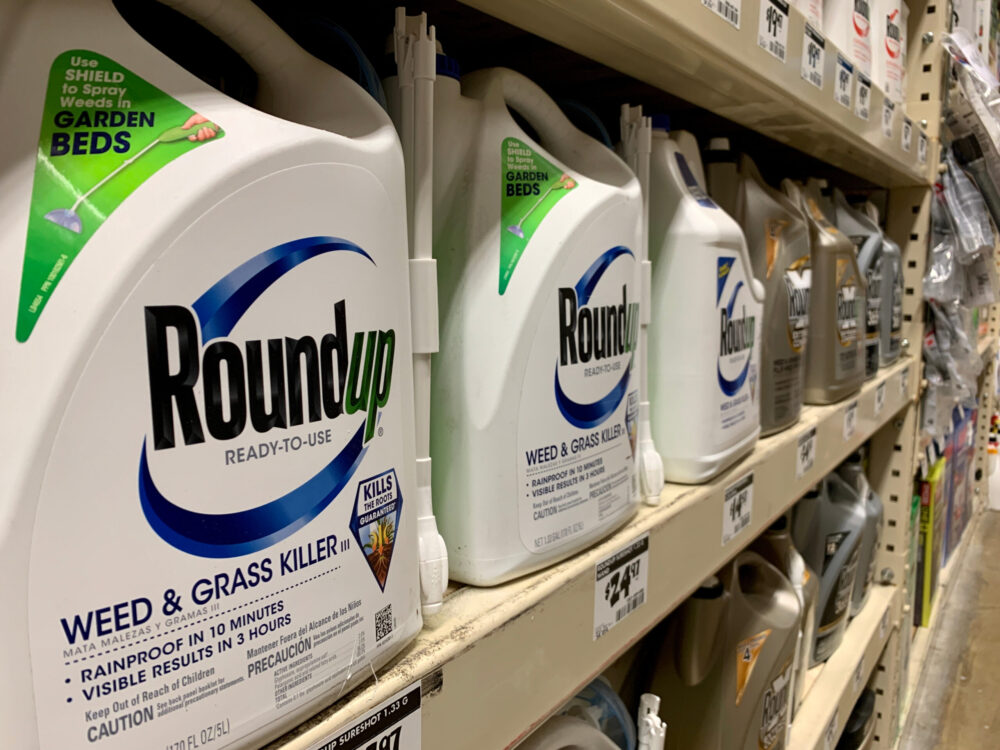
A coalition of groups has called on the Welsh Government to phase out the use of glyphosate-based weed-killers in public spaces following mounting evidence that they are damaging to public health and the environment.
In a letter to First Minister Eluned Morgan, they state: “We are a collection of residents, community groups, academics, businesses and politicians committed to protecting the health, biodiversity, and wellbeing of communities across Wales.
“We are grateful for the Welsh Government’s stated ambition to be world-leading in sustainability and future generations policy. However, we are increasingly concerned that the continued widespread use of glyphosate-based herbicides in public spaces is incompatible with those ambitions and with the scale of the environmental and public health challenges we now face.
“Furthermore, the latest comment from Land Use Consultants in March 2026 states: “The evidence against glyphosate is mounting – this hazardous substance should be banned.”
“We urge the Welsh Government to adopt a clear, time-bound, nationwide phase-out plan for glyphosate in public settings, alongside a separate, supported transition plan for Welsh agriculture.”
The letter goes on to set out a series of reasons why the substance should be banned.
Human Health – Growing Evidence of Risk
Glyphosate was classified in 2015 by the International Agency for Research on Cancer as “likely carcinogenic to humans.” Since then, the evidence base has expanded considerably.
Recent reporting has highlighted the detection of glyphosate residues in UK playgrounds, including soil and play equipment, raising serious concerns about exposure in places designed to be safe for children
Children are uniquely vulnerable to pesticide exposure due to developmental sensitivity and behavioural factors such as hand-to-mouth contact. Research from the University of California, Berkeley (2023) found that childhood exposure to glyphosate and AMPA is associated with increased risks of serious diseases later in life, including liver cancer, diabetes and cardiovascular disease.
Independent toxicologists have raised concerns that regulatory “safe limits” may not adequately reflect real-world chronic exposure or formulation toxicity. Emerging evidence also links glyphosate exposure to endocrine disruption, organ toxicity and microbiome disruption.
Public spaces—parks, pavements, playgrounds, sports pitches—are precisely the environments where exposure should be minimised, particularly for children, pets, and vulnerable populations.
Biodiversity Emergency – Wales at a Tipping Point
Wales is in a biodiversity emergency. The Natural Resources Wales State of Natural Resources Report 2025 makes clear that biodiversity, soil health, water quality and ecosystem resilience continue to decline despite strong legislative frameworks.
Nearly one in five species in Wales is at risk of extinction. Ecosystems are under sustained pressure from pollution, habitat loss and chemical inputs.
Glyphosate contributes directly and indirectly to these declines:
* It eliminates flowering plants that support pollinators.
* It disrupts soil microbiota essential for nutrient cycling.
* It harms aquatic organisms when residues enter waterways.
* It contributes to reductions in insect biomass, undermining entire food webs.
Evidence summarised in environmental toxicology literature demonstrates impacts on non-target species, especially aquatic organisms.
Research also shows glyphosate affects soil organisms and microbial communities critical to soil health.
Studies on pollinators demonstrate altered gut microbiota and immune suppression in bees following glyphosate exposure.
The loss of insects, birds, and pollinators is not abstract—it directly affects food security, ecosystem stability and long-term resilience.
In January, Defra’s Nature Security Assessment: Global Biodiversity Loss, Ecosystem Collapse and National Security explicitly recognised biodiversity loss as a national security risk.
Continuing the routine use of broad-spectrum herbicides in public environments sits uneasily alongside such warnings.
Fossil Fuel Link & Climate Implications
Glyphosate is part of a petrochemical system dependent on fossil fuels. Approximately 99% of synthetic chemicals, including pesticides, are derived from fossil fuel feedstocks and involve energy-intensive production processes.
Reducing reliance on glyphosate therefore aligns not only with biodiversity and public health goals, but also with climate commitments.
Council Action Across the UK – Wales Falling Behind
Momentum across the UK is clear. According to Pesticide Action Network UK over 100 councils in England and Scotland have either stopped using glyphosate entirely or committed to phasing it out in public spaces.
National media have also reported the rapid expansion of pesticide-free initiatives among UK councils.
Yet to date, no Welsh council has formally joined this list with a full ban or committed phase-out plan.
In Cardiff specifically, we have been raising concerns for several years. A small-scale trial of alternatives was undertaken, but the conclusion was to continue using glyphosate. While we recognise operational challenges, this outcome reflects a precautionary gap at precisely the time when precaution is most needed.
Wales has often positioned itself as progressive and world-leading in environmental governance. This is an opportunity to demonstrate that leadership in practice.
Alignment with the Well-being of Future Generations (Wales) Act 2015
The Well-being of Future Generations Act requires public bodies to act in ways that:
* Prevent problems from worsening
* Safeguard long-term wellbeing
* Deliver a *Resilient Wales* and a Healthier Wales
* Protect natural resources for future generations
Continuing to apply a chemical classified as probably carcinogenic in playgrounds and public green spaces is difficult to reconcile with the preventative and long-term principles embedded in the Act.
Safe, abundant nature is fundamental to mental health, community cohesion and national wellbeing. Public confidence in green spaces depends on trust that they are not routinely treated with harmful chemicals.
Our Request – A National Phase-Out Plan
We respectfully but urgently call for:
1. A formal Welsh Government commitment to phase out glyphosate in all non-agricultural public settings, including streets, playgrounds, parks and sports pitches.
2. A clear, time-bound national phase-out plan with milestones and accountability.
3. A requirement for all Welsh councils to commit to the plan.
4. A separate, supported agricultural transition strategy, promoting Integrated Pest Management and regenerative approaches.
5. Transparent monitoring and public reporting on pesticide reduction.
Wales is already facing a biodiversity emergency, growing public health pressures, and escalating climate instability. Preventative action now will reduce long-term ecological, social and financial costs.
This is not simply an environmental issue. It is a public health issue, a children’s safety issue, a biodiversity survival issue, and a future generations issue.
We believe Wales can lead the UK—and internationally—by adopting a bold, science-led, precautionary approach.
We would welcome the opportunity to meet and discuss how such a transition could be supported collaboratively and pragmatically.”
The letter is signed by WWF Cymru, Cardiff Civic Society, Pesticide Action Network, Keep Wales Tidy, Green Squirrel, Friends of Gwent Levels, Friends of Bute Park, Bute Park Community Orchard Trust, Secret Garden Café, Cathays Wild Gardeners, FOE Cardiff, Save the Northern Meadows, Wales Green Party, Welsh Farmhouse Ltd, Watson & Pratt’s, Rhiwbina Eco Team, Save our Woods and Wildlife, Cardiff National Park City, Global Gardens Project, Ediculture, Professor Dave Goulson, School of Life Sciences, University of Sussex, and author of Insectarium and Silent Earth, Dr Panos Paris, senior lecturer, Cardiff University and GP Dr Sanjay Ahlawat.
Support
A spokesperson for the Welsh Government said: “We are committed to promoting the sustainable use of pesticides in line with the UK Pesticides National Action Plan (2025). We are providing support to all types of users of pesticides to encourage reduced and more responsible use of pesticides through guidance, training and the promotion of practical alternatives.”
The spokesperson added: “Like all pesticides, and the active substances they contain, glyphosate is subject to strict regulation in Great Britain. Pesticides are only approved for use if the evidence shows that they won’t harm human or animal health and won’t have unacceptable effects on the environment.
“The Health and Safety Executive is currently reassessing glyphosate to determine whether it continues to meet strict approval criteria.
“As an example of the support being provided, this week we hosted a workshop for local authorities and other land managers on the use of alternative weed‑management approaches. This focused on weed prevention, monitoring, and targeted intervention using a combination of methods while keeping chemical use to levels that are ecologically and economically justified.”
Support our Nation today
For the price of a cup of coffee a month you can help us create an independent, not-for-profit, national news service for the people of Wales, by the people of Wales.


