

Campaigners ask if missing Welsh eagle was poisoned
Stephen Price
A wildlife protection organisation has raised concerns after discovering that a number of wild bird poisonings have taken place near areas managed for ‘game bird’ shooting – calling on the Welsh Government to do more for Wales’ native birds.
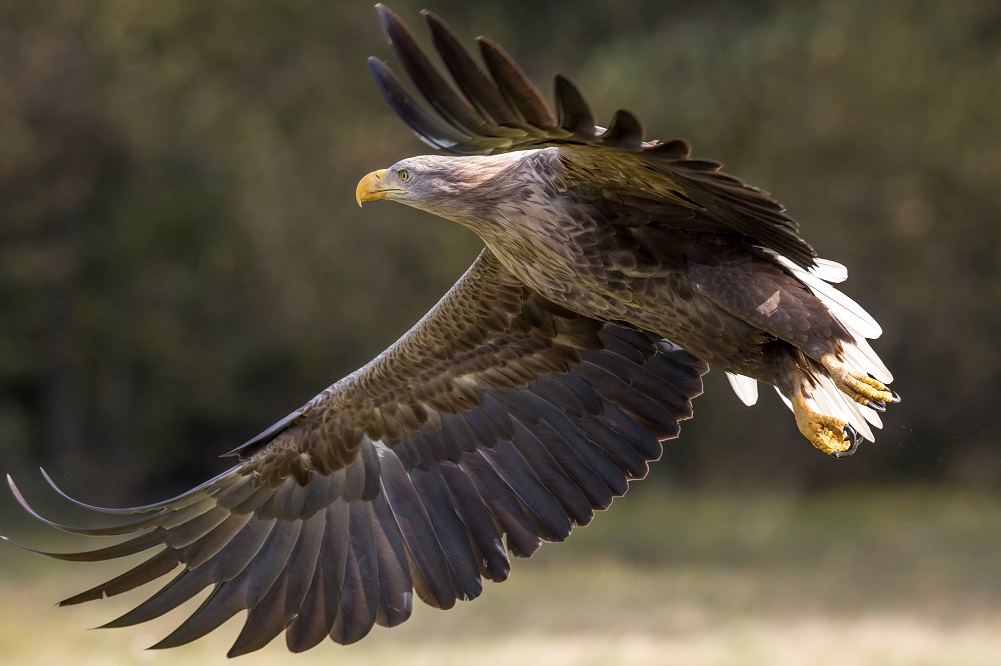
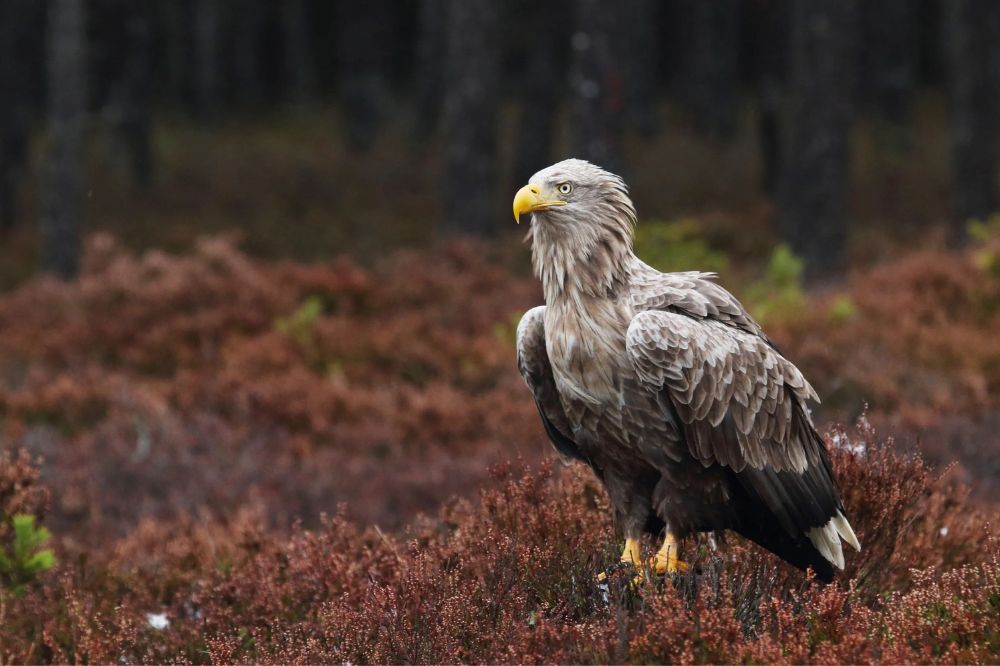
Nature lovers across Wales were horrified in September when a White Tailed Sea Eagle disappeared near Newtown, Powys; with strong evidence that this rare bird had been illegally killed. The bird had been carrying a radio transmitter which had been cut off and hidden on some moorland. There is no evidence in the public domain which suggests that the bird was killed at the location that the transmitter was found.
New information collected by the wildlife group Wildlife Poisoning Research UK (WPRUK) has found that there have been a number of wildlife poisonings in the area where the transmitter was found and has led them to question whether this eagle was poisoned too, possibly from eating a poison bait put down to kill other wild birds.
Since 2012 at least 18 birds have been killed in this area by suspected poisoning, including 11 ravens, 4 red kites, 2 buzzards and 1 crow. With so many birds killed in this area and the indiscriminate nature of these toxins, poisoning of this eagle must be considered likely.
Many people probably imagine that the use of poisons to kill protected wildlife is something out of the pre-Victorian era, like cock fighting and bull baiting. However, this senseless and cruel slaughter is still happening in Wales, with many mammals and birds of prey suffering horrific and agonising deaths, even though this practice has been banned since 1911.
It is a crime which not only kills wildlife, but also kills much loved family pets and can even kill people. This is a wildlife crime that frequently occurs on remote and private land where the chance of detection is very low and most victims are never found. Those cases which are reported and then investigated must be considered to be a very small tip of a very large ‘iceberg’ of sickening rural felonies.
Mapping project
WPRUK has stepped in to pick up a commitment which has been abandoned by the UK Government – producing maps showing where illegally poisoned birds have been found. In 2017, in an attempt to combat this form of wildlife crime, the UK Government initiated a project to map incidents of illegal bird poisonings. This provided information to the public as to where these crimes were taking place and it was intended that these maps would be updated annually to “provide an invaluable intelligence tool to help fight crimes against birds of prey” (Defra press release 2017).
It now appears that these wildlife poisoning crime maps have not been updated and there is very little governmental action informing the public that these crimes are still occurring and wildlife is still being deliberately poisoned.
WPRUK works to place information about the environmental impact of pesticides and toxins into the public domain so that the general public and the media have a better understanding of this situation. Data on cases of deliberate poisoning of birds has been obtained using Freedom of Information requests. This has enabled WPRUK to produce maps showing where these poisoned birds have been found. This is information which the UK Government, for whatever reason, has now apparently declined to put into the public domain. The first map published showed the location of poisoned birds in Northern England and now a map for Wales has been produced.
What has been found in Wales:
- Between 2012 to 2023, the bodies of 88 legally protected birds, mostly birds of prey and ravens, were found in Wales and along the border, which were suspected of having been illegally killed by the deliberate use of poison. 29 of these birds were Schedule 1 Wildlife and Countryside Act (1981) species, which have the highest level of protection in the UK. Evidently, the enforcement regime currently in place in Wales is not preventing this ongoing criminal activity.
- There were a number of incidents which involved multiple bird deaths, where there were 5 or more victims. All these incidents were in or on the border of the county of Powys in Mid-Wales, where the eagle disappeared last year.
- There was also a high frequency of suspected poisoning incidents in the area of the Clwydian Hills and Dee Valley in North East Wales. Part of this area, Ruabon Moor, is managed for grouse shooting. Suspected poisonings were far more frequent here than in the adjoining English county of Cheshire to the east. Previous research by the RSPB has shown a high number of gamebird shoots in this part of Wales and an association of wildlife crime with some elements in this industry.
Releasing the report on where poisoned birds have been found in Wales, Dr Ed Blane from WPRUK said: “The fact that 115 years after this sickening practice was banned, individuals are still poisoning our wildlife is deeply disturbing. People visit the Welsh countryside to enjoy nature and they will be truly alarmed to learn that poison is still being used to kill wildlife.”
“There is now well documented evidence that many of these wildlife crimes are associated with some elements from within the game bird shooting industry. However, this industry is relatively unregulated in Wales. Clearly one means of tackling this ongoing criminality is for the Welsh Government to introduce a licensing regime for game shoots. If birds of prey continue to be shot and poisoned on and around game shoots then the licences can be revoked.”
“Not only is this barbaric and illegal activity upsetting for many people, but the indiscriminate killing of wildlife with poison may jeopardise projects to re-introduce eagles back to Wales. For other areas of the UK such projects have proved to be major income earners for local communities. Research has shown that the re-introduction of sea eagles to the Isle of Mull, Scotland, has resulted in a yearly tourist spend of up to £8 million and at least £2.1 million income for the local economy.”
The full report, entitled ‘The Wildlife Poisoning Map of Britain. Where the bodies of poisoned birds were found! Part 2: Wales’ is available on the WPRUK website: wildlifepoisoningresearchuk.wordpress.com
The Welsh Government says: “The recent report from Wildlife Poisoning Research UK raises important issues.
“We have launched a new Wildlife & Rural Crime Strategy for 2025 – 2028 jointly with police in Wales – it provides the framework for how all partners are working together to tackle wildlife offences.
“A Bird Crime Priority Group is part of the strategy and is made up of police, stakeholders and Welsh Government. The group is working to reduce bird offences in Wales, raise awareness of bird offences and improve police and partner agency training.”
Support our Nation today
For the price of a cup of coffee a month you can help us create an independent, not-for-profit, national news service for the people of Wales, by the people of Wales.



Landowners eh. Looking after wildlife.
But only if it makes them money from blowing other birds to bits.