


Campaigners condemn Labour’s U-turn over M4 relief road
Mark Mansfield
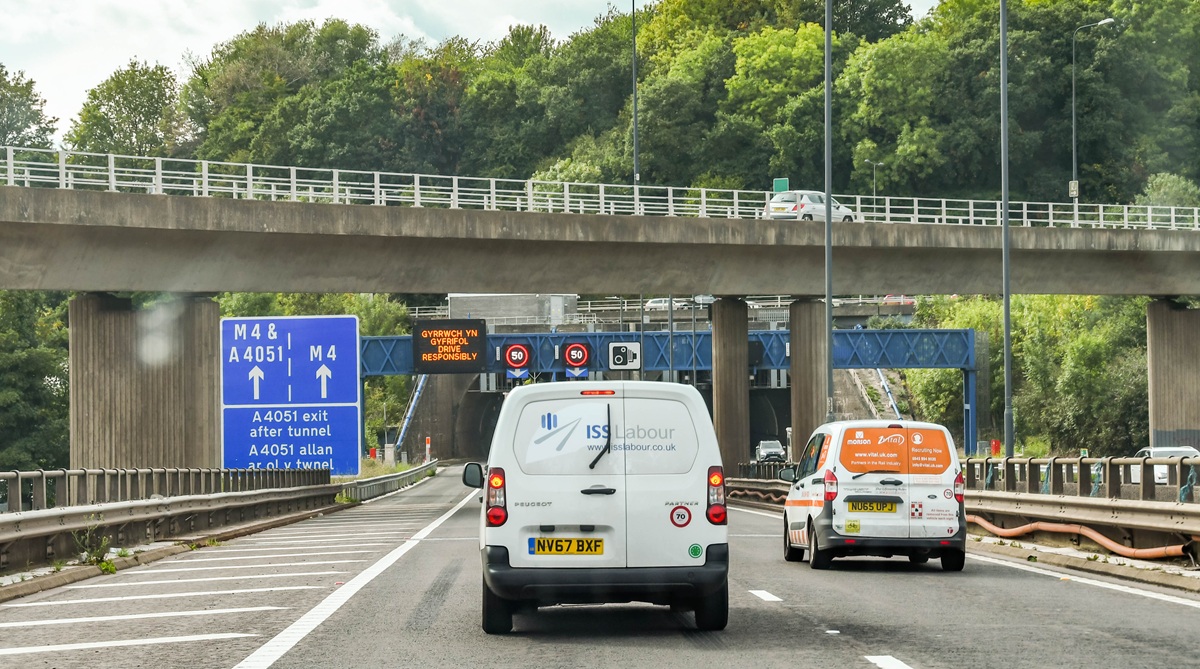
Transport campaigners have criticised Welsh Labour’s renewed support for an M4 relief road, warning that the financial and environmental concerns behind its cancellation have not gone away.
Transport Action Network (TAN) Cymru said public transport improvements should take priority in tackling congestion around Newport, ahead of a Senedd debate on Wednesday, October 21.
Labour’s motion calls on the Welsh Government to begin work on a new relief road and rule out closing junctions 25, 26 and 27.
Welsh Labour leader Ken Skates has backed an amended version of the previously proposed black route south of Newport.
TAN Cymru transport campaigner Gwynfor Edwards said: “A new motorway is the wrong answer for Newport. Building more road capacity risks generating more traffic, while the financial and environmental concerns that led to the scheme being scrapped in 2019 have not gone away.”
Mr Edwards called for the South East Wales Transport Commission’s recommendations to take priority.
“The South East Wales Transport Commission set out a better way forward, with public transport alternatives that could improve connectivity between Cardiff and Newport, including new rail stations,” he said.
“These options should be prioritised before committing to another major road scheme.”
However, the group backed Labour’s opposition to junction closures.
“Ruling out junction closures, however, is the right decision. Closing junctions would simply push traffic onto local streets,” Mr Edwards said.
“Whatever Members decide, people in Newport deserve more than another delay. They need a clear timetable, a properly funded plan and practical action to tackle congestion.”
Then first minister Mark Drakeford cancelled the relief road on cost and environmental grounds. His government subsequently established the commission, also known as the Burns Commission, to examine alternatives.
The current Plaid Cymru government has ruled out reviving the black route but announced an 18-month study into other roads-based options, after which it intends to select a preferred scheme.
Ministers say a review found that no single measure would resolve congestion and that road improvements were needed alongside other changes.
A five-year programme will include motorway maintenance, changes to traffic management, targeted road and junction improvements, and measures to encourage freight operators to use alternative routes such as the A465.
Public transport plans include accelerating delivery of Cardiff Parkway and Magor and Undy railway stations, improving access to Severn Tunnel Junction station and better bus connections between Newport and Cardiff.
‘Beyond capacity’
Deputy Minister for Transport Mark Hooper said: “Alongside that work, we are taking action to reduce peak-hour traffic by up to around one in ten vehicles.
“Every vehicle taken off the road helps on a motorway that is already operating at or beyond capacity at the busiest times.”
Options outlined earlier this month included closing junction 27 at High Cross and the eastbound slip roads at junctions 25 and 26.
The report estimated that a relief road could now cost around £3 billion. It also warned that the former route was no longer protected through the planning system, meaning development could make it harder or more expensive to build.
‘No other option’
Mr Skates told BBC Wales that other measures would not adequately resolve congestion.
“That means that there is no other option on the table other than a relief road if we wish to solve the problem of congestion on that route,” he said.
He argued that circumstances had changed since 2019 and that further work would be needed to address environmental concerns.
Plaid Cymru MS Peredur Owen Griffiths, who represents Casnewydd Islwyn, described Labour’s position as “hypocrisy”, accusing the party of reversing a decision it had made in government.
TAN Cymru also pointed out that, just seven months ago, Mr Skates had backed public transport measures while serving as transport minister and said the relief road “had been and gone”.
Support our Nation today
For the price of a cup of coffee a month you can help us create an independent, not-for-profit, national news service for the people of Wales, by the people of Wales.
Get more trusted Welsh news
Choose Nation.Cymru as a preferred source in Google News to see more of our journalism.



What a mess. What about Ynys Mon as well
The usual self-appointed types who have no understanding of working people, their commute, how commerce works, freight, business, the state of the Welsh economy, the school run, job creation etc etc etc.
It’s not the only congested section of the M4 which has a variable average speed limit to manage flow. The elevated section around Port Talbot has one too. Strangely, it was the last Labour administration who tried an experiment to close slip roads and junctions in an attempt to ease congestion. It failed. What is needed is a scheme to move traffic from peak times to off-peak times and make it feasible for those who do use it during rush hour to remove themselves from the equation by integrated and affordable public transport. Wasn’t this the solution to A470 between… Read more »
“What is needed is a scheme to move traffic from peak times to off-peak times”
That would be dynamic tolling.
The town traders squashed that.
This is the problem with the Labour Party. Detached virtue signalling, not a consistent and planned vision for what Wales. How we can be and what to cherish. This M4 relief road U turn was exemplified when Vaugahn Gething took £200k cash from a serial fly tipper on the Gwent levels to bolster his Labour Party leadership campaign. It’s not what they say at any point in time. It’s who stuffs their wallet.
Bang on 👏
Hilarious when considering the cancellation was due to the, but I not wanting to do that by having to match fund Westminster tories running up the bill for their mates.
I do love the do gooders who stick their oar in and believe that by providing better public transport it will make the situation better. The problem is that there is no way public transport can even match the convenience that a car gives, despite the occasional slow down or jam. Public transport is really only ideal if you live close to work or you have really good rail links. For someone living in let’s say Caerphilly and working in Bristol, public transport would be a 2.5 hour journey compared to an hour in the car. That’s an additional 5… Read more »
Not sure where you’re getting 2.5 hours from? CPH->BRI is about 1h20m. And even if it were accurate, that’s still an argument in favour of improving transit links so people have the option to not drive. I wouldn’t really call spending an hour concentrating on driving convenient, when I could spend that hour reading, playing a game, or just looking out the window watching the world go by. You’re right that jobs no longer exist on people’s doorsteps. They’re becoming more and more centralised in cities. And there just isn’t room for thousands of people to each bring their 2… Read more »
He’s quite correct. By time you get to the station, get your train, wait for your connection in Cardiff, get from the station in Bristol to your place of work. It’s obvious TAN don’t have a single member who has commuted.
National Rail is quoting 1h17m for a 6.59am train from Caerphilly arriving 8.16am into Bristol Temple Meads so it depends where you live in Caerphilly and work in Bristol. Meanwhile Google Maps is predicting a car journey at that time taking typically anywhere between 1h5m and 2h10m.
There is a reasonable new road called the heads of the Valley which connects to the midland trunk road which is not sign posted as a route to the M50.
There is a road in Port talbot called the peripheral distribution road, this is not signposted as a bypass for Port Talbot
Why are these roads kept secret.?.
Pretty sure the financial concerns *have* gone away, given that the concerns were being tied into a shared funding agreement with a tory Westminster government that was handing out public money to their party funders hand over fist as if it was theirs to gift and massively running up operating costs on everything to do so.
Can you explain how you believe it could be funded? Too many supporters seem to think there’s a magic money tree for roads.