


Campaigners fear historic toxic waste scandal is being buried again
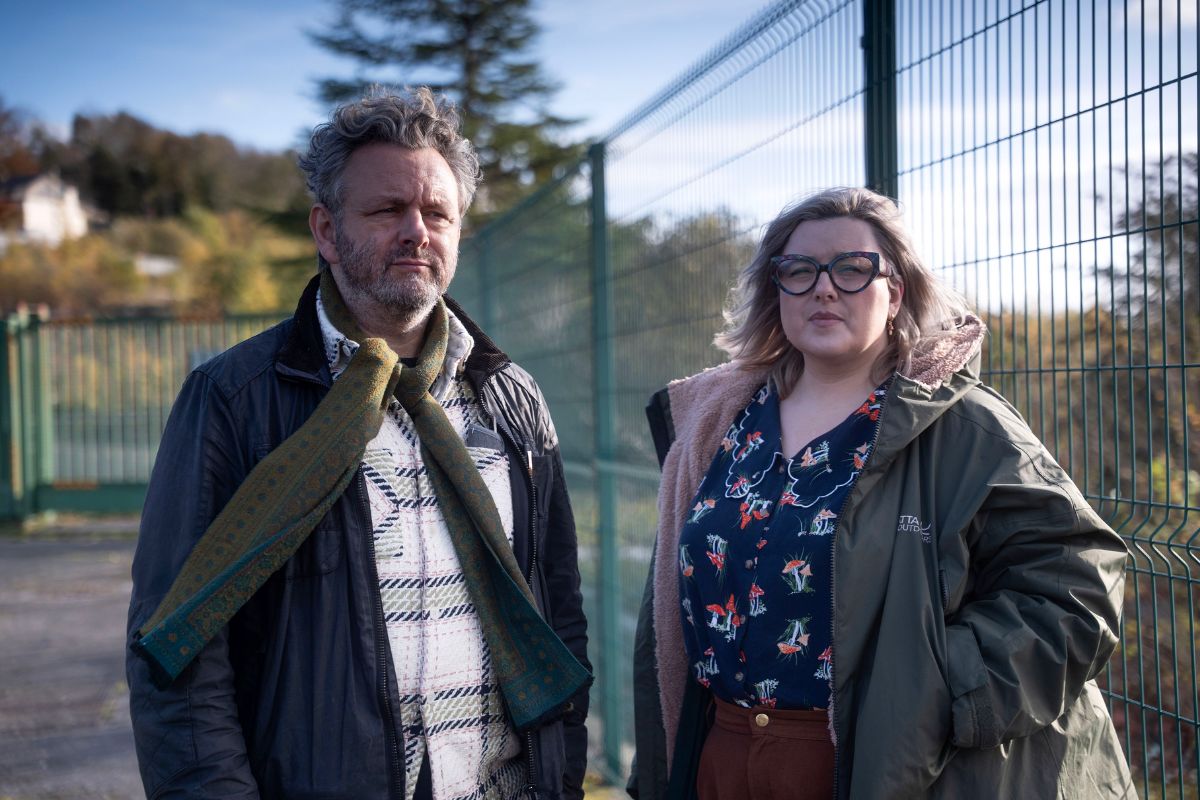
Alec Doyle, Local Democracy Reporter
Communities fighting to clean up a county’s historic toxic waste dumps say they fear the authorities are allowing the issue to be hidden once more.
Following the broadcast of Traitors-star Michael Sheen’s Buried documentary on the BBC – which used the late Douglas Gowan’s research into ‘forever chemical’ dumps all over Wales — there was a momentum across the country to re-investigate historic dumping by Monsanto and others in Wrexham.
But now the Monsanto Contamination Action Group – a Wrexham-based collective of people living in communities potentially poisoned by historic toxic waste dumps – say they feel the Welsh Government, Public Health Wales and even Wrexham County Borough Council are no longer providing the support they hoped for.
Wrexham is a key location for toxic chemical dumping as it was there that Monsanto based a huge manufacturing plan that disposed of polychlorinated biphenyls (PCBs) in sites like Llwyneinion Acid Tar Lagoon, Cefn Mawr and Ruabon.
PCBs are the ‘forever chemical’ staying in the environment, animals and human bodies and accumulating over time – never breaking down and even being passed on from generation to generation.
Carcinogenic, they are believed to have been responsible for a number of incredibly rare cancers contracted by people living in affected communities in Wrexham.
There is no definitive data however, so MCAG has been campaigning for water, soil and blood testing to determine wether people in some areas of Wrexham have been exposed to higher and potentially more harmful levels of these chemicals.
But lead campaigner Katie Witherden, who once worked at Monsanto and has experienced her own cancer battle, said that after the initial flurry, the the authorities seem to have become more reluctant to support the campaign.
“We’re seeing nothing from the Senedd,” she said. “We’ve had more information, more curiosity, really, from Westminster.
“We are beginning to fear that this issue – as it has in the past – is once more being allowed to fade into the background. The sites sitting behind fences, the victims forgotten, the health impacts unknown.”
The group currently has a Senedd petition open calling for blood, soil and water testing in affected communities if it reaches 10,000 signatures it will be debated in the Senedd.
Inquiry
A recent decision by the Welsh Government reinforced Katie’s belief that debate needs to happen soon.
“It was hugely disappointing when Caerphilly Council, who have a similar issue, unanimously voted to ask for an inquiry in Wales over this and the Senedd refused,” she said. “That was incredibly disappointing.
“Their argument was that waste management is better now so it isn’t needed, but that doesn’t really make much sense to me because we’re not talking about waste management now. We’re talking about historic waste management and the risk it still presents today.” – but Katie said the Welsh Government’s decision was a missed opportunity.
“We would welcome a national inquiry on this in Wales – but we also recognise that this is not only a Welsh issue.
“The Buried programme was really clear – what has happened in Cheshire with dumping is horrific.
“I’m sure there are many other places within England who’ve had similar historic issues, maybe with the same company or different companies. I think a Welsh inquiry could really start all rolling on this.
“It’s the same situation when we requested volunteer blood testing programs with Public Health Wales. That was a real opportunity for PHW and Welsh Government to grab this issue, stand in front of the UK and say ‘we’re going to deal with this properly, we’re going to deal with it differently, we’re going to start investigating this’.
“They may find there is nothing to worry about but right now we do not have any clarity nor any answers.
“Unfortunately in both instances, volunteer blood testing and a public inquiry, they have said no.”
Open books
Wrexham Council, whose leader Cllr Mark Pritchard had previously pledged that it would open its books to campaigners and give them access to every document related to historic dumping, also came in for some criticism.
Despite the leader’s pledge, Katie said officers had not been forthcoming with some documents requested.
“Within the political class in Wrexham across the board, there is a desire to move forward on this provide the information for us,” she said. “The leader has been clear on that.
“But when it comes to the actual civil service within the offices, there is not and I don’t know why that is.
“For example we were told they had a list of 50 sites form 2010 or 2011 of suspected dumping that were of their highest priority. And two of the sites that we talk about in Cefn Mawr weren’t even on it.
“But we have asked for it and have not received it. Maybe they are overwhelmed but these communities have waited so long for answers and help that we cannot wait any longer.”
Concerns
A Welsh Government spokesperson said: “We know residents are concerned about contamination, and we take those concerns seriously.
“That is why we are working with communities to develop a Wales-wide strategy to progressively restore former industrial land.
“We continue to press for environmental justice by raising the importance of seeking UK Government funding direct with the UK Treasury.
“This should be used to continue our joint efforts to address the legacy of Wales’s industrial past through restoring coal tips and remediation of contaminated land.”
Addressing the calls for community testing, a Public Health Wales spokesperson said: “Public Health Wales agrees with the Welsh Government that land which may have been contaminated in Wales by Monsanto should be addressed, to minimise any potential health harms.
“We understand that people living near these sites may be worried about their health. Some people have asked for blood tests to measure concentrations of PCBs.
“However, Public Health Wales does not recommend blood testing as a public health measure because it cannot tell us where the PCBs came from, when people were exposed to them or what they might mean for a person’s health.
“For example, if PCBs were found in a blood sample, it would not be possible to say whether they came from contaminated land, food, buildings or another source.
“People can also respond differently to PCBs. The same level in the blood may affect one person differently from another. There is also no treatment that can remove PCBs from the body. This means that blood testing may not provide clear answers and could cause extra worry for some people.
“The Welsh Cancer Intelligence and Surveillance Unit run by Public Health Wales has collected and analysed data on every single case of cancer amongst Wales’ population since the 1970s.
“Based on the evidence currently available, there is no indication that historical environmental pollution is responsible for an increased risk of cancer, or any other disease or illness, in these areas.
“We will continue to review new evidence and provide public health advice based on the best information available. We will continue to work with partners, including the Welsh Government, on how to address problems linked with contaminated land.”
Wrexham Council were approached for comment.
Support our Nation today
For the price of a cup of coffee a month you can help us create an independent, not-for-profit, national news service for the people of Wales, by the people of Wales.
Get more trusted Welsh news
Choose Nation.Cymru as a preferred source in Google News to see more of our journalism.


