


Cardiff mum calls on others to take part in postpartum research study
Nation.Cymru staff
A mum-of-four from Cardiff is calling on other mothers to take part in a research study after experiencing a rare but severe postpartum mental health condition.
Researchers from the National Centre for Mental Health’s (NCMH) are looking for mothers from across the UK to take part in its Mums and Mental Health (MAM) study, funded by Health and Care Research Wales and the European Research Council, to help them learn more about what causes postpartum psychosis.
The condition affects around one to two in every 1000 childbirths and in many cases, mothers have no previous history of mental illness. Symptoms can begin suddenly in the days or weeks after giving birth and can include hallucinations, delusions and rapid mood changes.
Symptoms can escalate quickly, and it should be treated as a medical emergency. With the right treatment and support – usually in a specialist psychiatric unit called a mother and baby unit (MBU) – most mums make a full recovery.
Very little is known about what causes the condition and there are no clear guidelines on identifying and treating postpartum psychosis.
It is currently considered, and treated as, a form of either schizophrenia or bipolar disorder, but researchers and clinicians have for a number of years been advocating for it to have its own distinct entry in diagnostic manuals.
Call out
Researchers are calling for anyone who has had a baby to share their experiences, regardless of whether this was followed by an episode of mental illness. Women who report symptoms or a diagnosis of postpartum psychosis are asked to provide a genetic sample using a simple, at-home testing kit.
Researcher Jess Yang said: “There are so many unanswered questions when it comes to postpartum psychosis. We don’t know what the triggers are and symptoms can vary widely.
“When identified and treated appropriately, mums generally get well quite quickly in comparison to a lot of other psychiatric conditions. However, there can be a sense of shame or stigma which makes what they went through hard to talk about, which compounds those gaps in understanding.
“We want as many mums as possible to share their experiences with us, whether they’ve experienced postpartum psychosis or not, to help us compare groups and identify potential risk factors to explore further. If we can understand more about the condition, we’ll be able to diagnose and treat it better.”
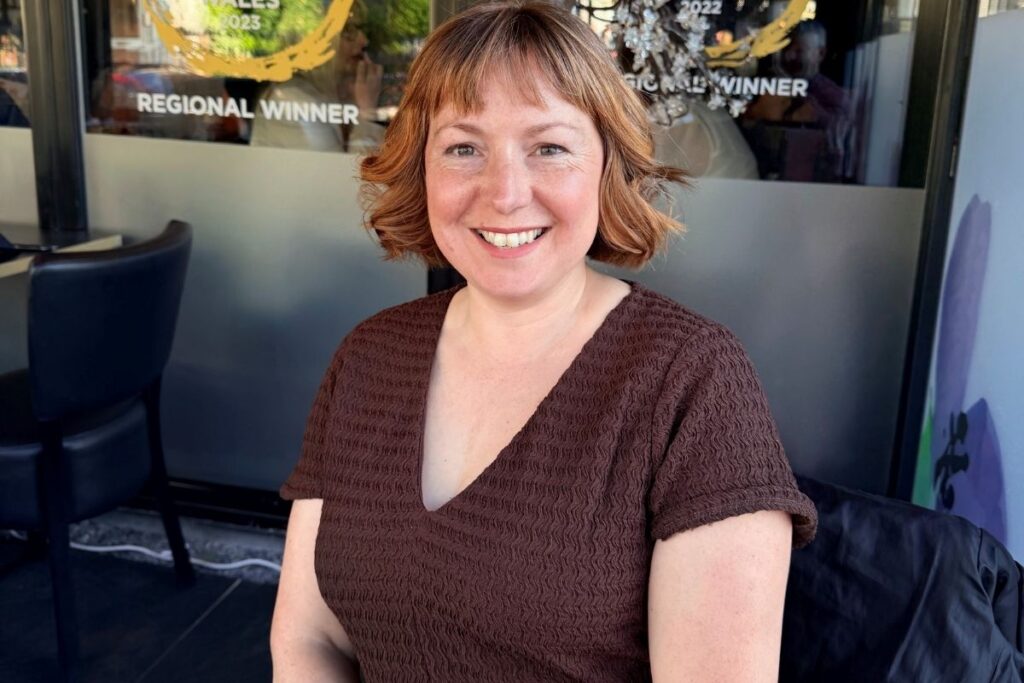
Roz Owens
Roz Owens took part in the study, having experienced postpartum psychosis in 2007 after the birth of her eldest son. She was treated at a mother and baby unit for just over two months.
Owens said: “I started having symptoms about three weeks after my son was born. It quickly got worse and worse. I’d experienced a slight depression before but this was on another level. People need to realise how extreme it is. It was all-consuming, like I was living in another world.
“I wasn’t eating properly, I wasn’t sleeping and was saying things that didn’t make sense. I was delusional: I had convinced myself I was evil. It led to me feeling suicidal.
“My husband and mother-in-law could see something was very wrong, but it took me making an attempt on my life to be hospitalised and start getting the help that I needed.”
Owens found the mother and baby unit isolating for a number of reasons – but particularly because her condition wasn’t explained to her.
Owens continued: “Nobody mentioned the words postpartum psychosis to me. When I arrived at the MBU, a psychologist asked me questions, but nobody told me, this is what we think you have. They told me I was ill, but I believed the delusions I was experiencing. It felt real to me.
“I’d like to think that if they’d been able to give me a name for what I had, explain the symptoms and tell me I would get better, it could have started to break through, give me another narrative to listen to.”
Sense of loss
Yang added: “Many of the mums I’ve spoken to felt a real sense of loss and sadness about that early postpartum period being so disrupted. If mums could get earlier interventions and support, the impact of their experience will be much less.”
Owens made a full recovery and did not experience any further periods of psychosis after her other children were born.
She also hopes that research like this will help to raise awareness of postpartum psychosis among mums during pregnancy.
She said: “We may talk about the ‘baby blues’ but this has to be understood as more than that, because it’s so dangerous and can escalate quickly. While it’s rare, people need to know any key symptoms to look out for, just in case it happens to them or their partner or loved one.”
Find out more about the Mums and Mental Health (MAM) study here.
Support our Nation today
For the price of a cup of coffee a month you can help us create an independent, not-for-profit, national news service for the people of Wales, by the people of Wales.
Get more trusted Welsh news
Choose Nation.Cymru as a preferred source in Google News to see more of our journalism.



