


Catholic super school plan called-in for review
Alec Doyle, local democracy reporter
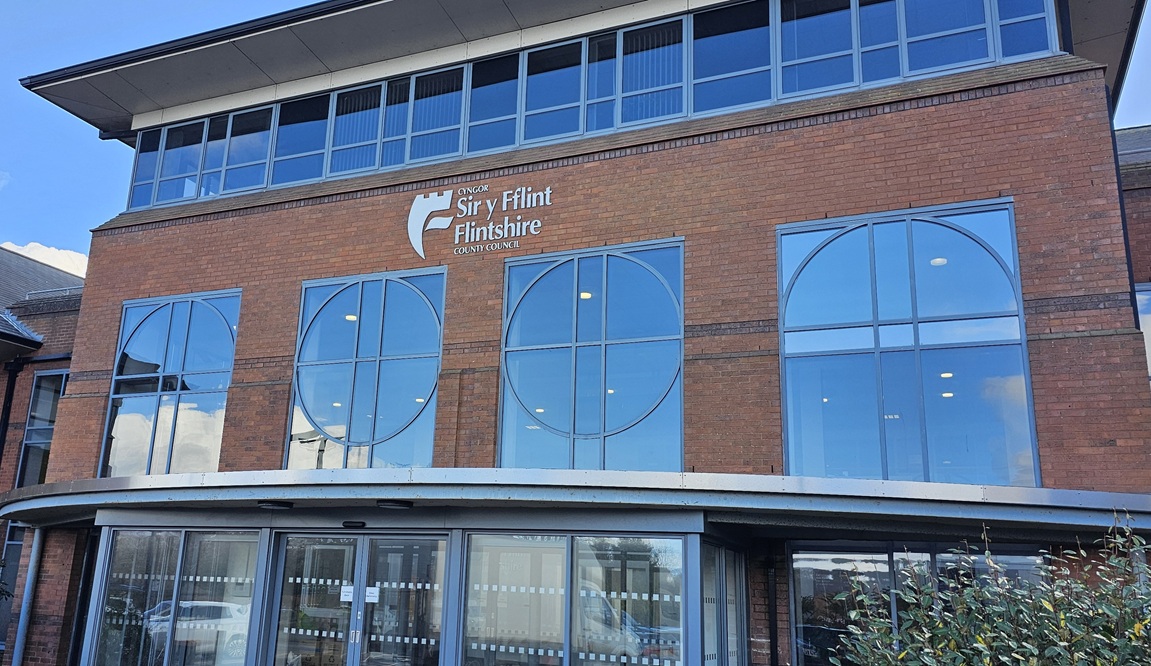
A group of councillors have challenged a county council’s decision to press on with its controversial Catholic school restructuring plan despite overwhelming public opposition.
The opposition councillors have formally ‘called-in’ Flintshire councils decision to push forward with the next statutory stage of what the authority calls the Catholic Schools Reorganisation – delaying the opening of public objection period.
Meanwhile some parents have warned they will seek a Judicial Review if Flintshire County Council continues to – in their words – ‘ignore statutory duties, public opposition and safeguarding obligations’.
The restructuring plan is a joint scheme between Flintshire and the Diocese of Wrexham. It proposes the closure of three Catholic primary schools – St Anthony’s in Saltney, St David’s in Mold and St Mary’s in Flint – plus St Richard Gwyn Catholic High School.
£55 million
Replacing them would be a £55 million super-school offering Catholic education for children from 3-11 years-old. If approved St Anthony’s would close at the end of this school year – with pupils having to go to Venerable Edward Morgan in Shotton or cross the border to be educated in England from September – while the other schools would remain open until the super-school was completed.
A consultation over the summer on the plans saw more than 2,000 respondents make their feelings known, with 95% against the proposals.
Such an overwhelming rejection of the scheme prompted the Education Youth and Culture Overview and Scrutiny Committee to recommend that Flintshire’s Cabinet pause the process and reconsider alternative options.
But during their October meeting Cabinet dismissed the recommendation.
Cllr Mared Eastwood, Cabinet Member for Education, Welsh Language, Culture and Leisure said: “We fully accept that reviewing the future of any school is controversial and emotive, with schools having strong ties to local communities.
“The proposal is focused on reducing the number of surplus places which diverts resources away from frontline delivery to pupils, improving the learning environment of some schools, securing excellent leadership across the sector to deliver the highest quality education offer for pupils, providing a full curriculum offer for children from age 3-18, further developing Welsh education from within a Catholic context and maximising the financial investment available from Welsh Government through its Sustainable Communities for Learning programme for Voluntary Aided schools.”
Opposition councillors
Now a group of opposition councillors – Cllr David Coggins Cogan, Cllr Carol Ellis, Cllr David Richardson, Cllr Lind Thew and Cllr Marion Bateman – have submitted a call-in notice to review that decision.
The call-in, which will be debated on Thursday, November 6, states: “We believe this decision should be subject to further scrutiny for the following reasons:
Inadequate consultation and community engagement – The consultation shows very high levels of opposition among affected stakeholders – there is evidence that governing bodies and parents did not feel adequately informed or involved in shaping the proposals before the statutory stage and consultation events for staff and governors were held online only, with no public consultation events held. This appears inconsistent with the principles of meaningful consultation required by the School Organisation Code (2018).
Failure to demonstrate sufficient educational justification – the proposal focuses heavily on financial and building condition factors, while the report acknowledges that quality of education in the existing schools is generally good and that the merger will not lead to any significant improvements in quality of education.
Lack of clarity on impact for denominational choice and faith-based provision
Insufficient assessment of travel and access implications
Financial and capital uncertainties – The council will assume additional debt of approximately £8.25m under the proposal, a debt Flintshire’s Council Tax payers will be required to service during a cost of living crisis.
Equality and faith access concerns – The Integrated Impact Assessment suggests ‘no anticipated negative impact’, yet the proposal dramatically reduces the number of Catholic-maintained schools, limiting accessibility for families seeking Catholic education. The analysis appears insufficiently evidenced to satisfy section 149 of the Equality Act 2010.
They also cited procedural concerns over the decision.
Widespread concern
Parents groups praised the move. Mold-based St David’s Action Group said: “We welcome the call-in of the Cabinet decision. It reflects widespread concern and demonstrates a clear commitment to protecting children’s wellbeing and educational rights.
“We must express our deep alarm and unequivocal objection to Flintshire County Council’s Cabinet decision to continue advancing this deeply flawed reorganisation proposal.
“None of the serious issues raised during consultation have been addressed or even acknowledged.
“We are fully prepared to seek Judicial Review of this decision should Flintshire County Council continue to ignore statutory duties, public opposition and safeguarding obligations.
“This is not a threat — it is a lawful and necessary safeguard to protect children’s rights and community interests.”
Clare Smith from St Anthony’s parents group added: “I am truly grateful that the decision to move ahead to the next stage of the consultation has been called-in.
“After watching the Cabinet completely ignoring the recommendations and the public opinion on this – to me it was clear they had no interest in the scrutiny committee’s recommendations or what the community want!”
Disregard
Another St Anthony’s parent, Kerry Hunt, said: “I believe this is the right call. The council decision shows complete disregard towards pupils, parents, community and staff.
“They stated it was an emotive subject – it’s not about our emotions it’s about the welfare of our community.”
This week North Wales MS Sam Rowlands took parents’ fight to the Senedd.
“Local families are facing the closure of four Catholic schools,” he said during an education debate. “You’d think such a major change would be backed by evidence and significant public support. This simply is not the case.
“Parents are furious and rightly so. We’re told this is about improving outcomes. There has been no clear explanation of how uprooting these communities will do that.
“Schools like St Anthony’s in Saltney and St David’s in Mold are at the heart of their community. They are being closed, removing the choice of Catholic education which so many hold dear.
“For the Cabinet to just ignore the public’s views is outrageous. It is simply not right that the views of local people on such an important issue are being ignored.”
Support our Nation today
For the price of a cup of coffee a month you can help us create an independent, not-for-profit, national news service for the people of Wales, by the people of Wales.



This is badly thought out. Also I don’t see why the state should fund sectarian education 100% when traditionally the relevant church contributed. If the funds cannot be raised from the diocese why is the state funding a school from which other local people’s children will be selectively excluded.