


Church threatens legal action over council’s school plans
Bruce Sinclair, Local Democracy Reporter
A row has erupted over the future of a rural primary school, with the Church in Wales threatening legal action against a council it accuses of religious discrimination.
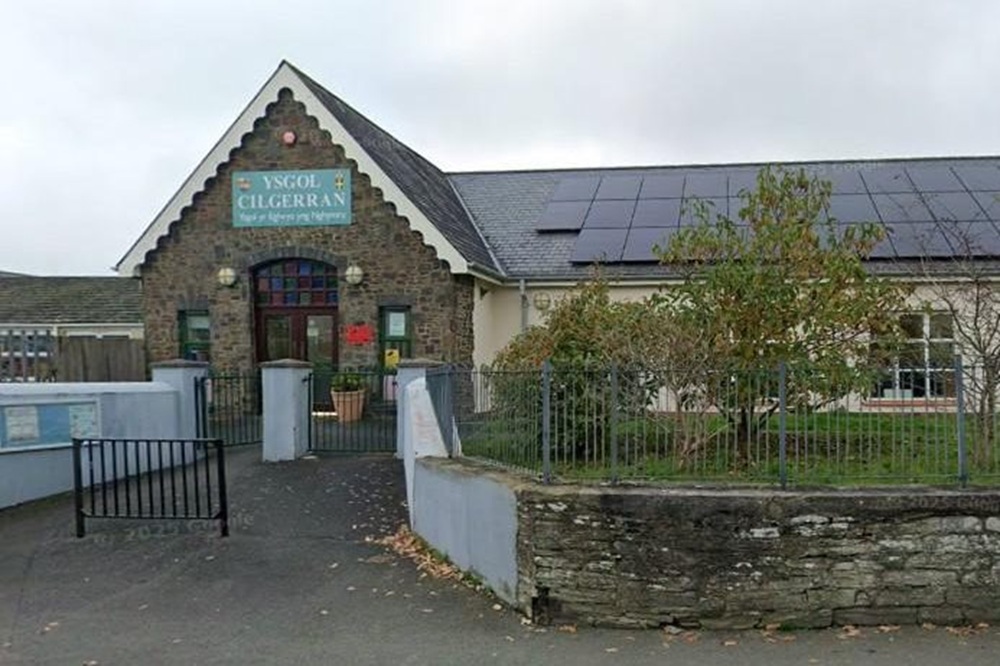
The dispute centres on Ysgol Cilgerran in north Pembrokeshire, where Pembrokeshire County Council has voted to remove the school’s Voluntary Controlled status and establish it as a community school.
The Church in Wales has now issued a formal notice warning that it will take legal action if the council proceeds with the changes.
The move follows a consultation on the future of the Welsh-medium school which attracted overwhelming opposition. Of the 203 responses received, 197 – around 97% – opposed the proposal, while just three responses supported it.
The consultation was launched after a review of surplus school places in the area against a backdrop of declining pupil numbers.
A petition hosted on the council’s website also attracted 391 signatures opposing the plans.
Earlier this year, councillors heard concerns from school governors and church representatives about the proposals.
Vice-chair of governors Gary Fieldhouse said removing the Church in Wales status would be “a profound mistake”, arguing that the school’s connection to the church was “not symbolic but fundamental”.
The Reverend John Cecil told councillors the plans were “fundamentally flawed”, claiming the land was legally held in trust as a Church in Wales school and that the proposals would effectively create a new school without premises.
Lawyers acting for the Diocese of St Davids and the Church in Wales have now written to council officers warning that the authority faces legal action if it continues with the process.
The letter alleges “public misrepresentation and unqualified legal assertions” by council officers and raises concerns about what it describes as discrimination against faith schooling.
The Church has also warned that if Voluntary Controlled status is removed, it will not make the school site available for a successor community school.
According to the letter, that would render the council’s plans unworkable.
The legal threat comes just weeks after Pembrokeshire County Council decided to close Manorbier Church in Wales Voluntary Controlled School, which was badly damaged by a fire in 2022.
The Church says it was repeatedly assured the school would be rebuilt, but claims it was instead left vacant while pupils continued to learn in temporary accommodation and numbers fell.
‘Utterly unconscionable’
A spokesperson for the Church in Wales said: “Pembrokeshire County Council’s behaviour in the case of Manorbier VC School has been utterly unconscionable.
“The council has presided over a catalogue of delay, incompetence and broken promises resulting in the literal destruction of a thriving school which has served its community for more than 150 years.
“Taken together with the gratuitous attack on the church status of Ysgol Cilgerran, this amounts to a targeted assault on the inclusive Christian education which Church in Wales schools have provided to their communities for generations.”
The spokesperson added that it was a “bitter irony” that such action was being pursued in the county regarded as the birthplace of Wales’ patron saint, St David.
“We are not prepared to allow it to happen, and we look to the county’s elected representatives to halt this destructive course of action,” they said.
Pembrokeshire County Council has been approached for comment.
Support our Nation today
For the price of a cup of coffee a month you can help us create an independent, not-for-profit, national news service for the people of Wales, by the people of Wales.
Get more trusted Welsh news
Choose Nation.Cymru as a preferred source in Google News to see more of our journalism.


