


Climate change pushing wading bird to brink in UK as numbers fall 89% – experts
Emily Beament, PA Environment Correspondent
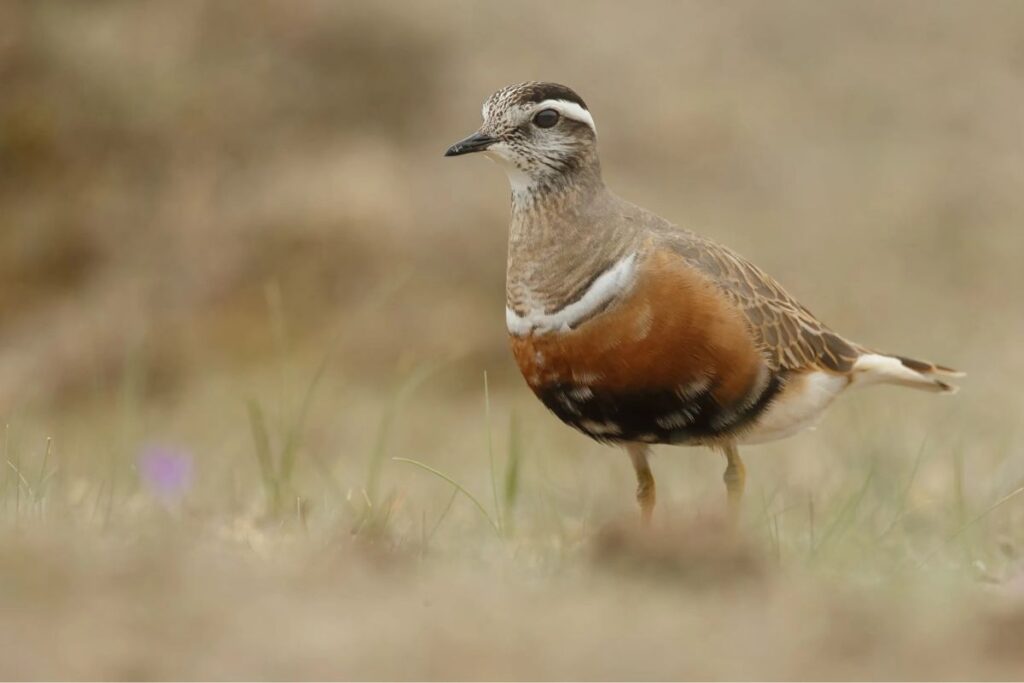
The UK could lose its first bird species to climate change, conservationists have warned, as mountain-breeding dotterel numbers tumbled almost 90%.
The small, wading birds with rusty-orange chests migrate from northern Africa to mountainous regions in the UK each summer to breed, and are adapted to rearing their young in rocky plateaus and sparse vegetation in those environments.
But monitoring has shown dotterels have suffered significant reductions in both their range and population sizes.
The latest, national, dotterel survey has seen numbers fall 89% since monitoring began in 1988, with declines increasing since the 2011 survey, while most of the remaining population is now restricted to the eastern and northern Highlands of Scotland, conservationists said.
With declines mirrored within protected areas, where the birds might be expected to be safe from other threats, the conservationists warn that climate change could be one of the potential causes of decline.
Species which depend on mountainous habitats are particularly vulnerable to climate change, as hotter and drier temperatures push them higher and higher up in the landscape until they have nowhere left to go, they warn.
Dotterels breed in mountain ranges across northern Europe and Asia, and the global population is classed as “least concern” over their extinction risk on the IUCN Red List.
But the team behind the survey say it could be the first time the UK has documented a species being driven towards extinction locally as a result of climate change.
Dr Leah Kelly, RSPB conservation scientist and one of key scientists on the project, said: “Dotterel are in steep decline, and we are seeing them disappearing before our very eyes.
“The fact they need mountain tops to breed has made them particularly susceptible to habitat loss as climate change alters their montane environment.”
The latest survey was carried out in 2025, with three, previous, national, dotterel surveys in 1988, 1999 and 2011 revealing “worrying” contractions in the bird’s range and a 57% fall in numbers between 1988 and 2011.
The 2025 assessment, led by the RSPB, aimed to find out if the losses – which had led to the dotterel being “red listed” on the UK’s birds of conservation concern list – were continuing and where breeding pairs remained in the UK.
With males, unusually, staying on the nest to incubate the eggs, the survey used sightings of male dotterels to estimate the size of the breeding population.
Just 22 (10%) of the 217 sites surveyed contained any breeding males, with no breeding dotterels discovered in England, Wales or southern Scotland.
Just 33 males were recorded in the survey, leading conservationists to estimate a total of 112 breeding males across the UK.
Numbers had fallen by almost three quarters (74%) since the 2011 survey and a similar rate of decline was seen inside and outside “special protected areas” – suggesting the main cause of tumbling populations was the same across all mountain areas, the team said.
They said climate change, in combination with overgrazing, degrades the low-growing, alpine vegetation the dotterels favour, while their preferred food of cranefly larvae also appears to have undergone declines in UK mountain sites.
While dotterels could soon be lost from the UK, there is a chance to keep them here as a breeding bird by managing grazing to keep habitats in good condition and reducing disturbance by hillwalkers and dogs, the experts said.
NatureScot ornithologist, Dr Nicola Largey, said: “The striking dotterel has long been a special sight for those who spend time in Scotland’s uplands and mountains, but sadly the evidence shows the species is now in precipitous decline.
“The potential loss of this distinctive bird from our hills demonstrates the urgent need to tackle the twin crises of climate change and biodiversity loss that are threatening our wildlife and the habitats they depend on.
“At a local level, managing pressures on dotterel habitat such as overgrazing can give us the best chance to retain them.”
Support our Nation today
For the price of a cup of coffee a month you can help us create an independent, not-for-profit, national news service for the people of Wales, by the people of Wales.
Get more trusted Welsh news
Choose Nation.Cymru as a preferred source in Google News to see more of our journalism.


