

Community divided as council erect fence to deter wild birds from using park
Stephen Price
A Welsh council has divided opinion after sharing details of their new ‘management strategy’ to reduce the number of Canada Geese using a popular park which includes fencing to prevent them from accessing breeding grounds.
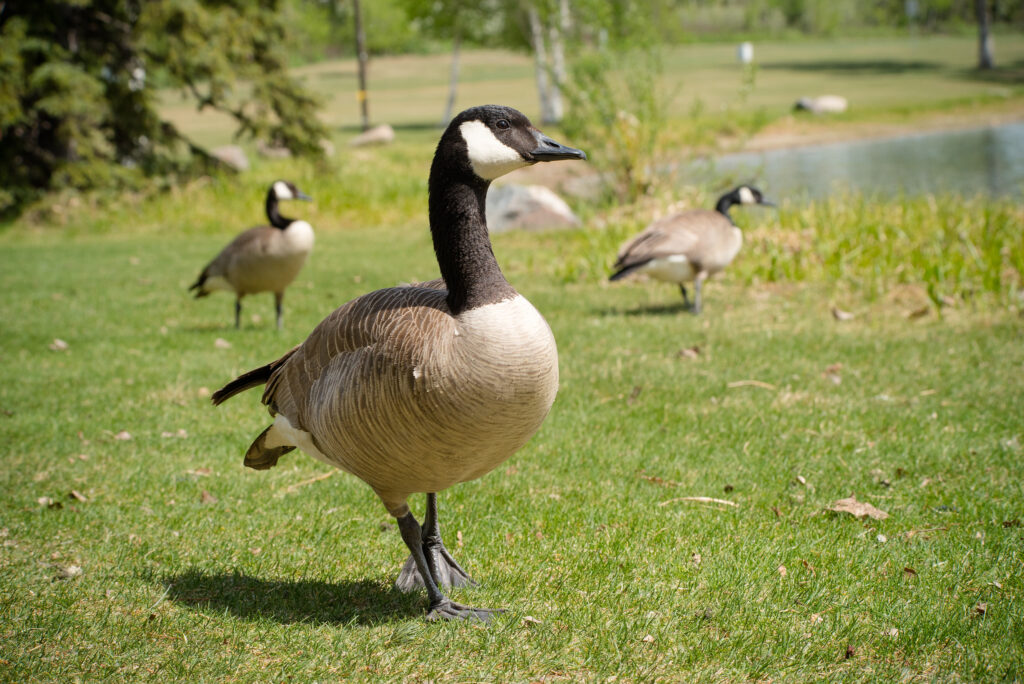
The Canada goose is one of Wales’ most familiar birds, although it is not actually native to the UK. A common and bold bird, it can be found around most parks, lakes, reservoirs and gravel pits.
Canada geese are not native to this country, having been introduced from North America about 300 years ago. After the Second World War, they spread across the UK.
In a post shared to social media on 11 July, Rhondda Cynon Taf Council wrote: “Visitors may have noticed increased activity in Aberdare Park – it’s nothing to flap about!
“New measures are being introduced to reduce the increasing number of Canada Geese that have made the area their home.
“Dedicated Park staff share visitors concerns about the impact of the geese, in terms of damage to plants and grass, fouling, and injuries the birds cause to each other because, well, they are wild animals.
“A NEW management strategy for the geese – which can live for up to 30 years – is in place to prevent them from settling in the park, thereby reducing numbers over time.
“This strategy has been designed carefully to be humane and protect the park’s environmental/ecological importance.
“We will share more details of the plan with you soon!
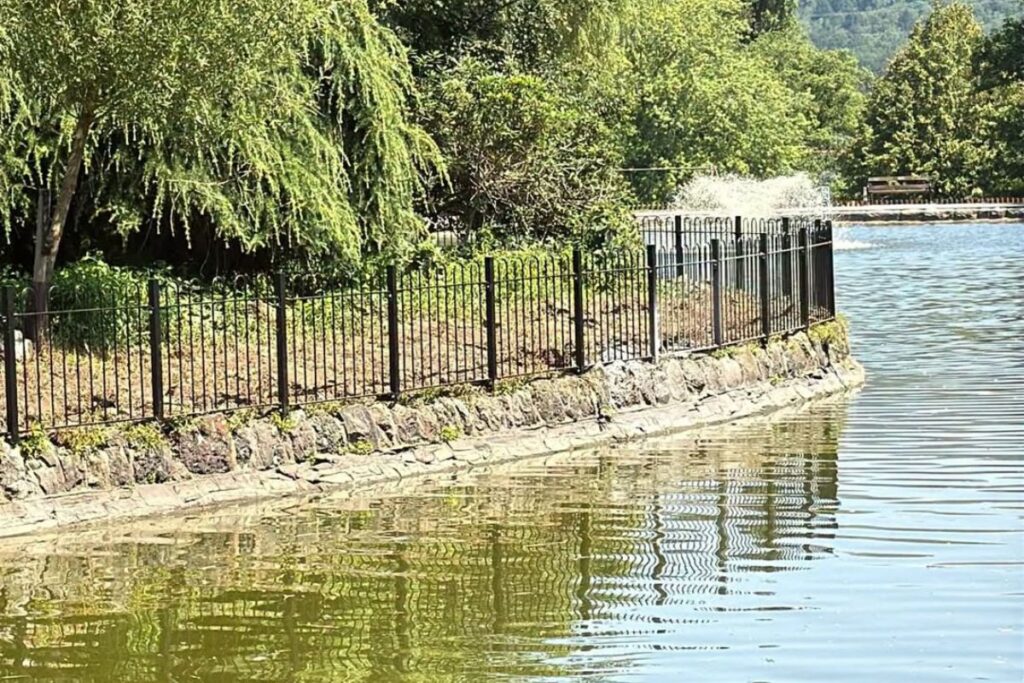
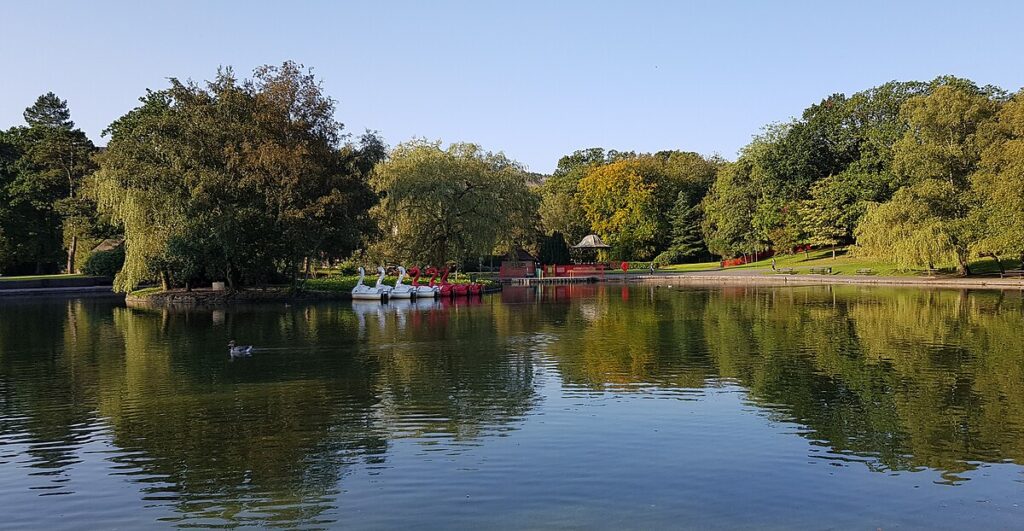
“At present, a new fence is being installed around the perimeter of the lake island, which the birds use to breed and nest.
“Typically, birds fly into the park, land in the lake and glide to the edge of the island, climbing up to claim their spot. it’s an easy landing space for them with lots of room.
“The new fence will deter them from doing this, as they cannot glide from the lake to the edge of the island. Large shrubs and foliage will be planted on the island to further deter landing.
“New signage is being installed to remind people not to feed the geese. Removing their food source will act as further deterrent.”
The post adds: “Future work includes using the existing fountains in the lake to create ripples to prevent landing (geese don’t like that apparently) as well as the continued removal of food sources by replacing grassed areas with wildflowers and meadow, or using non-toxic coating on grass.
“Rangers will further increase their patrols to discourage the geese and to monitor the birds in the park.
“This is on top of the work we have already done, in terms of increased patrols, increased signage, the removal of the sale of bird feed, signage to ask the birds are not fed and continued partnership work with agencies such as Natural Resources Wales.
“It’s a long, sensitive process that we are committed to and we urge you to continue your support by NOT feeding the birds and reporting any issues to staff.”
Canada Geese
According to the RSPCA, problems associated with Canada geese include grazing and trampling (e.g. grassland in public parks and agricultural crops), fouling with droppings, damage to habitats (e.g. grazing reed beds or trampling other species’ nests), as well as aggressive confrontations with other birds.
Wherever possible, the RSPCA would always prefer non-lethal solutions and lethal control should only be considered if there is a serious problem and non-lethal means are ineffective or impractical.
Canada geese have basic legal protection under the Wildlife and Countryside Act 1981. In Wales, they can be legally controlled under licences issued by Natural Resources Wales, but any action must follow the conditions specified on each licence.
Commentary on the council’s social media post, however, has been deeply divided.
One commenter wrote: “When I was over there last week, there was an increase of the amount of bird pooh over on the grass area. There wasn’t anywhere to sit on the grass as it was that bad.
“Glad they are doing this as humanely as they can as the increase in the amount of birds is a lot.”
Another shared: “Yes the right thing to do because the park was built for people not wildlife. For the locals to have a place and sadly the geese love it too but too many of them it was not a wild life zoo its a park for our community.”
While another Facebook user added: “The park has been a big part of my family’s enjoyment for generations from my parents and when I was young to taking my own 4 children there.
“I have 7 grandchildren now that I don’t take there due to the mess the birds leave, you cannot picnic on grass or walk any area. I t’s very sad as I have many good memories there that I would like my grandchildren to experience. I like wildlife and believe it’s lovely for children to experience, but there has to be a balance.”
Others took a less favourable view, with one writing: “Rhondda Cynon Taf Council please reply to concerns. How will this not impact all birds in the park and how will their welfare be protected going forwards or is the idea for there to be no wildlife in nature? Perhaps change all the real grass for plastic whilst you are at it?”
Another wrote, simply: “I’d rather be in a park full of wildlife than a park full of humans to be honest..”
While another in support of leaving the geese and the shared habitat alone, wrote: “It’s a sad day when wildlife is denied its natural habitat , there are lots of other Waterfowl use that lake ,this council is obsessed with wasting our money don’t care about natural environment mowing verges every few weeks before wild flowers have had chance to self seed, pollinators and other insects have no chance, better if they employed people to look after our green areas so that flora. fauna and humans could share the green spaces that remain.”
A spokesperson for Rhondda Cynon Taf Council said: “Rhondda Cynon Taf Council continues to receive a significant number of complaints about the impact large numbers of Canada Geese are having in Aberdare Park.
“Visitors complain regularly about geese fouling on pavements and walkways, including those leading to the café, the children’s play area and the splash pad. Visitors also complain open grassed areas can no longer be used for picnics, games and days out due to the levels of geese mess.
“The geese are also having a detrimental impact on the wider environment of the park, destroying the grass, vegetation and flowers.
“As a result, Rhondda Cynon Taf Council has worked with partner agencies including Natural Resources Wales to draw up a Geese Management Strategy.
“The strategy focuses clearly on a humane approach to naturally reducing the number of geese settling in the park by deterring them. It details the continued – and increased – use of existing measures, such as encouraging people not to feed the birds, increased ranger patrols to deter the birds, cleansing programmes and the use of the water fountains in the lake to disturb the surface of the water to deter landings.
“It also details new approaches, including a fence around the island in the middle of the lake, where the geese settle, and consideration of the use of non-toxic coatings to prevent grass from being eaten, as well as changing some habitats from grass land to wild flowers to remove a food source.
“The Strategy balances the need to care for all wild and ecological systems in the park and the needs of the public who use the park.
“Rhondda Cynon Taf Council is very aware of the strong opinions on both sides of this issues and is working to deliver a balanced and sensitive approach which manages the number of geese living wild in the park with the needs of the people for whom the park was created. It welcomes partnership work with all interested parties who have suggestions on how the impact of the geese can be balanced with the needs of park visitors.”
Support our Nation today
For the price of a cup of coffee a month you can help us create an independent, not-for-profit, national news service for the people of Wales, by the people of Wales.
Get more trusted Welsh news
Choose Nation.Cymru as a preferred source in Google News to see more of our journalism.



Surely they will just fly over the fence?
Canada geese are classified in the UK as a non-native species. However, they are also protected by the Wildlife and Countryside Act 1981, which is why it’s considered best to relocate them to a more appropriate environment where possible. Ask an ornithologist or, if you feel really brave, approach a goose directly for comment.