


Conservationists call for end to overfishing as experts issue zero-catch advice
Rebecca Speare-Cole, Press Association Sustainability Reporter
Conservationists are calling for an end to overfishing as scientists say there should be “zero” fishing of cod, plaice and haddock in certain UK waters next year.
No fishing of cod in the Irish Sea, Western Channel or South Celtic seas should take place in 2027 to prevent the collapse of fish stocks, according to the International Council for Exploration of the Sea (Ices).
The organisation, which gives advice on maximum catches that would allow stocks to continue to be fished sustainably, has also recommended a catch limit of nine tonnes in the Rockall area off the coast of Scotland next year.
Ices scientists also recommend a “zero-catch” policy for haddock in the south Celtic Sea and Western Channel for 2027.
And for the first time, they said no fishing of plaice should take place in the Irish Sea next year either, which marks a significant reduction from its recommended limit of 614 tonnes in 2026.
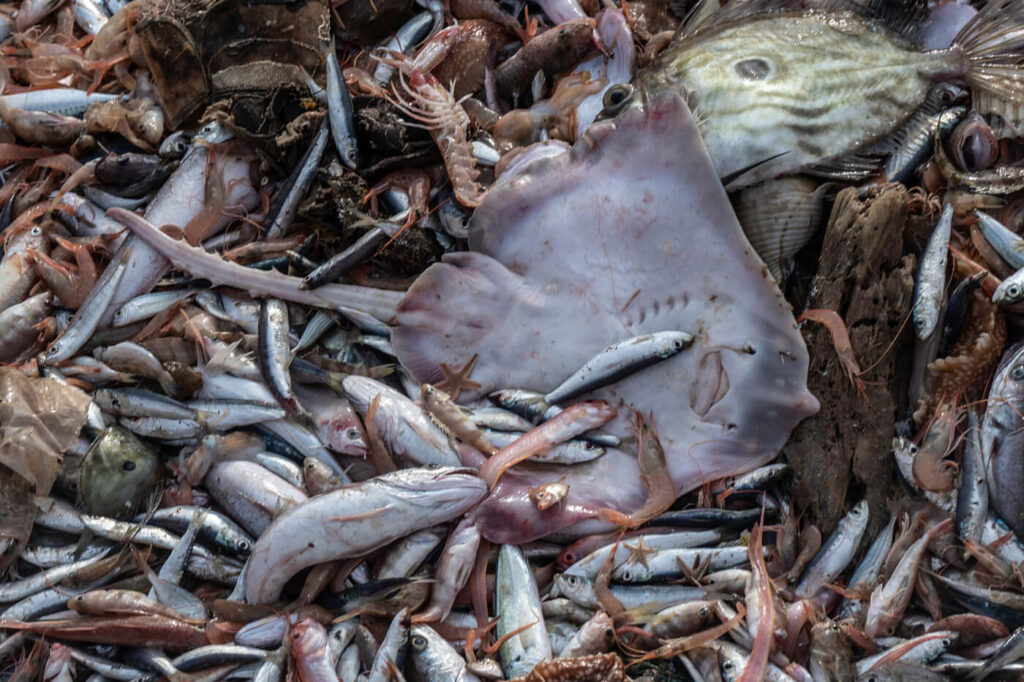
It comes as overfishing has caused fish stocks to deplete in the north-east Atlantic, with Ices saying species, and the wider fishing industry, could face long-term risks unless countries stick to recommended catch limits.
But quotas agreed annually between the EU and coastal countries in the region, including the UK and Norway, have consistently exceeded levels recommended by scientists.
For 2026, the majority of fishing limits negotiated by the UK were not set in line with scientific recommendations, according to an official assessment by the Government’s Centre for Environment, Fisheries and Aquaculture Science (Cefas) released in April.
Conservationists say “warning lights are flashing red across UK seas” as fish populations come under growing pressure, with some “teetering on the brink”.
Responding to the latest Ices advice, Hugo Tagholm, executive director of campaign group Oceana UK, said: “The picture is grim.”
Citing the organisation’s assessment that only 133 tonnes of adult breeding cod remain of the Western Channel and southern Celtic Sea stock, he said it marks a “terrifying” 99% decrease from 2012.
“That is how quickly we are losing our fish,” he said.
“Fish population dynamics can be framed as complex, but the reality of this decision is simple. No fish means no fishing. No fish means the starvation of our ocean.
“The Government has the best possible scientific advice at its fingertips, and it needs to act now, to limit the catches and build the recovery.
“Without these measures, we risk decades of boats tied up, the extinction of ocean wildlife, livelihoods lost. The stakes couldn’t be higher.”
Meanwhile, Jonny Hughes, fisheries policy manager at the ocean conservation charity Blue Marine Foundation, also called the latest Ices assessments of UK fish stocks’ health “pretty grim reading”.
“They expose the consequences of years of political failure in fisheries management,” he said.
“Overfishing continues to drive the decline of fish populations in UK waters, with damaging consequences for marine ecosystems, coastal communities and the long-term viability of the fishing industry itself.
“Time and time again, ministers have prioritised short-term political trade-offs over scientific evidence, pushing fish populations closer to collapse.
“This is precisely why it is vital that the Government changes course and follows scientific advice when setting fishing limits.”
As part of the latest Ices assessment, scientists reduced their advised fishing limits for several other species across different UK waters for 2027.
This included a 69% and 19% reduction in the recommended limit for haddock fishing in the Irish Sea as well as for the North Sea, western Scotland and Skaggerak, respectively.
The experts also cut their advised 2027 limit for fishing Cornish sole by 11% and cut by 47% for whiting in the North Sea and English Channel.
And plaice fishing in the English Channel, and the North Sea and Skaggerak should be limited to 1,102 and 160,380 tonnes respectively in 2027 – drops of 20% and 2% respectively on the 2026 recommended quotas, they said.
The Press Association has contacted the Environment Department for comment.
Support our Nation today
For the price of a cup of coffee a month you can help us create an independent, not-for-profit, national news service for the people of Wales, by the people of Wales.
Get more trusted Welsh news
Choose Nation.Cymru as a preferred source in Google News to see more of our journalism.


