


Consultation opens on tightening of fox hunting ban
Martin Shipton
Animal welfare charity the League Against Cruel Sports has welcomed a government consultation which will pave the way for tougher laws to finally end hunting with dogs, such as fox hunting, in the English and Welsh countryside.
The League is encouraging the public to take part in the hunting consultation and use it to back the government’s pledge to ban so-called trail hunting, but also to demand new measures to outlaw reckless and ‘accidental’ hunting, to remove loopholes in the existing Hunting Act 2004, and to introduce custodial sentences to act as a deterrent for lawbreaking.
New figures released by the League to coincide with the consultation show suspected illegal fox hunting is rife. During the last fox and cub hunting seasons, from August 2025 to March 25 this year, the charity recorded 488 reports of foxes seen being pursued, along with 1,220 reports of anti-social behaviour and havoc inflicted on rural communities by fox hunts. Pre-laid trails were recorded being laid at only four per cent of hunt meets attended by monitors.
The consultation will be open for 12 weeks from March 26 and invites respondents not only to give their opinions on trail, drag and clean boot hunting, but also “whether any other legislative changes are needed to ensure that a ban is effective”.
Emma Slawinski, chief executive of the League Against Cruel Sports, said: “This consultation is the very welcome start of a process which should lead to more effective legislation allowing the courts and police to tackle persistent and prolific illegal hunting, something the League has been lobbying many different governments for over many years.
“The time for change is now – 21 years after the original hunting ban came into force, we are now finally on the brink of consigning this old-fashioned blood sport to history
“So-called trail hunting must be banned, the exemptions in the Hunting Act removed, the end of so-called accidental hunting, and jail sentences introduced to act as a deterrent for those who would break new stronger fox hunting laws.”
The charity says it has public backing. In February 2025, on the 20th anniversary of the Hunting Act coming into force, the League handed a 104,000-signature petition into Number 10 calling for stronger laws on hunting, followed this year by a 36,000-signature open letter to the government urging it to stand by its promises to do just that.
The League’s fox hunting data was collected from reports into the League’s Animal Crimewatch service, the League’s professional investigators, and other monitor and saboteur groups in the field.
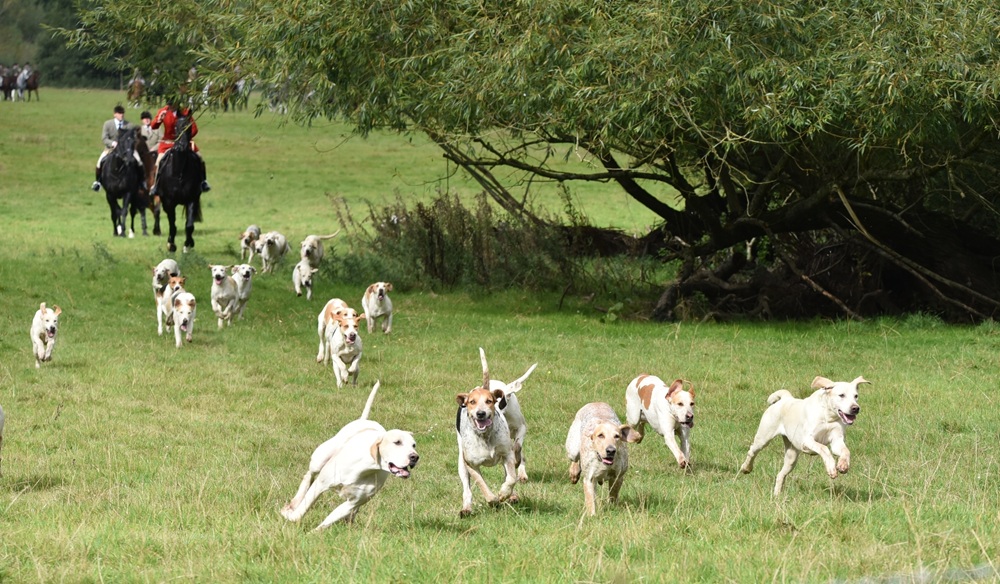
The hunt havoc includes reports of trespass in people’s gardens, attacks on family pets, reports of other wildlife such as deer being chased, hounds running amok on busy roads and causing road traffic accidents or on a railway line – all activities inconsistent with the idea of following a trail, which is what hunts claim to be doing.
However, the League says the figures are just the tip of the iceberg, showing only those hunts being monitored, with hunt behaviour in many remote rural areas and incidents of animals being chased and torn apart going unreported.
‘Breaking the law’
Ms Slawinski added: “For more than 20 years, hunts have carried on breaking the law and ignoring the ban on chasing and killing wild animals with dogs.
“This is a pivotal moment for animal welfare and, as well intentioned as the original ban was, this time around we need to get it right with stronger measures to stop the cruelty and killing.”
Meanwhile opponents of a change in the law accused the UK Government of “an assault” on rural communities in pursuing a ban on trail hunting.
The Countryside Alliance said the Labour government had already caused mass rural uproar with its Family Farm Tax and proposals to restrict shotgun ownership and gamebird shooting, as part of what critics have branded an “all-out war on the countryside”. Rural pubs and businesses were currently facing unprecedented hardships as a result of government policies and the ongoing war in the Middle East.
The group claimed that trail hunting contributes £100m to the rural economy every year, contributing to local economies, sustaining rural employment and supporting a wide network of small businesses – from farriers and feed merchants to country pubs and suppliers – across hundreds of constituencies.
They said the “legitimate and lawful recreational activity” involves a scent being laid across the countryside for packs of hounds to follow, adding that the last Labour government spent 700 hours of parliamentary time debating the original hunting ban, and brought in the Hunting Act, which allowed trail hunting and under which prosecutions are brought when there is evidence of illegal hunting activity.
‘Unjustified’
Tim Bonner, chief executive of the Countryside Alliance, said: “At a time when the countryside is on its knees as a result of misguided government policies and a cost of living crisis heightened by war, the government has again chosen to attack rural communities with another assault on rural life. A ban on trail hunting is unnecessary, unjustified and unfair.
“This is nothing more than the government attempting to distract from the real problems facing British people. Voters care about the countryside, the food on their table and cheaper energy bills; not toxic culture wars.
“With two in three voters believing that the government does not care about the countryside, Sir Keir Starmer is running the very real risk of causing a permanent schism between Labour and the countryside.
“If the government continues down this path, it will do nothing but confirm to rural people that Labour has warped priorities and a fundamental dislike of the countryside.”
A recent poll by ORB found that two in three voters (65%) think the Labour government unfairly neglects those living in the countryside and does not care about those that live there (64%). When asked what the government’s top priorities should be, not a single respondent mentioned a ban on trail hunting. The public’s top priorities were the economy (36%), immigration/asylum/ borders (17%) and health/social care (15%).”
Hunting Act
Trail hunting became popular in the UK after the Hunting Act 2004 became law, as an alternative to traditional fox hunting.
The UK Government says it can result in wild animals, including foxes and hares, being injured or killed by dogs, as well as household pets in some cases. The nature of trail hunting makes it difficult to ensure wild animals are not placed in danger as a result of dogs picking up their scent, as opposed to the intended animal-based scent trail.
Concerns also persist around whether trail hunting is being used by some as a “smokescreen” to facilitate illegal hunting with dogs.
Assistant Chief Constable Matt Longman, who leads on hunting for the National Police Chiefs’ Council, has previously said he believes trail hunting is providing a smokescreen and it “gives people the opportunity to carry on hunting – as they always said they would when the ban came in 20 years ago”
We want alternative practices such as drag hunting and clean‑boot hunting, which use non‑animal scents, to continue to thrive. We recognise that hunts can support jobs and local businesses, and bring people together across the countryside. We are committed to ensuring that responsible rural pursuits, where there is no risk to our precious wildlife, can continue.
‘Unacceptable’
Baroness Sue Hayman, Animal Welfare Minister, said: “We pledged to ban trail hunting in our manifesto and that is exactly what we intend to do.
“The nature of trail hunting makes it difficult to ensure wild and domestic animals are not put at risk of being killed or injured – that is clearly unacceptable.
“We understand that this is a complex issue and so we are seeking views from everyone with an interest to help shape how we bring this forward.”
The Secretary of State for Wales Jo Stevens said: “It is right that the UK Government is going to ban trail hunting in Wales. In 2004 traditional fox hunting was banned and this is the latest step to ensure we have the highest standards for animal welfare.”
Support our Nation today
For the price of a cup of coffee a month you can help us create an independent, not-for-profit, national news service for the people of Wales, by the people of Wales.


