


Controversial hydroelectric scheme approved
Richard Evans, Local Democracy Reporter
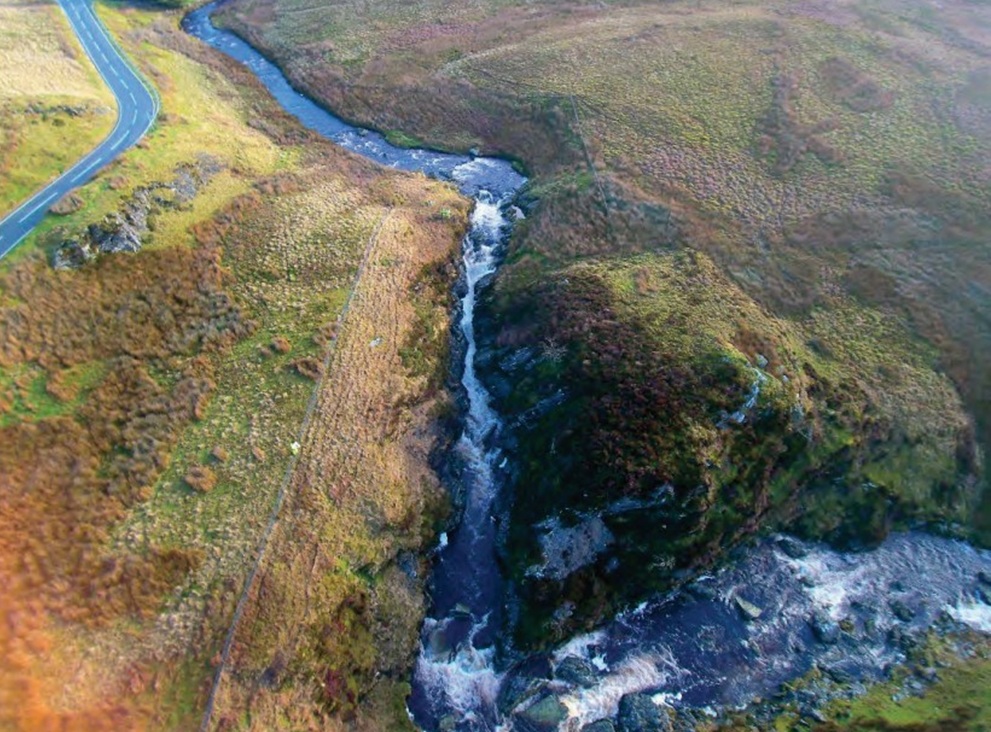
Controversial plans for the development of a hydroelectric scheme at the site of a scenic Eryri waterfall have been given the green light.
The Eryri National Park Authority’s planning and access committee today [Wednesday] approved plans for the scheme, which the applicants say will generate enough power to serve 700 homes.
The hydroelectric generation scheme on the Afon Cynfal relates to land near Pont yr Afon Gam Bridge in Llan Ffestiniog.
The decision on the controversial plans was reached after a period of two years of consultation, discussion, and “thorough and careful considerations”, with the decision passed by one vote.
Earlier this year, the Welsh Government decided against calling in the plans at the scenic Gwynedd waterfall, meaning the final decision lay with the Eryri National Park Authority.
Cllr Edgar Wyn Owen proposed the committee back the plans, this was seconded by Cllr John Pughe Roberts, and the vote was then passed with eight in favour and seven against.
Now the applicants – three farming brothers from Bala-based renewable energy company MED Dafydd – will build a small dam on the Afon Cynfal near Llan Ffestiniog, diverting water from Rhaeadr y Cwm waterfall to produce electricity.
The committee heard how over 1,720 representations were received as part of a consultation process, with around 1,590 raising objections.
The report added that “1,140 of the objections are identical submissions following an online campaign”.
Just under 140 comments were received in support of the proposal. Ffestiniog Town Council sent an objection letter, which stated: “The gorge is protected under wildlife legislation, as a Site of Special Scientific Interest within the National Park.
“It has been designated in part because of the rare liverworts and other plants found there. If we divert nearly 70% of the water away from the waterfall, it will change the very wet conditions that make the gorge so special.
“The council is concerned about the visual appearance, the striking sound of the waterfall, the wildlife living in the gorge, and also about the damage to this very historic site with its medieval paths.”
But others pointed to the current heatwave and said the scheme was needed to help combat climate change.
“We cannot hide from the fact there is a need for renewable energy schemes, and the weather that we are getting at the moment and what we are facing actually underlines the fact that we are in a crisis,” said one committee member.
The report stated that meeting renewable energy targets contributed to “wholly exceptional circumstances” that could allow the application to be considered appropriate if “not likely to damage” land considered to be a Site of Special Scientific Interest.
Conservation groups
Speaking in objection, Mr Cotterill said he was representing several conservation groups, including Save Our Rivers, North Wales Rivers Trust, Plantlife, the British Mountaineering Council, and “over one thousand people objecting”.
“We are supportive of clean energy generation in principle but not anywhere and not at any cost, and certainly not here,” he said. “It will take 12 schemes like this to produce the amount of electricity that could be produced by just one modern wind turbine.”
He then added that the damage to the wildlife and the site could not be justified. “I also invite you to consider what makes a waterfall a waterfall: the site, the sound, the location of a torrent of running water.”
He went on to reference the river inspiring the paintings of David Cox and the works of the Mabinogion, with the location continuing to inspire today.
Reduced flows
He added: “At times very significant amounts of water would be diverted out of the waterfall, with significant waterfall flows reduced during peak periods of the year.”
The scheme will generate up to 600kW and include a pipe route, intake weir, extraction pond, and a below-ground penstock of approximately 1.2km. The plans also include a turbine building and metering building, together with alterations to the existing site access and the repositioning of a highway access.
Supporting works comprise laydown areas, a temporary construction compound, a temporary footpath diversion, and both above and below-ground grid connection infrastructure linking to the national grid.
Support our Nation today
For the price of a cup of coffee a month you can help us create an independent, not-for-profit, national news service for the people of Wales, by the people of Wales.
Get more trusted Welsh news
Choose Nation.Cymru as a preferred source in Google News to see more of our journalism.



Who’s homes? Will there be a cable running straight to the local communities?? ….or does it go eastwards along with all our other resources for little in return.
Hot it in one ,we zkready priduce enough in wales ,this is anither Treweryn being built for english needs do they can make money .
Sad to hear this. The damage that dams cause, whether they produce energy or not, is often understated. It has devastating impacts on the ecology of the river. The fact this is being built in what’s supposed to be a national park as well is a disgrace.
Treweryn all over again ,and no real opposition to speak of ,Bring back the M.A.C……