


Cooper dismisses ‘cancel culture’ foreign policy on visit to China
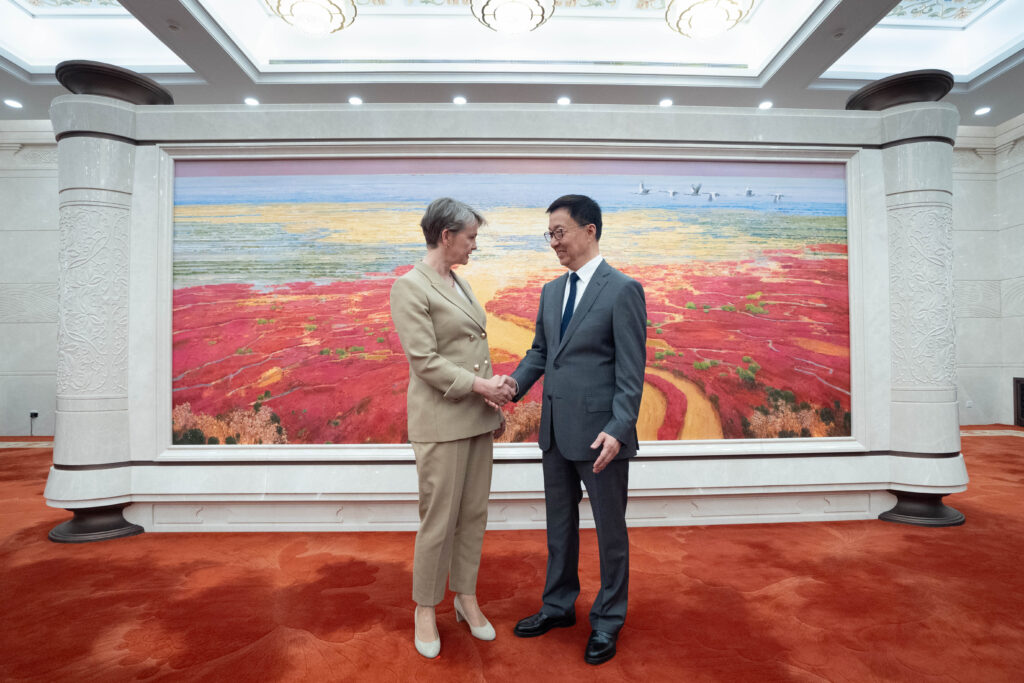
Nina Lloyd, Press Association Political Correspondent in Beijing
Yvette Cooper accused opponents of “cancel culture” foreign policy as she defended the Labour Government’s warming relations towards China on a three-day diplomatic visit to Asia.
The Foreign Secretary said the UK’s engagement with Beijing, the world’s second largest economy, is key to strengthening position at a time of heightened global instability.
Britain’s approach has been one of “standing up for our country”, the minister insisted, amid pressure from critics to take a harder line on China over issues like the treatment of the Uighur population and imprisoned pro-democracy campaigner Jimmy Lai.
On her first visit to the country, Ms Cooper told reporters “of course” she had raised the case of the detained British citizen, but did not go into detail when asked whether progress had been made on the prospect of his release after meeting Chinese vice-president Han Zheng and her counterpart Wang Yi on Tuesday.
China’s relationship with Russia, with which it has shared enduring strategic ties following Moscow’s invasion of Ukraine in 2022, was also discussed.
Asked whether she raised accusations against Beijing of propping up Vladimir Putin’s war economy with foreign minister Mr Wang, Ms Cooper told reporters she had discussed Russia’s “appalling escalation towards civilians”.
Pressed on whether President Xi Jinping’s government should be doing more to bring an end to Moscow’s invasion, she said it is “an issue where the UK and China have had disagreements”.
She said: “We’ve certainly discussed the importance of putting pressure on Russia, now, in order to bring them to the table, to peace negotiations.
“Obviously there are other areas where we have co-operation, but it’s important we have those frank and constructive discussions.”
Ms Cooper added: “I think at a time like this, in order to pursue UK interests, UK values, we need that principled diplomacy and engagement with major powers like China, contrary to some of the really foreign policy cancel culture that we’ve heard from others who said we should disengage.
“It’s only by having these talks and discussions that actually we can make the UK stronger back at home.”
The Foreign Secretary earlier acknowledged “areas of disagreement” between London and Beijing but insisted that approaching discussions with “candour and respect” would help increase mutual understanding of one another.
Welcoming her in Beijing’s opulent state building, the Chinese vice-president said an “important consensus” had been reached during Prime Minister Sir Keir Starmer’s visit earlier this year after the two leaders agreed to move forward with a “comprehensive strategic dialogue” – a framework for deepening co-operation amid heightened geopolitical volatility.
“Their important consensus has opened a new chapter for bilateral ties,” Mr Han said.
“We need to intensify interactions and strengthen dialogue and co-operation for the sake of world peace and stability and for the growth of our respective economies.”
He said “shouldering our responsibilities as major countries” together and moving steadily forward with strategic ties would bring “great benefits to our two countries as well as the entire world”.
Despite the efforts to thaw what Sir Keir has dubbed a diplomatic “ice age” between the two countries in recent years, the Foreign Office delegation are travelling with “burner” phones throughout the trip in a sign of ongoing concerns over Chinese espionage.
Ms Cooper later paid a cultural visit to the Forbidden City, where she was shown around the world’s largest imperial palace complex by a tour guide before meeting Mr Wang for further talks at Diaoyutai State Guest House.
She will later fly to Shenzhen, a major technology hub, where she said she would discuss potential trade links and also “the challenges of the future of AI as it rapidly changes our world”.
After concluding her China visit on Wednesday, the Foreign Secretary will travel to Delhi to meet her Indian counterpart Subrahmanyam Jaishankar on Thursday.
Those bilateral talks are also expected to include discussion of the Middle East, with a focus on maritime security as Iran maintains its chokehold on the Strait of Hormuz and amid ongoing escalation around the key global shipping lane.
Support our Nation today
For the price of a cup of coffee a month you can help us create an independent, not-for-profit, national news service for the people of Wales, by the people of Wales.
Get more trusted Welsh news
Choose Nation.Cymru as a preferred source in Google News to see more of our journalism.



Mini Cooper declares her and Clark’s complete lack of principals, in the language of an Air Head…