


Cooper warns Hormuz blockade risks sending world ‘sleepwalking into food crisis’
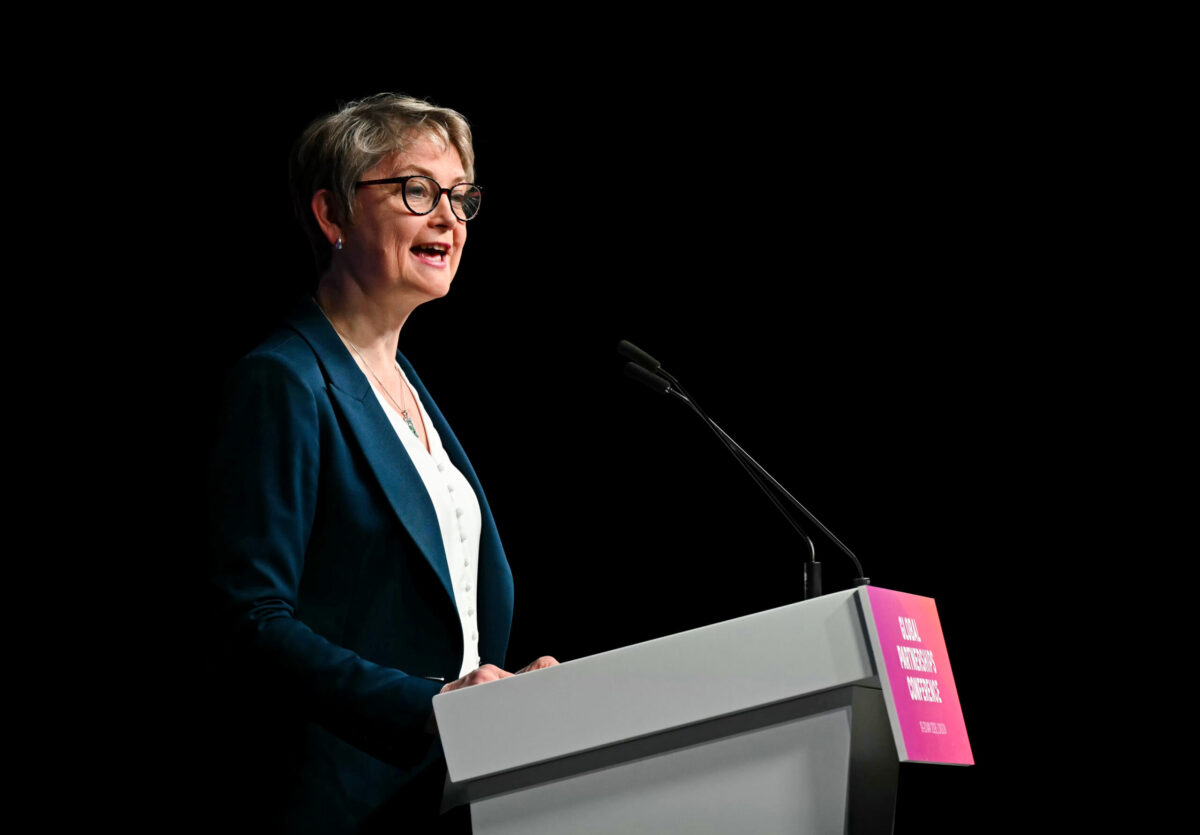
The Foreign Secretary has warned that Iran’s blockade of the Strait of Hormuz could result in tens of millions going hungry as she told an aid summit of the risk of “sleepwalking into a global food crisis”.
Yvette Cooper told an aid conference in London that the global south was paying the biggest price as the global trade of fertiliser and heating oil are largely blocked.
Markets are already pricing in weaker harvests and the World Food Programme has estimated that 45 million people could fall into acute food insecurity if the conflict does not end by the middle of the year.
The Foreign Secretary said: “We meet against the backdrop of the Hormuz crisis, a strait of water through which 90 ships a day used to pass, but for the last three months it’s been more like five.
“Heating oil for Asia – stuck in the Strait, fertilisers for Africa – stuck in the strait, 20,000 seafarers, 800 ships – just stuck in the strait.
“The global economy is being held hostage, and the global south is paying the biggest price.”
The Strait of Hormuz, between Iran and the Arabian peninsula, has been effectively closed since the US and Israel launched their campaign against Iran at the end of February.
Tehran’s blockade of the vital shipping lane has sent oil prices spiralling, but has also shut off access to some of the world’s most significant fertiliser factories, threatening to push food prices up as well.
Ms Cooper warned it was affecting planting season too, and that damage is already being done that will hit crop yields and send food prices up well into next year.
“The world risks sleepwalking into a global food crisis, and we cannot risk tens of millions of people going hungry because Iran has hijacked an international shipping lane,” she said.
She called for faster co-ordinated action from multilateral development banks and specific support for fertiliser markets to alleviate the impact of the strait’s closure.
And she said the UK was already working with UN agencies and the World Food Programme to “pre-position food supplies”.
“We have to get ahead of the risks, not wait for the suffering to unfold before us,” she said.
The International Chamber of Commerce said Ms Cooper was right to sound the alarm.
John Denton, ICC secretary general, said: “Fertiliser is a time-critical input: if shipments do not move from the Persian Gulf soon, farmers will miss application windows, crop yields will be lower and food prices will inevitably rise.
“Higher prices are already forcing farmers to delay or cut fertiliser purchases – demand destruction that will translate directly into weaker harvests.
“At the same time, production outages and shortages of essential inputs risk leaving key nutrients unavailable in sufficient quantities ahead of major planting seasons later this year and into next.”
International development organisation Bond welcomed Ms Cooper’s efforts to forge new partnerships, but urged the UK Government to set out concrete action to address the root causes of food crises.
Gideon Rabinowitz, director of policy and advocacy at Bond said: “To make genuine progress on tackling the food crisis now, and reduce risks in the future, the conference should set out plans to help smallholder farmers to increase their production sustainably, drive decarbonisation of agriculture and invest in green fertiliser production.”
Ms Cooper was speaking at the Global Partnerships Conference in London, convened to set out a new approach to development amid cuts to overseas aid budgets.
Last year, the UK cut its target for aid spending to just 0.3% of GDP, while Donald Trump’s administration effectively gutted the US aid agency.
Tuesday’s summit, co-hosted by the UK and South Africa, is expected to set out an approach based on “partnership” and technical advice rather than cash payments.
Ahead of the summit, development minister Baroness Jenny Chapman said: “Countries want to have more control, move beyond aid, attract investment, strengthen their own health and education systems and take charge of their own futures.
“Traditional development finance alone cannot meet that call, indeed it never could. Nor can it respond to the scale of today’s challenges.
“We need to bring new ideas and a broader coalition of partners to the table.”
Support our Nation today
For the price of a cup of coffee a month you can help us create an independent, not-for-profit, national news service for the people of Wales, by the people of Wales.
Get more trusted Welsh news
Choose Nation.Cymru as a preferred source in Google News to see more of our journalism.


