


Council report says tower block should be approved at former Howells store in Cardiff city centre
Martin Shipton
Cardiff council is recommending approval for a controversial 11-storey apartment block to be built in the centre of the Welsh capital as part of a £100m redevelopment centred on the former Howells department store.
A report published by the authority’s planning department on the evening of October 31 argues that the scheme, proposed by the Thackeray Group, is the best way to ensure that the Grade II* listed building survives.
Conservation groups have strongly opposed the development, saying it will harm the character of the historic city centre.
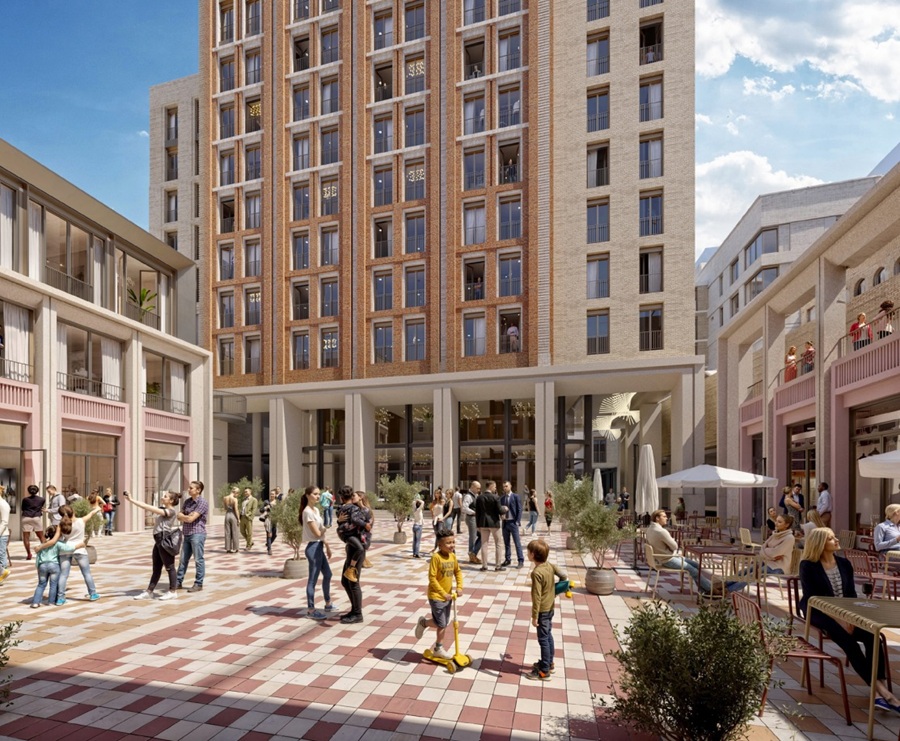
The project is intended to create a new city hub with apartments, offices, retail, and leisure space. It entails retaining historic elements like the St Mary Street frontage and the Percy Thomas building, restoring the Bethany Chapel, and creating a new public courtyard linking to Cardiff Market.
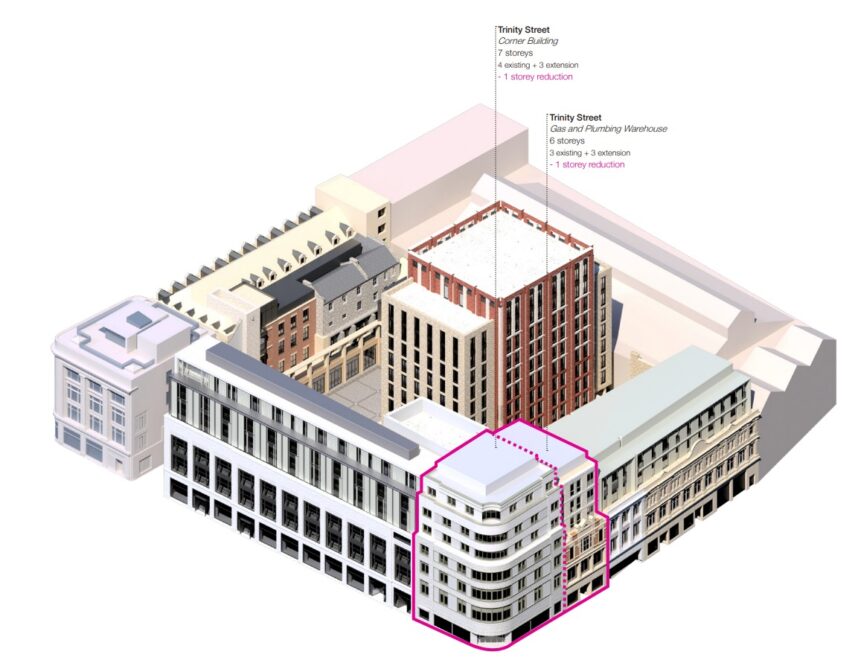
The tower block for apartments is part of the final phase.
Dr Elaine Davey of Cardiff Civic Society said: “We agree with the Victorian Society, the Council of British Archaeology and other amenity societies that these proposals should be withdrawn or refused.
“There is a general presumption in favour of preservation or enhancement of listed buildings, and their settings, to meet the requirements of the Historic Environment (Wales) Act 2023.
“This is a collection of Grade II* landmark buildings that define the character of Cardiff’s historic centre, and that includes Cardiff’s few ancient buildings, namely St John the Baptist (The Lords of Cardiff church) and the mediaeval Castle.
“The impact of the proposed tower, in particular, is seriously damaging to the centre of the city and should have long since been refused, but Cardiff council is not the best guardian of its distinguished heritage buildings, hence probably the reason for losing two very capable conservation officers.
“This tower also ignores the recommendations of Cardiff’s Tall Buildings SPG [Supplementary Planning Guidance], plus the impact on the associated conservation areas by this proposal.
“These proposals are driven by a desire to maximise profit from sensitive sites and will ultimately ruin the character and significance of Cardiff’s historic centre that draws in tourists from around the world. Our urban fabric will be irreparably damaged if these towers etc are allowed to be built.”
‘Overly large’
The Council for British Archaeology objected that despite some modifications, the tower “continues to be overly large, prominent, and uncharacteristic in views of the site, causing harm to the conservation area and the character of the historic city centre, particularly when viewed from the Castle and in the context of key historic landmarks, especially the Grade I listed St John’s Church.’ I
“In their view the tower would set a highly unwelcome precedent for new structures which do not respect or reflect the historic context of the medieval city core. They identify the following heritage impacts:
* Harm to the character and appearance of the St Mary Street conservation area, through the introduction of a tall, prominent building with a materials palette which contrasts with adjacent buildings and the street context;
* Harm to the legibility of the medieval grain of the city centre and the historic development of the Howells site through the introduction of a large new building which is set back from the street and cuts across the narrow medieval plots, causing further harm to the conservation area and the character of the city centre;
* Harm to the Grade II* listed Howells Store through the demolition of nineteenth-century warehouses which enabled the function of the innovative new Victorian store, and which have historic and evidential value;
* Harm to the Grade II* listed Howells site through internal alterations, the loss of original fixtures and fittings, and upward extensions.”
The council report recommending that the tower block should be granted approval states: “The primary heritage issue relating to this Grade II* listed building is to identify a means of safeguarding the future of the historic asset, which is currently at risk, in a way that minimises the harm whilst maximising the public benefit. The building is at risk because there is no longer a demand for such a vast area of trading floor and without a use the listed building may not be properly maintained.
“Since Howells was founded, the site has been in constant evolution and so the current proposals can be seen as the next phase of change. None of the key changes, however, are reversible so it is important to be certain that the quantum and nature of proposed change is essential to the viability. In weighing the balance of benefits and impacts, it is clear that to safeguard the future of this important heritage asset there needs to be a viable use.
“While a ‘purist’ approach to change of heritage assets might conclude that the scheme results in too great a level of harm, our heritage adviser is of the view that to move forward from the current situation a constructive conservation approach is essential, recognising the need and the potential for public benefit. He notes that this is a term introduced by Historic England but which is equally applicable in Wales.
“The primary objective of phases 4 and 5 [of the development] has been to ensure the highest level of protection to the external envelope as mitigation for the enormous change to the interiors and central areas. There has been substantial ongoing engagement with the applicant and their heritage and other advisers, including detailed discussions on matters of viability, all of which has resulted in evolving changes to the scheme to reduce the quantum, extent and impacts of new development.
“The final amended scheme that is now considered through this report is considered to be the necessary quantum and form of development and restoration/refurbishment that will ensure a deliverable and viable scheme to secure the long-term future of a significant landmark building. In doing so, through adaptive reuse it will also deliver a transformational regeneration of a key city centre site:
* A new public square and improved permeability. The new public square is designed to be a vibrant and inclusive space that will encourage social interaction and add vibrancy to the development and this part of the city centre. It will also open up the Chapel and create the opportunity to deliver a key connection through into Cardiff Market (subject to separate listed building consent). It will also echo the linkages that were historically provided by the iconic arcades. Overall, the creation of the new public square and connectivity, reflective of other parts of the city centre, is a fundamental part of the substantial community benefits to be delivered by the development.
* 194 new homes, 114-bed boutique hotel and commercial space, While not in themselves a ‘substantial community benefit’, the provision of a significant number of new homes in a highly sustainable city centre location is a clear benefit of the development, while the adaptation of the site to retain commercial uses and create additional hotel accommodation, will deliver further employment and economic benefits to the city.
“To achieve all of the above, the council’s appointed heritage expert is of the opinion that a higher level of change is needed than would normally be permitted and that for the most part the harm to the listed building is outweighed by the resulting benefits to it.”
Cadw
Councillors will decide on November 6 whether to approve the development or not. As the former department store is a Grade II* listed building, the scheme also requires the consent of the Welsh Government’s heritage arm Cadw.
Howells was established by James Howell in 1865, acquired by the House of Fraser group in 1972 and re-branded as House of Fraser in 2010. The store closed on March 26 2023.
Support our Nation today
For the price of a cup of coffee a month you can help us create an independent, not-for-profit, national news service for the people of Wales, by the people of Wales.



Why are they screaming for another business park on the outskirts of Cardiff and then build more apartments in the center?
Amir – London is very popular to live and work as there are excellent parks such as Hyde Park near the centre, Canary Wharf has excellent flats for young bankers, lots of theatres, iconic buildings such as London Eye etc.
For Cardiff City Region to grow it needs to cater for young professionals who want to live in the centre; plus families who want to live outside the city where one or both parents get to their office in under 60 minutes by public transport.
This argument makes sense in London. Cardiff in comparison is tiny. This sort of development makes no sense in a small city.
This view suggests that Cardiff should remain tiny. Why shouldn’t the Cardiff Capital Region (pop: 1.5m) aim to become a European economic success story?
By copying London and selling out peoples souls. Cardiff can expand in ways to create intere`est in the suburbs for all. Things to do on your doorstep. London people look like they hate life.
From here it’s a five minute stroll to Central followed by a seven minute train to CP. That’s what most would consider a dream commute.
Yes please, a small commuter station in Trowbridge and St Mellons will suit us residents just fine. Thank you.
A short stroll to the same well paid jobs is surely even better. A station that only helps locals leave but doesn’t attract investment won’t do that.
There are already 3 business parks in this area. 2 are within walking distance of this hendre park. Judging from the traffic queues to leave St. Mellons at 4pm every working day, it is very likely that 95% of the current highly paid jobs at these business parks are with non residents.
I agree, I have lived in this area for 40 years, about the same time we have been waiting for a station, it will probably never be done in my lifetime , if ever.
Good. Nothing would ever be built and nothing would ever happen in Cardiff if the po-faced Cardiff Civic Society had their way.
How long have you lived in Cardiff? Since I have been here, Cardiff has gone from a small relatively flat city with beautiful green spaces into a high rise concrete jungle and much less trees.
Good argument, too many cities are concrete jungles.
Sorry Amir but I just don’t the arguement that people admire the Cardiff skyline like you do St Paul’s in London, Paris with it’s 19th century apartments and the Eiffel Tower and Florence’s renaissance skyline. Where do people sit and admire the buildings of Cardiff. As you say it’s flat. As for the parks and green spaces this development has no impact?